
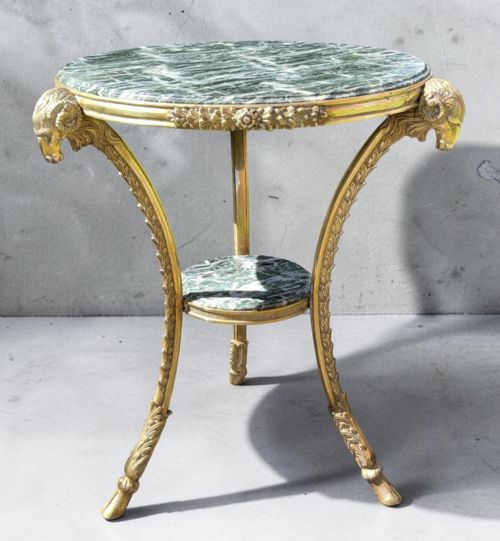


Empire Marble Top Gueridon
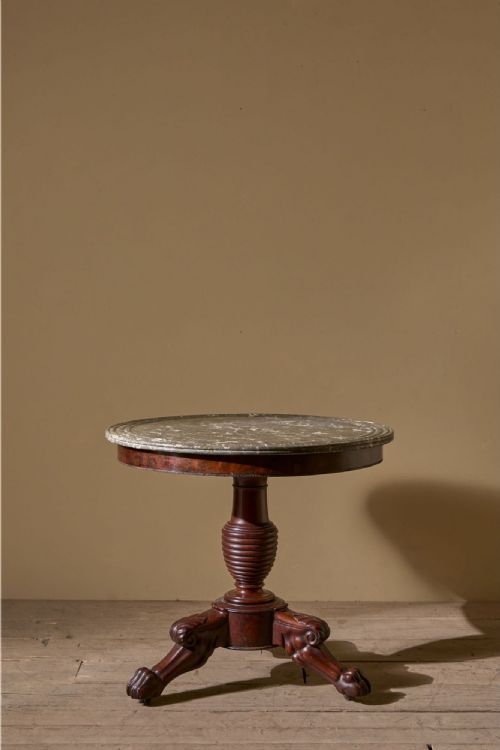
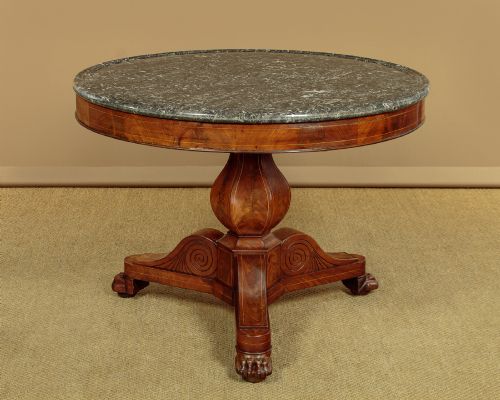
An empire marble top gueridon is a striking circular pedestal table designed for French interiors, combining rich woods and stone to anchor a room.
Empire Marble Top Gueridon
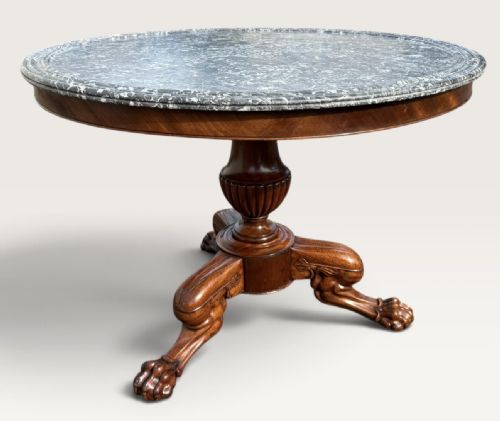
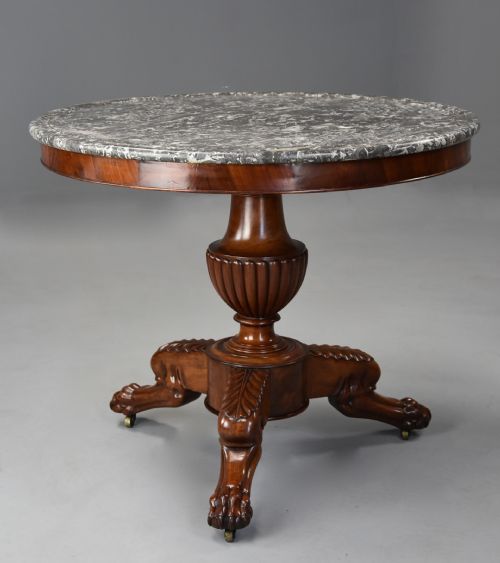
When you search for an empire marble top gueridon, you are looking at circular pedestal tables that typically function as centre tables, side tables, or occasional pieces within French neoclassical schemes. Most examples seen here date from the nineteenth century, including specific periods such as eighteen hundred, eighteen thirty, eighteen fifty, and eighteen sixty, alongside later empire revival iterations.
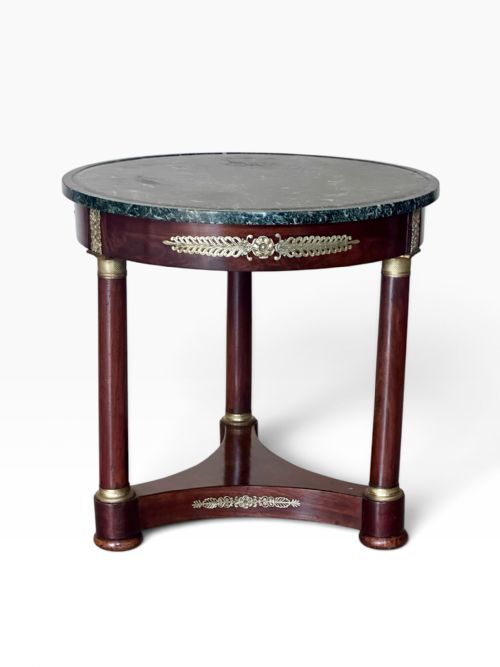
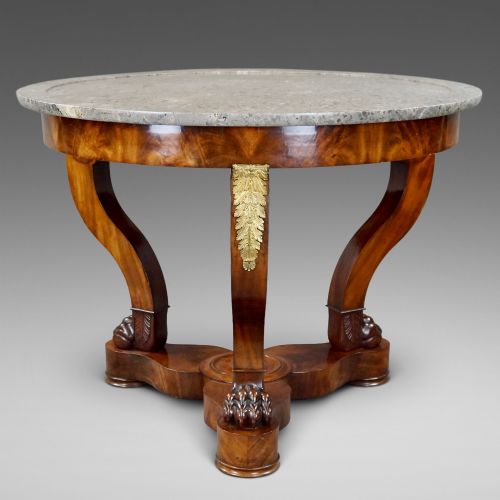
The form rests upon a central column or a triform base, often embellished with classical mounts, and is topped with white, grey, black, or specimen marble. These tables originate largely from French workshops operating in the French Empire, French Restauration, and Second Empire styles, though occasional Victorian and later twentieth century pieces also appear.
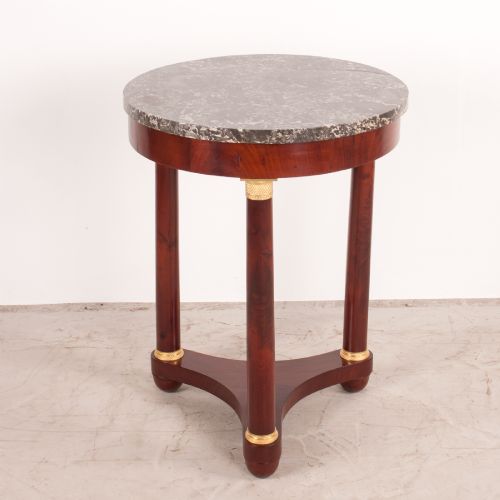
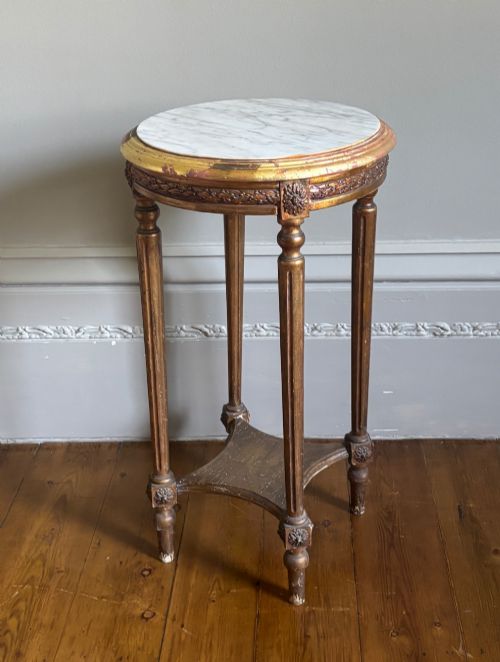
Buyers will encounter various incarnations, ranging from standard mahogany occasional tables to unusually large centre tables supported by swan motifs or cast brass rams heads. While many adhere strictly to French mahogany construction, others utilise giltwood, painted finishes, or canework to achieve distinct decorative effects.
How They Were Made
Makers constructed the primary frames of these tables using solid mahogany, flame mahogany, walnut, or painted woods, frequently applying rich veneers to circular tabletops. These wooden structures were then paired with heavy inset marble slabs, which provided a cool, durable surface suited to domestic use.
Metalwork played a defining role in the construction, incorporating cast brass, ormolu, and gilt bronze mounts to accent columns, bases, and aprons. Details such as applied mounts, cast brass feet, and figural supports like swans or rams heads were meticulously attached to enhance the classical aesthetic.
Cast brass rams heads peer outward from several pedestals, watching over the nineteenth-century French salons they inhabit.
What Varies in Quality
Quality reveals itself in the choice of materials and the crispness of execution, distinguishing standard production from exceptional pieces. Superior examples utilise finely figured flame mahogany and heavy, richly veined original marble tops rather than replacement stone.
The refinement of the cast metal mounts dictates much of the visual success of a piece. Finely chased ormolu and detailed brass mounts representing rams heads or swans demonstrate a higher level of craftsmanship than simpler, mass-produced hardware.
The Empire Marble Top Gueridon Glossary
- Gueridon
- A small circular table on a single pillar or pedestal, originating in seventeenth-century France. These tables serve multiple purposes as centre, side, or occasional furniture.
- Ormolu
- Gilt bronze mounted or applied to furniture, created through an amalgam of mercury and gold applied to a bronze base. This technique imparts a rich, lasting metallic lustre.
- Triform
- A three-sided base or pedestal configuration frequently used to support the central column of these tables. It ensures stability while adding architectural symmetry.
- Specimen marble
- A tabletop composed of various coloured marbles fitted together in geometric patterns or panels. This technique showcases mineral variety and lapidary skill.
Empire Marble Top Gueridon: Frequently Asked Questions
What is an empire marble top gueridon used for?
These tables traditionally served as centre tables in French salons, positioned in the middle of a room to hold lamps, decorative objects, or floral arrangements. Their round shape allows people to move easily around them.
Today, they function equally well as occasional tables in sitting rooms or as striking bedside tables. The stone top provides a durable surface that resists everyday wear.
How do I identify a French empire gueridon?
Look for architectural symmetry, heavy circular mahogany construction, and a distinct central pedestal base. Classical motifs such as brass mounts, rams heads, or swan supports strongly indicate the empire style.
The presence of original veined marble inset into the wooden top is another hallmark of the form. Pieces often date from the nineteenth century and reflect French neoclassical design principles.
Are these tables sturdy enough for daily use?
The heavy marble top provides significant weight that helps anchor the central pedestal firmly to the floor. Solid mahogany and walnut frames offer strong structural integrity for everyday placement.
While the stone top is durable, care should be taken with acidic liquids that might etch polished marble. The triform or pedestal bases distribute weight evenly across the floor.
What is the difference between original and revival pieces?
Original pieces date from the early to mid nineteenth century during the height of the French Empire and Restauration periods. They exhibit period-specific construction methods and authentic patination on the wood and metal.
Revival pieces, often appearing from the late nineteenth or early twentieth century, emulate these earlier neoclassical designs. Both categories utilise similar materials like mahogany and marble but belong to different eras of production.