



Empire Commodes
These empire commodes bring classical proportion and rich timber to a room, offering practical storage through stately architectural form.
Empire Commodes
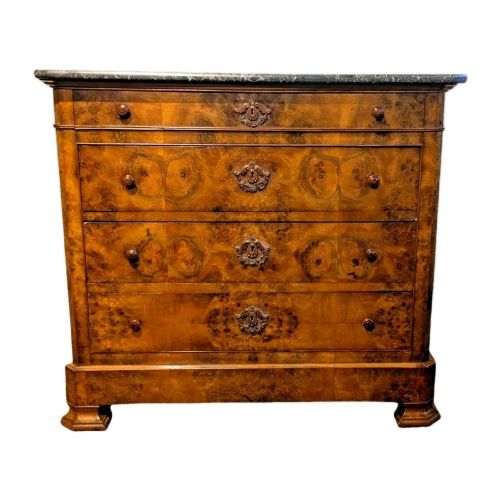
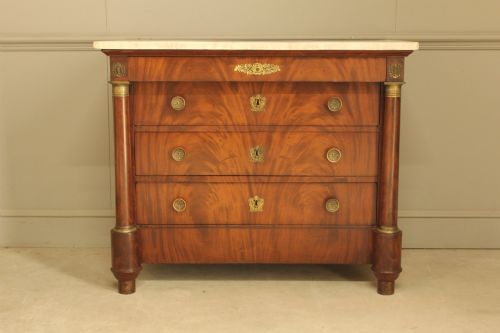
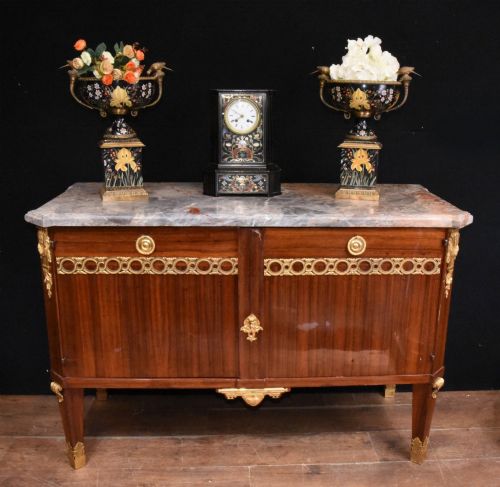
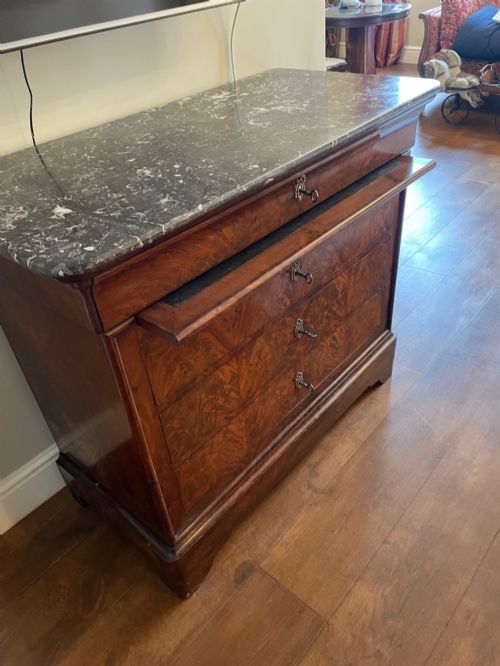
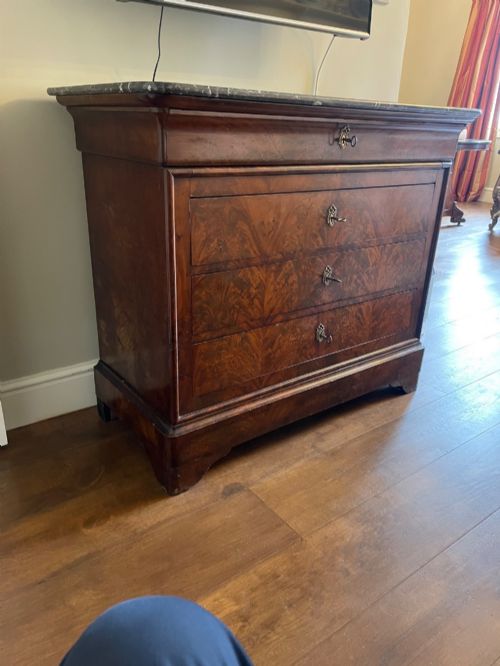
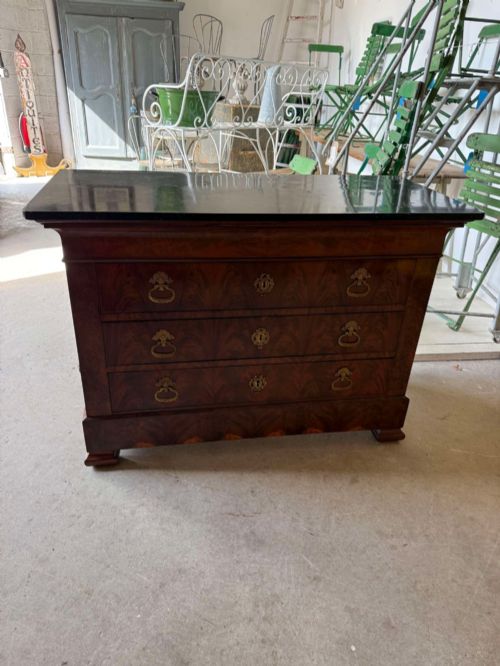
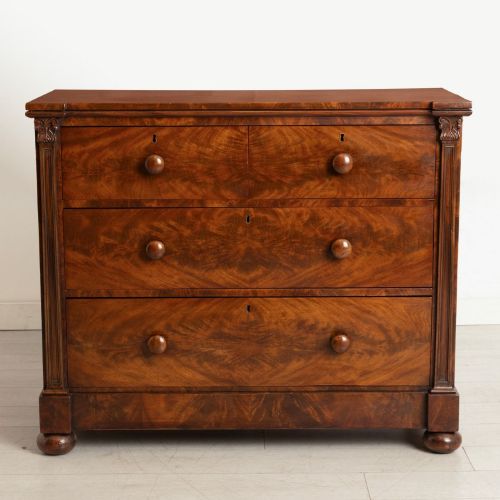
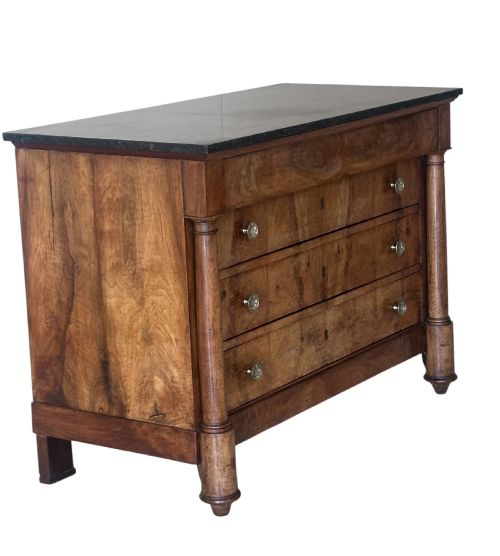
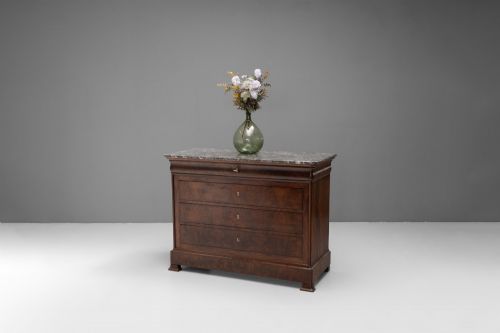
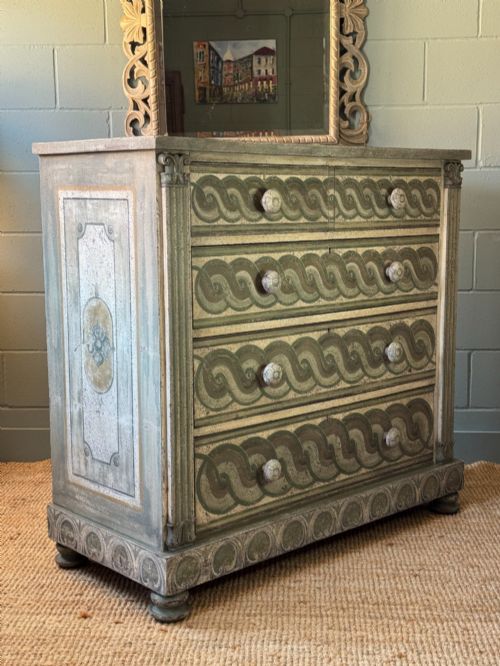
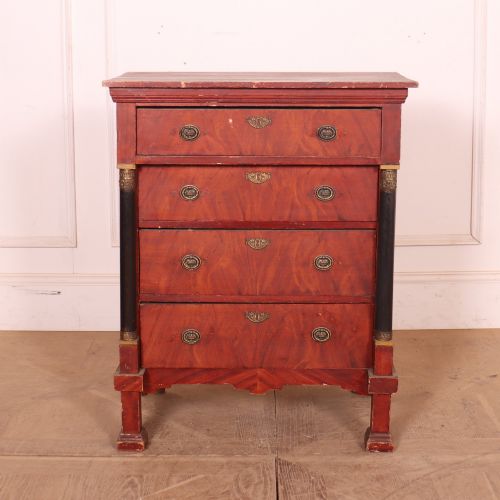
Empire commodes are substantial storage pieces typically taking the form of chest of drawers, side cabinets, or secretaire desks. When exploring these listings, the version you are most likely to meet is a 19th-century French or Swedish example rooted in the neoclassical tradition.
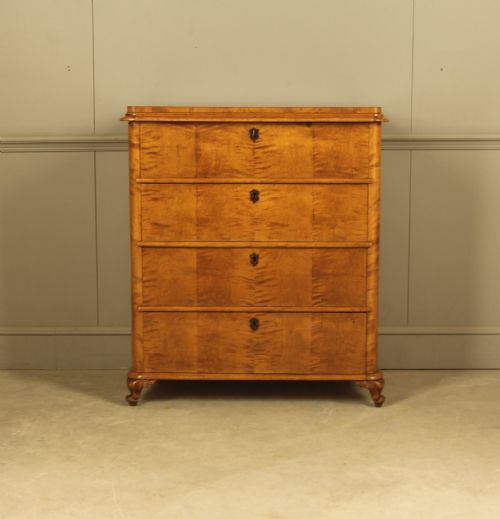
The materials span from rich mahogany and walnut to striking birch, flame birch, and burr elm, frequently finished with marble tops and metallic mounts. Origins range across France, Sweden, Italy, and the Netherlands, taking shape as French Empire, Biedermeier, and revival pieces.
Makers recorded in the evidence include Edmond Poteau, whose cabinets sit alongside diverse regional interpretations from the 18th century onward. These forms serve as functional bedroom or living space furniture with a commanding architectural presence.
Materials and Construction
Makers utilised dense cabinet timbers such as mahogany, walnut, and exotic birch veneers applied over sturdy secondary woods like pine. Surface decoration relies on natural wood figure, marquetry inlay, and parcel gilding to accentuate clean structural lines.
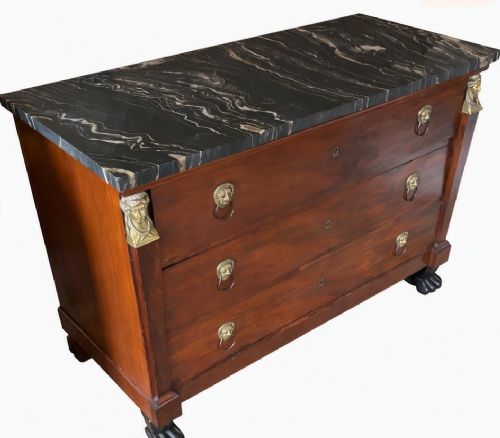
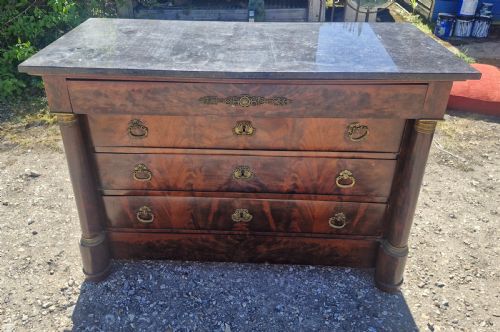
Mounts and hardware cast in brass or ormolu provide structural contrast against dark mahogany and warm burr veneers. Marble slabs, often white or grey, form durable tops fitted directly onto the cabinet carcass.
Empire Commodes Retail Price Guide 2026
Typical asking prices for empire commodes among the pieces listed under this phrase on Sellingantiques today, from the lower quarter to the upper quarter. They describe what is for sale here now, not the wider market.
Materials recorded across the inventory include solid mahogany, walnut, burr elm, flame birch, marble, and brass.
Factors of Quality
Quality depends upon the choice and matching of timber veneers, where symmetrical flame birch or figured mahogany elevate the visual impact of the piece. Crispness in the casting of ormolu mounts and the precision of marquetry inlay distinguish finer workshops.
Integration of stone tops, drawer tolerances, and the retention of original brass hardware mark the difference between standard production and superior cabinet-making.
Edmond Poteau
The Empire Commodes Glossary
- Ormolu
- Gilded bronze applied as mounts and decorative trim on furniture. It provides bright metallic contrast against dark cabinet timbers.
- Commode
- A low chest of drawers or cabinet designed for domestic storage. The form evolved during the 18th and 19th centuries into a substantial architectural presence.
- Secretaire
- A desk featuring a fold-down writing flap concealing small drawers and compartments. These often disguise themselves as standard drawer fronts.
- Biedermeier
- A Central European style prioritising utilitarian comfort and clean lines over excessive ornamentation. It favours domestic timbers like birch and walnut.
- Marquetry
- Decorative patterns formed by fitting contrasting wood veneers into a panel. It creates pictorial or geometric designs across drawer fronts and cabinet tops.
Empire Commodes: Frequently Asked Questions
What is an empire commode?
An empire commode is a formal chest of drawers or cabinet rooted in neoclassical design principles. These pieces emphasise symmetry, architectural columns, and contrasting metallic mounts.
Originating during the early 19th century, they provide deep storage drawers beneath stone or timber tops. Their heavy proportions suit grand hallways, bedrooms, and reception spaces.
How do I style an empire commode?
Place the commode against a clear wall where its linear form and figured timber can command attention. A heavy mirror or classical artwork hung above completes the traditional arrangement.
Keep surface objects minimal to let the marble top and brass mounts stand out. Use the deep drawers for storing linens, tableware, or paperwork.
How do I tell French and Swedish pieces apart?
French empire commodes frequently combine dark mahogany with bright ormolu mounts and dark marble tops. They lean towards imposing classical symmetry and military-inspired mounts.
Swedish pieces often utilise lighter birch, flame birch, or tiger birch timbers. Their aesthetic tends toward bright, restrained surfaces characteristic of the Biedermeier style.
Are these commodes practical for daily use?
The deep drawer configuration offers substantial capacity for modern storage needs. Robust construction in dense timbers ensures they withstand regular handling.
Care should be taken with marble surfaces to avoid staining from liquids. Drawer runners benefit from occasional waxing to maintain smooth operation.