





Empire Bronze Candelabra
Empire bronze candelabra combine classical form with heavy cast metal, bringing nineteenth-century lighting and presence into a room.
Empire Bronze Candelabra
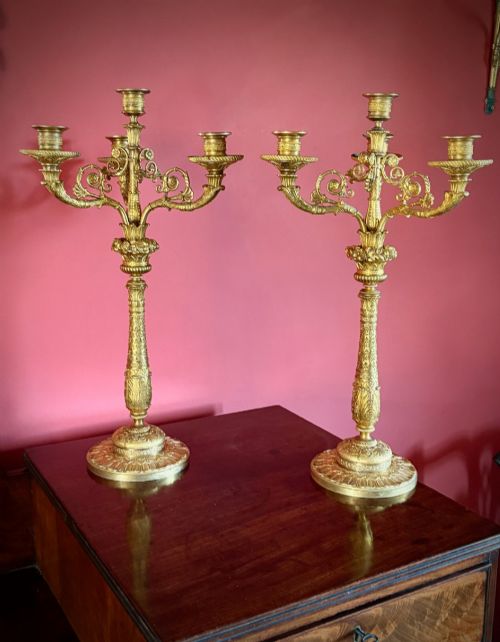
Empire bronze candelabra are decorative lighting fixtures originating primarily in the nineteenth century, encompassing French Empire, Regency, and Neoclassical styles. Buyers searching this phrase most frequently encounter matched pairs designed for mantelpieces or side tables, often incorporating multiple arms for candles.
The selection on this page demonstrates strong representation of French manufacture, alongside Regency pieces from the nineteenth century. These objects frequently pair cast metal with contrasting bases of marble, onyx, or slate.
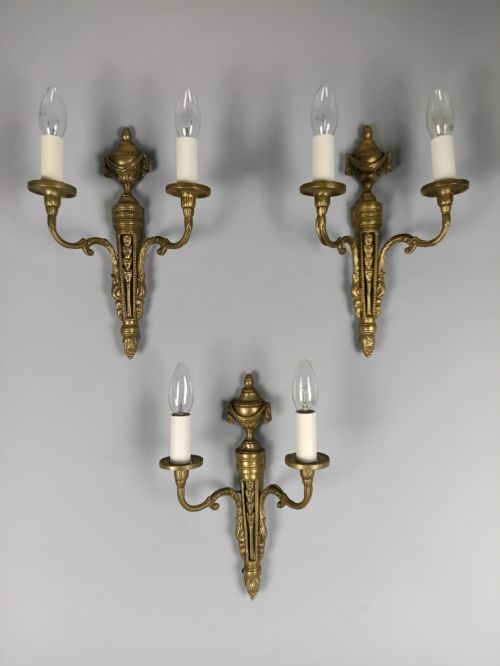
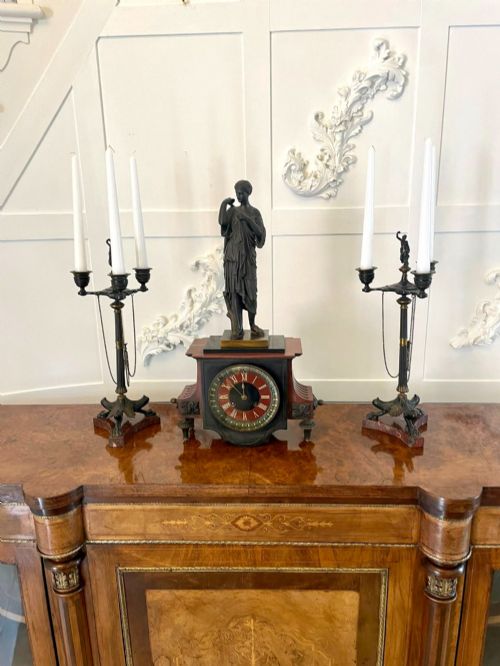
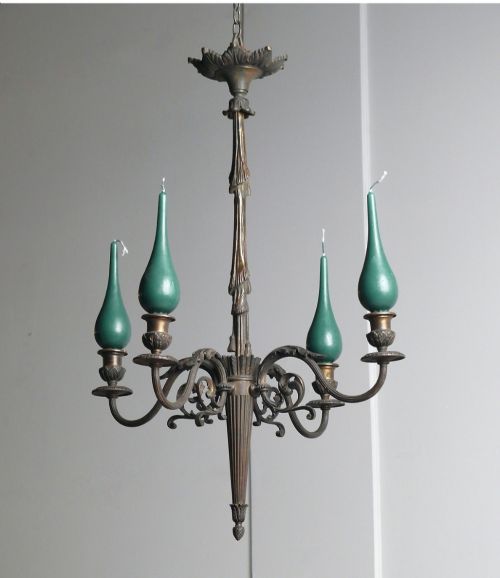
Beyond standard multi-arm candelabra, related forms in the listings include candlesticks, wall sconces, and complete clock garniture sets. These share the heavy classical vocabulary of patinated bronze and gilded highlights.
How they were made
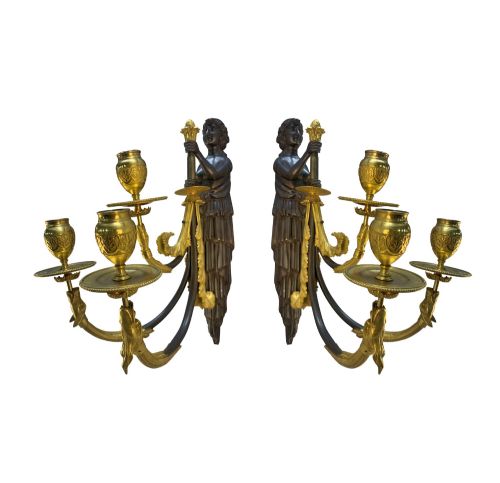
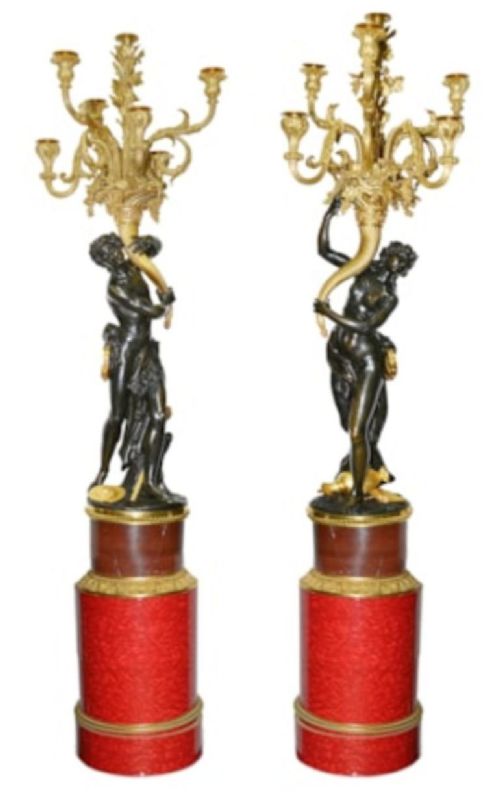
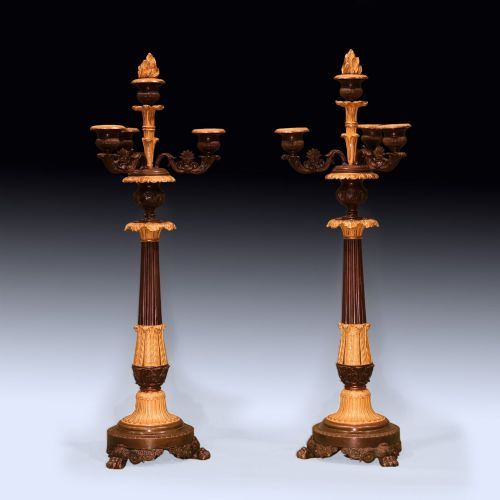
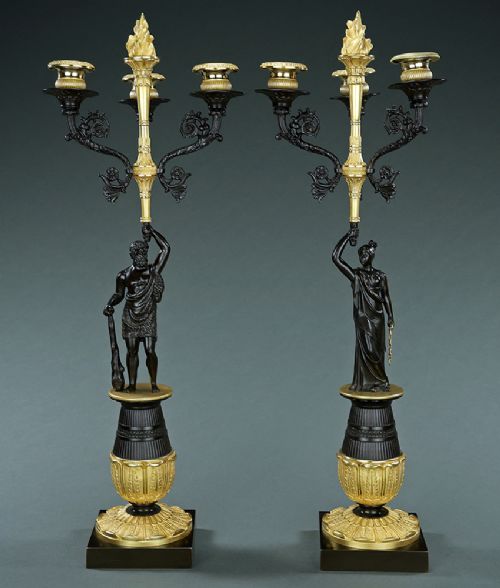
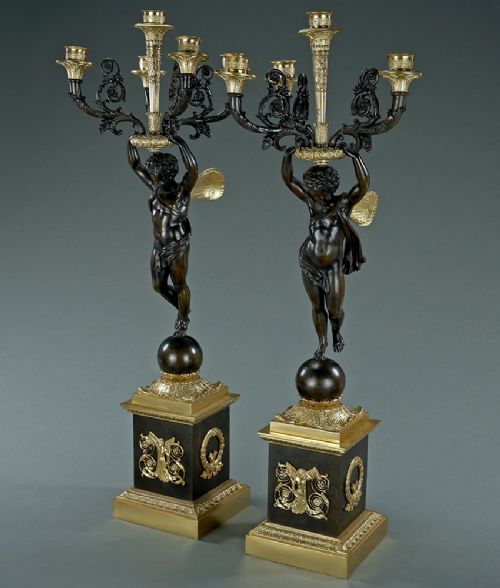
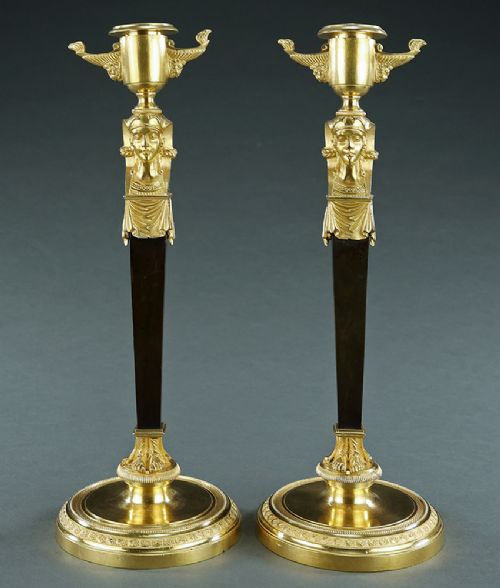
Maker workshops utilised two distinct metal treatments within a single piece, combining dark patinated bronze with fire-gilt ormolu. This dual finishing created high visual contrast between the cast figures and the gilded mountings.
Structural elements were frequently mounted onto natural stone bases such as white marble, black slate, or onyx. Turners and stonemasons shaped these plinths to support the weight of heavy metal arms and figural stems.
Empire Bronze Candelabra Retail Price Guide 2026
Typical asking prices for empire bronze candelabra among the pieces listed under this phrase on Sellingantiques today, from the lower quarter to the upper quarter. They describe what is for sale here now, not the wider market.
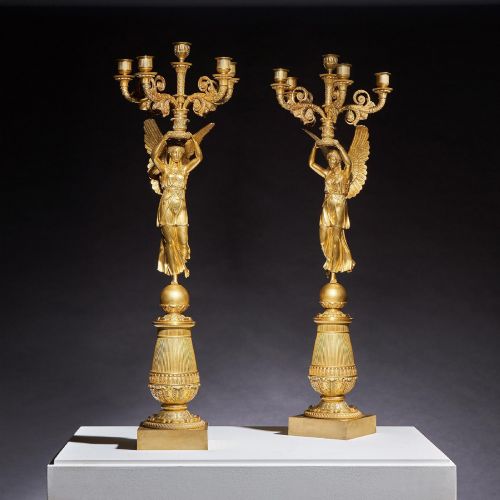
Merman twin-arm designs and winged putti share shelf space with solemn classical figures holding up the light.
What varies in quality
Proportion and structural weight dictate the calibre of a pair. Superior items balance heavy bronze figures securely upon solid marble or slate bases without awkward joins or mismatched components.
Pierre Philippe Thomire·Rabiat·Auguste Cain
The Empire Bronze Candelabra Glossary
- Ormolu
- Gilded bronze produced by applying a mercury and gold amalgam to the metal surface and heating it until the mercury vaporised. This historic French technique produces a warm, distinct lustre.
- Patinated bronze
- Bronze treated with chemical solutions to darken the surface to a deep brown or black tone. It serves as a visual foil to bright ormolu sections.
- Garniture
- A matched set of ornamental objects, typically comprising a central clock flanked by a pair of candelabra or vases. These sets were designed to sit together on a mantelpiece.
- Retour d'Egypte
- A design style inspired by Napoleon's campaign in Egypt, featuring motifs such as sphinxes, pharaohs, and hieroglyphs. It forms a distinct subset within nineteenth-century classical metalwork.
- Chasing
- The manual refinement of a cast metal surface using small punches and hammers. Master chasers sharpened details and removed casting flaws before gilding.
Empire Bronze Candelabra: Frequently Asked Questions
How were Empire bronze candelabra used?
These pieces functioned primarily as ornamental lighting for dining tables, sideboards, and mantelpieces during the nineteenth century. Tallow or wax candles provided illumination in large reception rooms.
Beyond practical lighting, matched pairs formed part of symmetrical interior displays, often placed alongside matching clocks to anchor the room decor.
How do I clean ormolu and bronze?
Dusting with a soft, dry cloth is the safest routine maintenance for antique metalwork. Avoid chemical dips, metal polishes, or abrasive cloths that strip historic gilding.
Professional conservation is recommended for deep cleaning or repairing loose mounts to prevent permanent damage to the patination.
Can these candelabra be converted to electricity?
Many nineteenth-century examples are adapted into table lamps or wired for electric bulbs. Professional conversion can often be executed without drilling primary structural components.
Reversible wiring methods preserve the underlying metalwork if a collector chooses to return the object to its original candle-bearing state.
How do I tell French Empire from Regency style?
French Empire pieces often lean heavily into classical antiquity, Napoleonic symbols, and heavy figural bases. Regency items share similar classical roots but frequently incorporate British interpretation and specific local cabinet-making traits.
Both styles utilise patinated bronze and ormolu, making the specific cast motifs and mount construction the primary indicators of origin.