



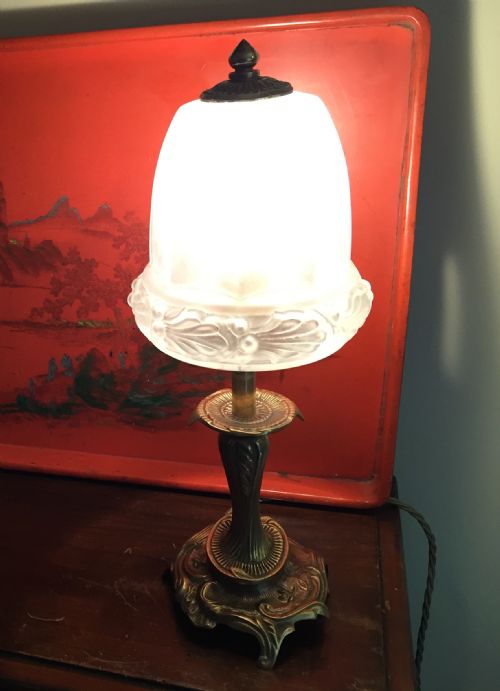


Empire Brass Desk Lamp
An empire brass desk lamp brings classical form and warm metalwork to a study, combining period proportion with functional illumination.
Empire Brass Desk Lamp
When you search for an empire brass desk lamp, you encounter lighting fixtures rooted in French Empire, Neoclassical, and Regency design traditions. These pieces often originate from nineteenth-century France or England, adopting forms derived from classical antiquity.
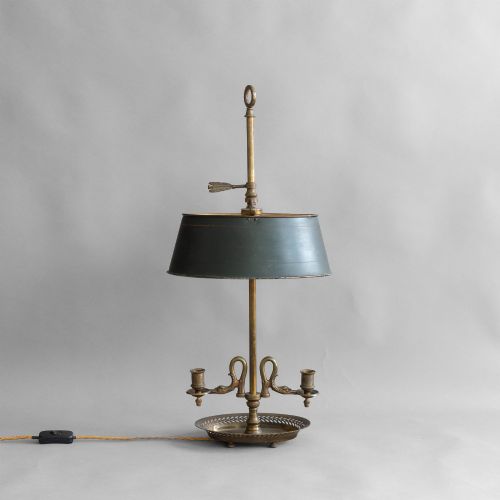
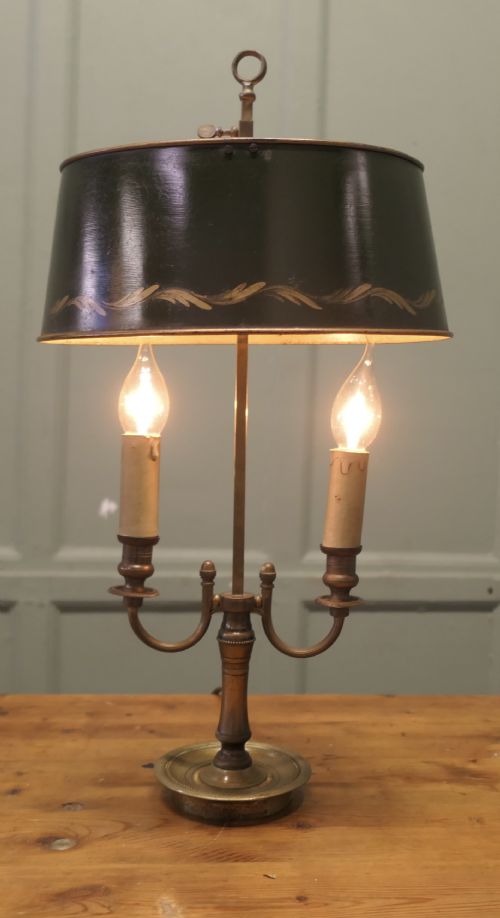
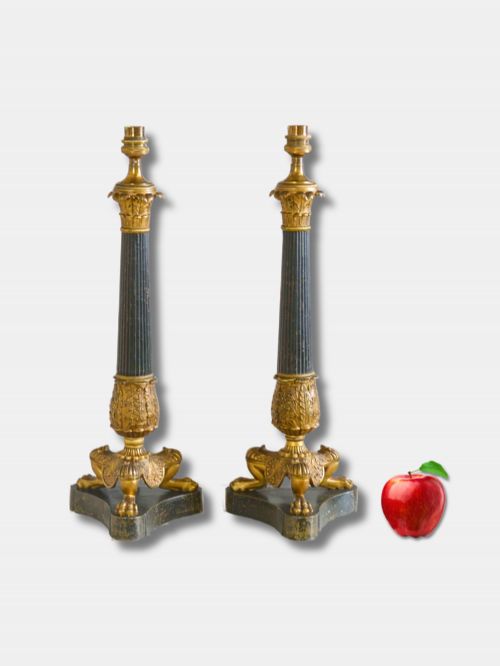
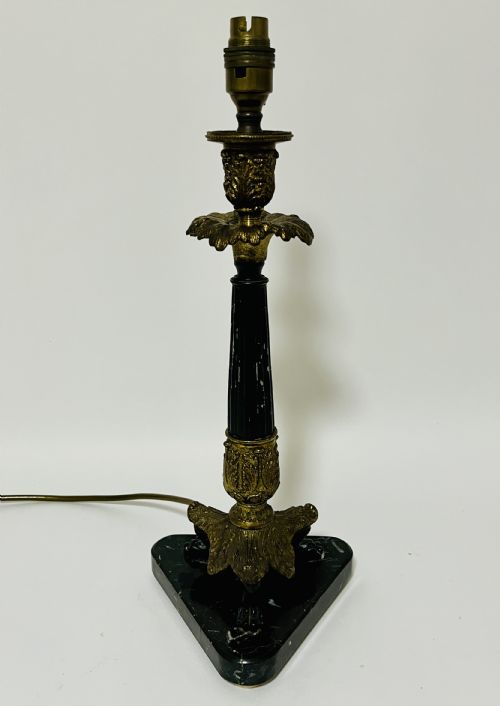
The selections here most frequently manifest as bouillotte lamps with adjustable toleware shades, classical column bases, or bronze and ormolu candlestick conversions. Table lamps and lamp bases span the nineteenth century through the early decades of the twentieth century, reflecting enduring classical revival tastes.
Quality variations
Quality depends upon the crispness of the casting and the depth of the original gilding or patination on the bronze and ormolu. Finer examples display sharp classical motifs such as rams heads, lion paw feet, and classical masks executed with precision.
The integration of secondary materials like white or coloured marble and hand-painted toleware distinguishes superior workshop output from simpler production. Proportion and balance between the column or urn body and the supporting base determine the visual success of each piece.
Empire Brass Desk Lamp Retail Price Guide 2026
Typical asking prices for empire brass desk lamp among the pieces listed under this phrase on Sellingantiques today, from the lower quarter to the upper quarter. They describe what is for sale here now, not the wider market.
The Empire Brass Desk Lamp Glossary
- Ormolu
- Gilt bronze produced by applying a finely ground high-carat gold mercury amalgam to a bronze object, creating a durable golden surface. This technique was widely utilised by French makers during the eighteenth and nineteenth centuries.
- Bouillotte lamp
- A traditional adjustable desk or table lamp featuring a central shaft, multiple candle arms, and a painted metal shade that slides up and down the stem. It takes its name from the eighteenth-century card game bouillotte.
- Toleware
- Enamelled and painted sheet metal, often coloured in deep green or black with gilt accents. It frequently forms the adjustable shades found on classical desk lamps.
- Patinated bronze
- Bronze that has been treated chemically or naturally to develop a dark surface layer. This finish provides contrast against bright ormolu mounts.
- Neoclassical style
- An aesthetic movement drawing inspiration from the classical art and architecture of ancient Greece and Rome. It prioritises symmetry, proportion, and classical ornament such as columns and urns.
Empire Brass Desk Lamp: Frequently Asked Questions
What is an empire brass desk lamp?
An empire brass desk lamp is a lighting fixture styled after classical French and English design motifs from the nineteenth century. These pieces frequently incorporate bronze, ormolu, and toleware.
They serve as both functional desk lighting and decorative objects of classical antiquity, often adapted from earlier candlesticks or oil lamps.
How do I use a bouillotte lamp?
A bouillotte lamp uses a central shaft holding multiple candle arms beneath a movable painted shade. The shade slides along the vertical rod to direct light downward onto a desk or table.
Adjust the height of the metal shade to control the spread of illumination for reading or writing.
How do I identify a nineteenth-century lamp?
Nineteenth-century lamps show heavy cast construction in bronze, brass, or ormolu, often paired with marble plinths. Look for hand-chased surface details and patination consistent with age.
Many period examples began as oil lamps or candlesticks before receiving electrical wiring in the twentieth century.
Are these lamps originally electrical?
Most nineteenth-century examples were originally designed for candles or burning oil before later conversion to electricity. These converted pieces retain their original cast metal bodies and structural components.
Wiring is typically updated to meet modern safety standards while preserving the antique metalwork.