



Empire Bed Frame
An empire bed frame brings neoclassical authority and grand proportions to a bedroom through rich timber and disciplined metal mounts.
Empire Bed Frame
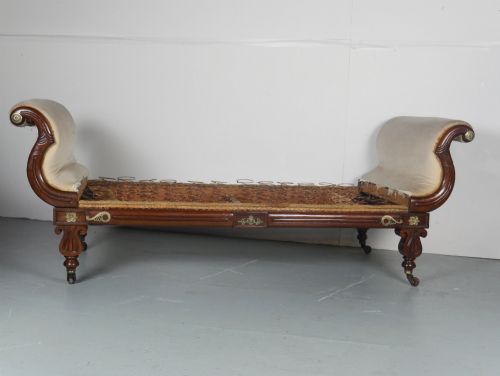
An empire bed frame combines architectural symmetry with substantial timbers, most frequently seen in mahogany, walnut, and painted wood.
The versions encountered on this page span the nineteenth century and early twentieth century, alongside interpretations from later decades.
Makers shaped these forms as single beds, double beds, and king size proportions, often reflecting French empire style and neoclassical design.
Buyers select these bed frames to anchor a room with period character, utilising king size, double, and single formats.
Materials and construction
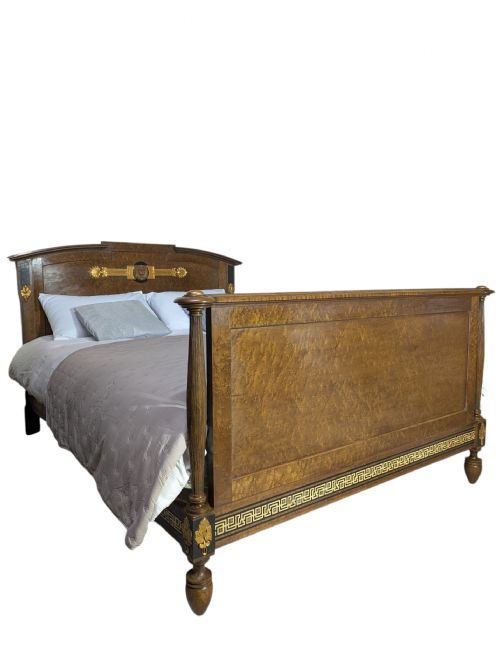
Cabinetmakers utilised dense hardwoods like mahogany, burr walnut, and fruitwood parquetry to construct the primary bed frame structures.
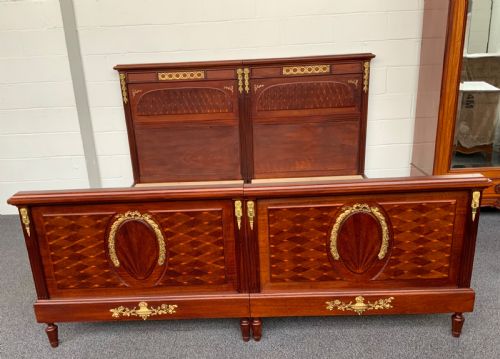
Decorative embellishments rely on cast brass detailing and ormolu mounts, which punctuate the dark timber surfaces with metallic contrast.
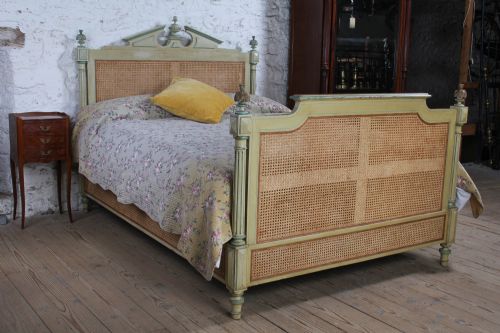
Certain examples incorporate painted timber finishes and woven caning to lighten the visual mass of the larger bed frame designs.
Empire Bed Frame Retail Price Guide 2026
Typical asking prices for empire bed frame among the pieces listed under this phrase on Sellingantiques today, from the lower quarter to the upper quarter. They describe what is for sale here now, not the wider market.
Listings feature mahogany, brass, ormolu, walnut, burr walnut, and painted timber across nineteenth and early twentieth century periods.
Gradations in quality
The standard of a bed frame rests upon the depth of the timber grain, such as plum pudding mahogany or burr walnut, and the crispness of any parquetry work.
Execution of metalwork differentiates output, where chased ormolu mounts and heavy brass embellishments display sharper casting than standard brass stampings.
Structural integrity and the retention of matching side cabinets or paired configurations elevate particular examples above standard single pieces.
The Empire Bed Frame Glossary
- Ormolu
- Gilded bronze mounts applied to furniture. This technique creates bright metallic highlights against dark mahogany surfaces.
- Parquetry
- Geometric wood inlay patterns. Craftsmen arrange contrasting timber veneers to form decorative repeating motifs.
- Neoclassical style
- Design movement drawing on classical antiquity. It prioritises strict symmetry, columns, and restrained classical proportions.
- Four poster bed
- A bed with four vertical columns supporting an upper canopy. This form creates an enclosed architectural space.
- Caning
- Woven rattan material used for bed panels. It provides a lighter texture compared to solid wooden headboards.
Empire Bed Frame: Frequently Asked Questions
How do I fit modern mattresses?
Many historical bed frames diverge from current standard mattress dimensions. Custom mattress suppliers can build bespoke bases to fit older internal measurements.
Checking the internal width and length before purchase ensures modern slats or bases integrate securely into the antique wooden rails.
Are pairs common for these beds?
Matching pairs appear among nineteenth-century continental listings, often created as twin beds for grand chambers. These configurations suit guest rooms requiring symmetrical furniture.
Single beds frequently survive in pairs, whereas larger king and double sizes typically exist as singular standalone pieces.
What woods dominate these designs?
Mahogany serves as the primary timber across the majority of nineteenth-century pieces. Walnut, fruitwood parquetry, and painted timber appear with regularity.
Metal components like brass and ormolu complement these woods by highlighting structural corners and headboard crests.
How do I maintain painted timber?
Painted wooden frames require dry dusting with a soft cloth to protect the surface finish from moisture and abrasion. Avoiding harsh chemical cleaners preserves original paint.
Keeping the bed frame away from direct sunlight prevents the painted wood and gilt details from fading over time.