
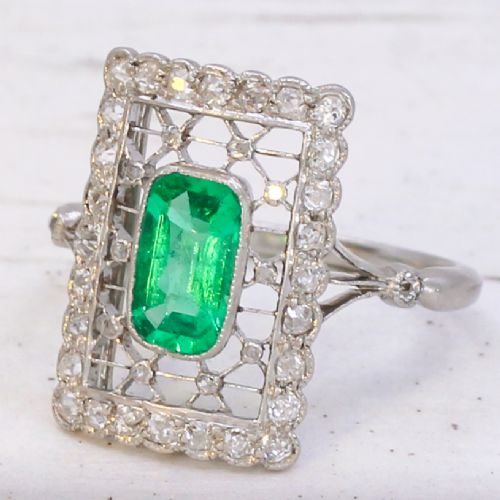
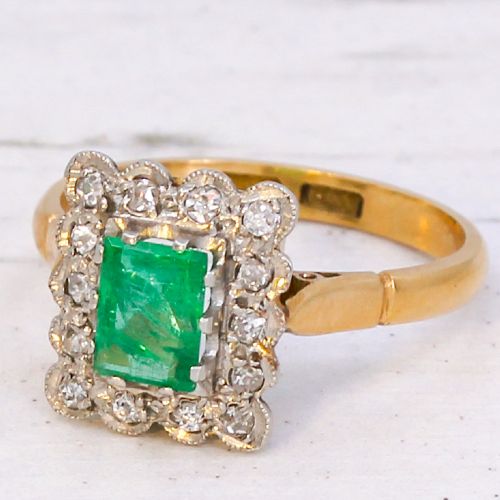
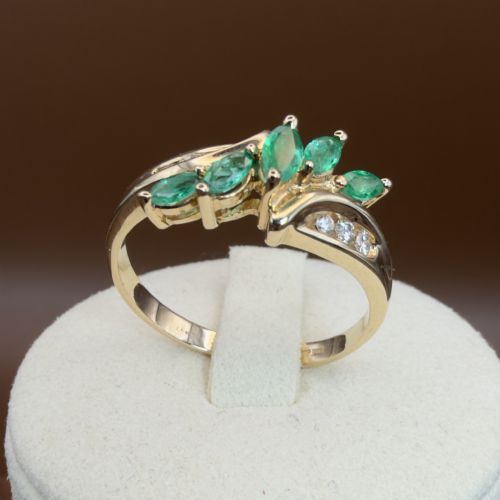
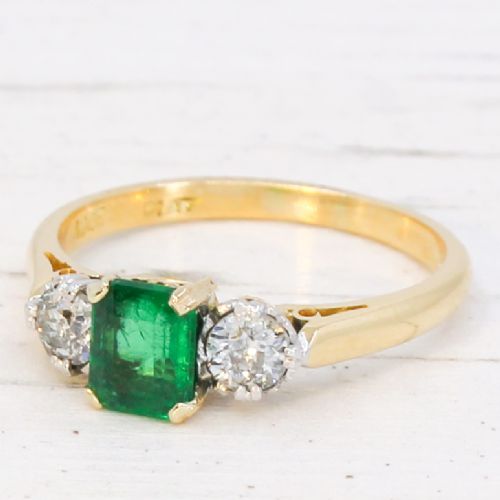
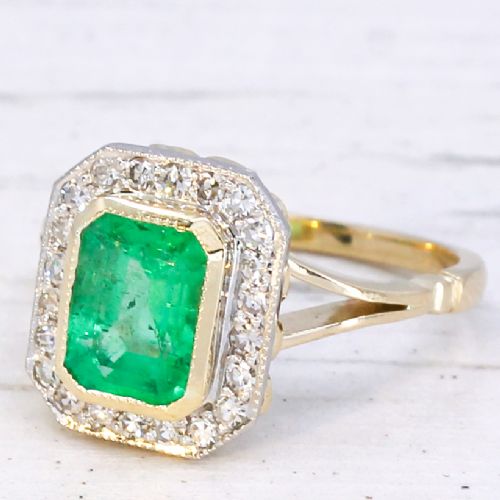

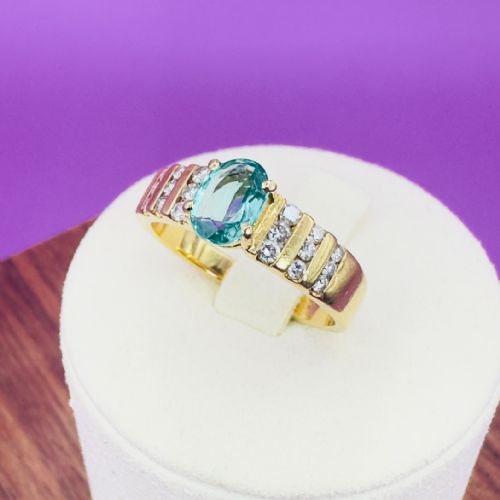

Emerald Cut Dress Ring
These emerald cut dress rings bring bold geometry and saturated colour to the hand, offering striking presence from mid-century and Art Deco workshops.
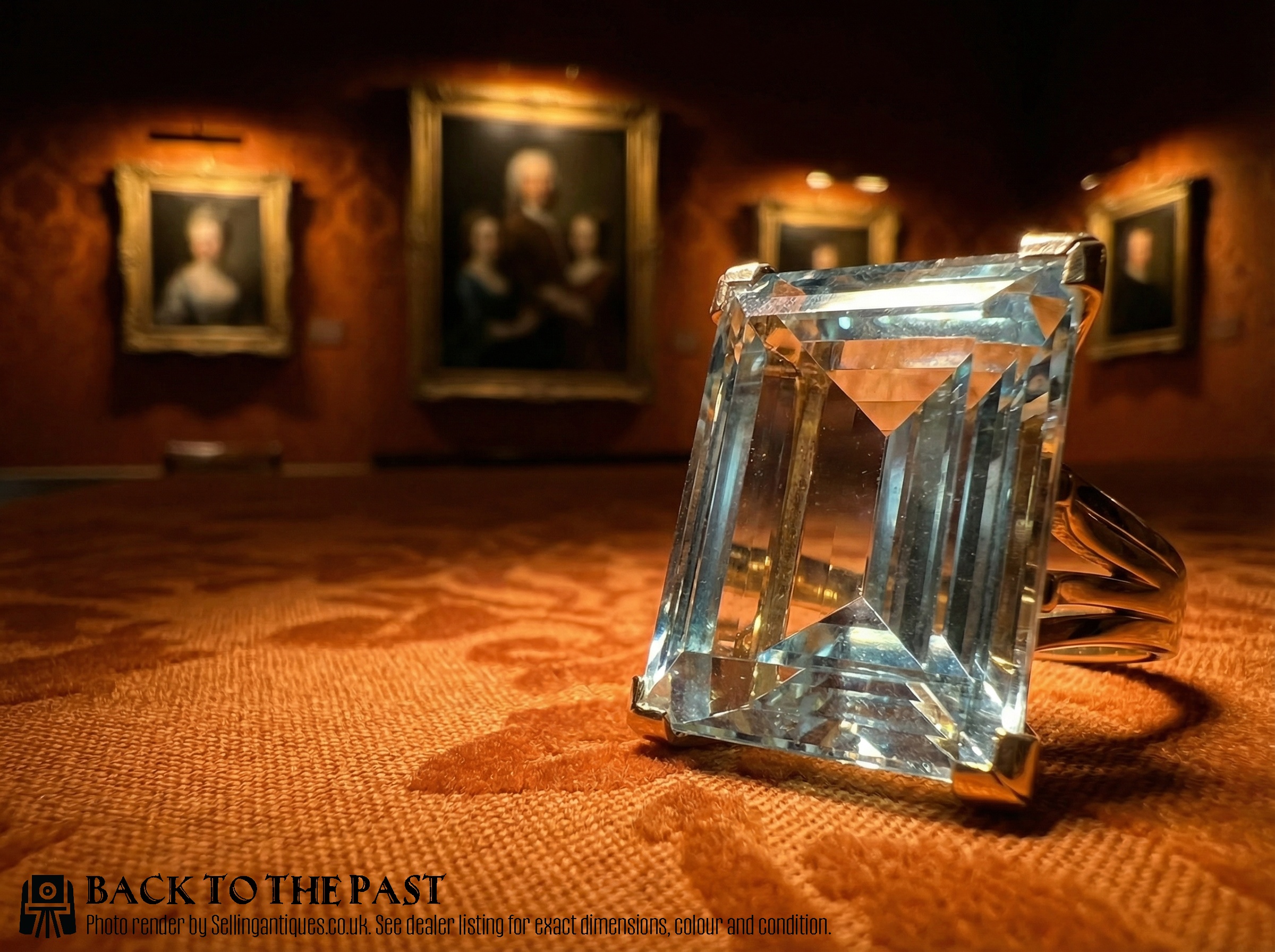
Emerald Cut Dress Ring
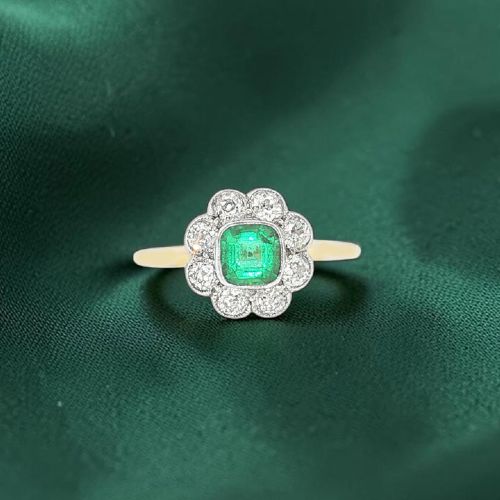
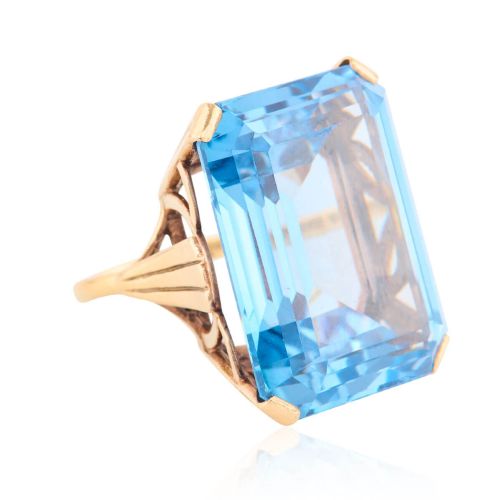
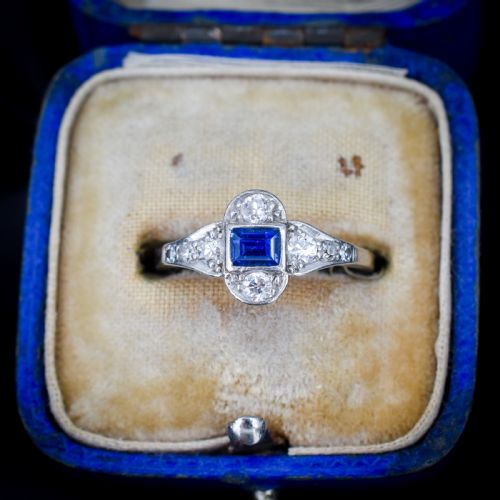
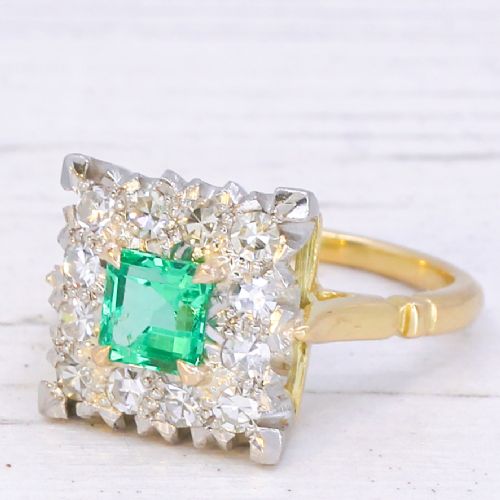
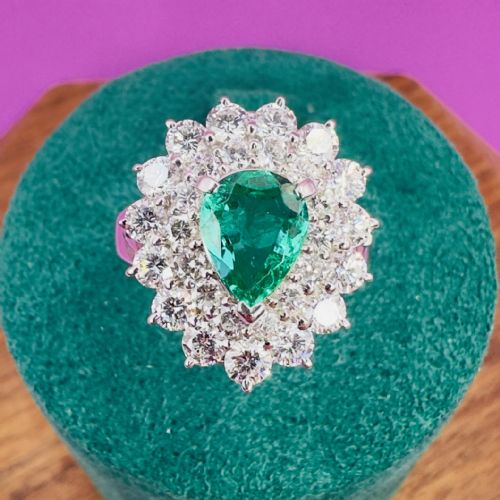
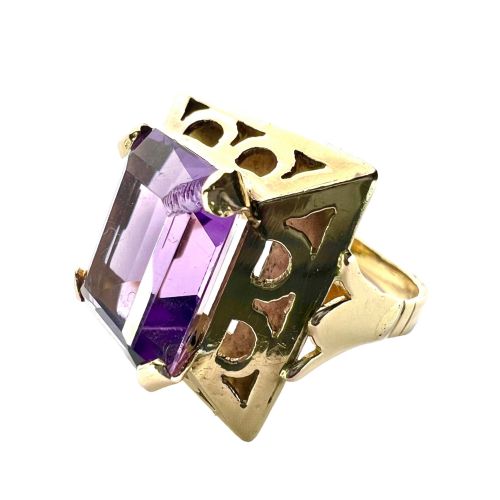
An emerald cut dress ring displays a distinct step-cut gemstone with characteristic cropped corners, creating a clean architectural silhouette on the hand. When you search for an emerald cut dress ring, you encounter substantial statement pieces designed primarily for evening wear rather than daily service.
The selections on this page span the 1920s through to the 1960s, encompassing Art Deco and Mid-Century styles in both yellow gold settings. Solitaire configurations dominate the inventory, showcasing large central stones held securely in simple or refined metal mounts.
The materials range from precious stones like natural sapphire, amethyst and aquamarine to vibrant glass paste. Each configuration emphasises the sheer scale of the central stone, often exceeding significant carat weights to create a dramatic visual impact.
How they were made
Goldsmiths constructed these rings using nine-carat and eighteen-carat yellow gold, shaping the metal to accommodate large step-cut stones. The prongs and bezels were shaped by hand to frame the rectangular facets securely while allowing maximum light entry.
The gemstones, including aquamarine, amethyst and sapphire, were precision cut with parallel facets to produce deep flashes of colour rather than scattered brilliance. Paste alternatives were carefully polished to mimic genuine stones with striking clarity and weight.
Emerald Cut Dress Ring Retail Price Guide 2026
Typical asking prices for emerald cut dress ring among the pieces listed under this phrase on Sellingantiques today, from the lower quarter to the upper quarter. They describe what is for sale here now, not the wider market.
Aquamarine stones in this selection reach up to a remarkable thirty-seven carats for serious presence.
What varies in quality
Quality rests in the optical purity of the central stone and the crispness of its step-cut facets. Superior examples display deep, uniform colour saturation across large carat weights without distracting internal inclusions.
The integrity of the gold work also dictates value, with finer pieces showing robust gauge metal and precise bezel or prong placement that maintains the sharp geometric lines characteristic of the cut.
The Emerald Cut Dress Ring Glossary
- Emerald cut
- A rectangular gemstone cutting style featuring parallel facets and cropped corners that emphasise clarity and depth. This geometry produces a distinctive hall of mirrors effect within the stone.
- Solitaire
- A jewellery setting featuring a single central gemstone without accompanying accent stones. This minimalist approach draws full attention to the scale and colour of the main gem.
- Paste
- Hand-cut and polished lead glass utilised historically to imitate precious gemstones. High-quality paste exhibits considerable weight and sharp facet junctions.
- Carat
- The unit of weight utilised for gemstones, directly relating to the physical scale of the stones found in these rings. Larger carat weights increase the visual dominance of the piece on the hand.
Emerald Cut Dress Ring: Frequently Asked Questions
What is an emerald cut dress ring?
An emerald cut dress ring is a statement piece featuring a rectangular gemstone with step-cut facets and cropped corners, designed to stand out on the hand.
These pieces typically date from the Art Deco period through the mid-twentieth century and utilise substantial stones like aquamarine, amethyst, sapphire or glass paste.
How do I wear these rings?
These rings suit evening wear and special occasions because their large stones and bold geometric shapes draw immediate attention to the hand.
Due to their significant carat weights and protruding settings, it is sensible to remove them during rigorous physical activities to protect the gold and stones.
What metals are used?
The settings utilise nine-carat and eighteen-carat yellow gold, providing a warm metallic contrast to the cool blues and purples of the gemstones.
Gold purity marks often appear inside the shank, indicating the specific alloy standard employed by the workshop.
How do I date these rings?
Dating relies on stylistic markers such as the sleek geometry of 1920s Art Deco pieces or the bolder, cleaner lines of 1950s and 1960s Mid-Century modern designs.
Stone cuts, setting techniques and accompanying hallmarks further clarify the specific decade of manufacture.