


Embroidered Footstool
An embroidered footstool brings traditional textile art and solid timber craftsmanship together, offering a practical seat or footrest with period character.
Embroidered Footstool
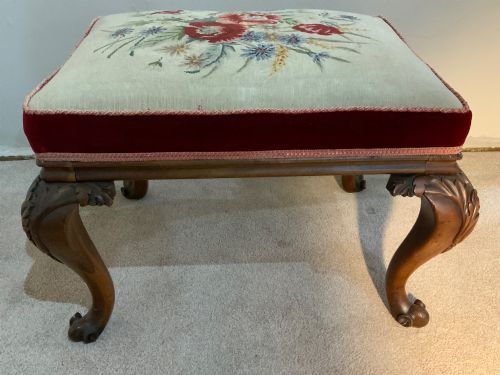
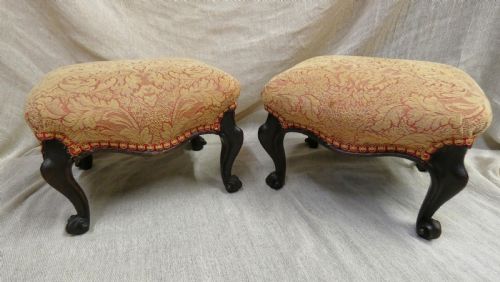
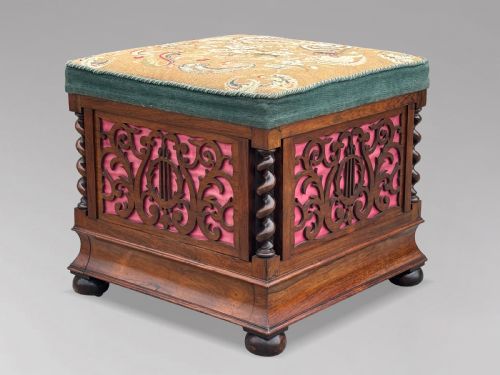
When you search for an embroidered footstool, you are looking at low seating designed to support the feet or serve as a low stool by a fireside. The forms on this page span compact dressing table stools, long ottomans, piano stools and fireside footstools.
The pieces you are most likely to meet here date from the Victorian period through to the early twentieth century, alongside earlier examples and revivals. Timber frames support various textile covers worked in wool, tapestry and needlepoint.
Makers shaped these supports in styles ranging from plain Queen Anne Revival and Chippendale style lines to ornate Victorian Rococo Revival and Swedish Empire forms. The resulting seats combine useful domestic function with decorative textile panels.
What varies in quality
Quality separates pieces by the tightness and complexity of the needlework and the selection of timber for the frame. Dense, well-preserved wool tapestry and neatly stitched needlepoint indicate careful execution.
Solid timber frames with carved details or well-turned legs demonstrate better cabinet-making standards than simpler constructions. The integration between the upholstered textile cover and the underlying wood frame determines the overall integrity of the piece.
Listings feature wood varieties including mahogany, walnut, oak, birch and rosewood paired with wool needlepoint and tapestry.
The Embroidered Footstool Glossary
- Needlepoint
- A type of counted thread embroidery stitched on canvas mesh, commonly found covering nineteenth-century footstools. It provides a firm, durable surface suitable for daily weight.
- Tapestry
- A thick textile woven on a loom or worked by hand in wool, often depicting floral or figurative scenes. It adds texture and colour to fireside seating.
- Cabriole leg
- A furniture leg that curves out and then in, resembling an animal's leg, typical of Queen Anne and Chippendale styles. This form gives traditional stools an elegant silhouette.
- Ottoman
- A low upholstered seat or footstool without a back or arms, designed for resting feet or sitting. Larger versions accommodate extended seating arrangements in reception rooms.
Embroidered Footstool: Frequently Asked Questions
How do I clean an embroidered footstool?
Surface dust can be removed gently using a soft brush or a low-suction vacuum attachment fitted with a textile guard. Avoid using harsh chemical cleaners or excess water on historic wool and fabric covers.
For stubborn marks, consult a professional textile conservator who understands nineteenth-century threads and canvas foundations. Protecting the wool from direct sunlight prevents the dyed colours from fading over time.
Are these footstools strong enough to sit on?
Most of these pieces were built as sturdy domestic seating, designed to support the weight of a person sitting or resting their feet. Solid timber frames joined with traditional woodworking techniques provide reliable daily support.
Delicate antique frames or smaller dressing stools function best as footrests or occasional seats rather than heavy daily chairs. Checking the firmness of the frame joints helps determine the load capacity of each individual piece.
How do I date a Victorian footstool?
Dating relies on examining the timber species, the style of the legs, and the construction methods used inside the frame. Victorian pieces frequently utilise mahogany or walnut alongside characteristic revival ornamentation.
Needlework patterns and colour palettes also offer clues to the decade of manufacture, shifting from muted botanical designs to bolder floral arrangements later in the nineteenth century.
Can I use an antique footstool every day?
These functional household items remain well-suited to everyday domestic use beside armchairs, sofas or dressing tables. Placing them on even flooring prevents unnecessary strain on the wooden joints and legs.
Regular rotation and careful placement away from direct heat sources ensure the wood and wool textile covers survive in good condition for years to come.