

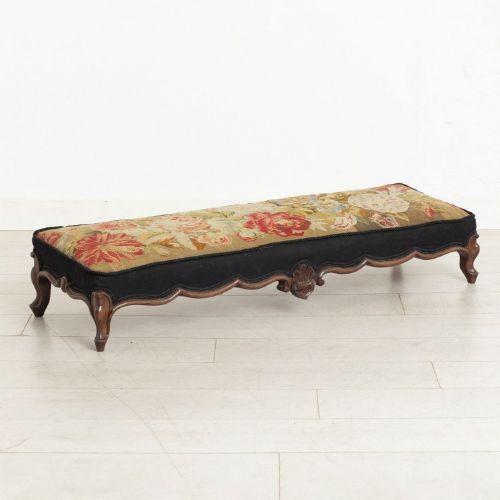


Brown Cabriole Stool
A brown cabriole stool brings centuries of graceful seating into a room, combining curved wooden supports with tactile upholstery.
Brown Cabriole Stool
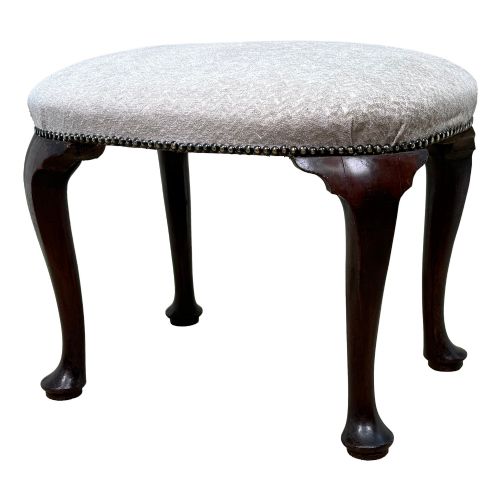
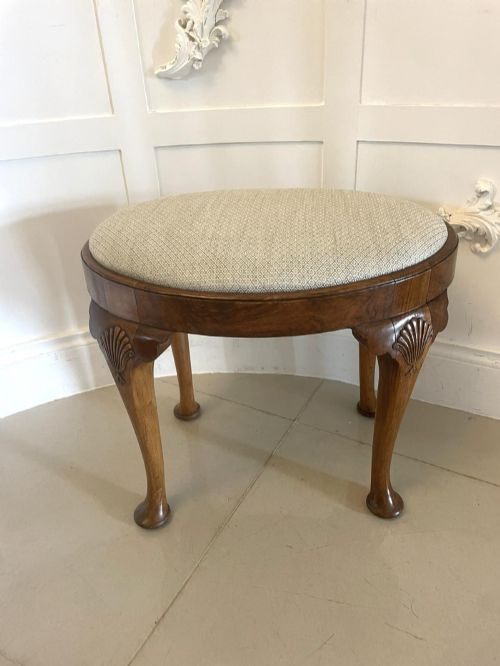
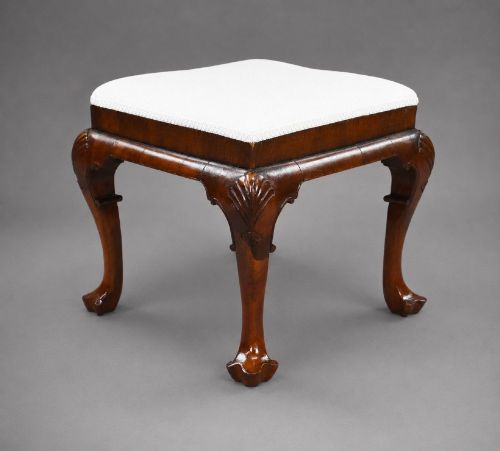
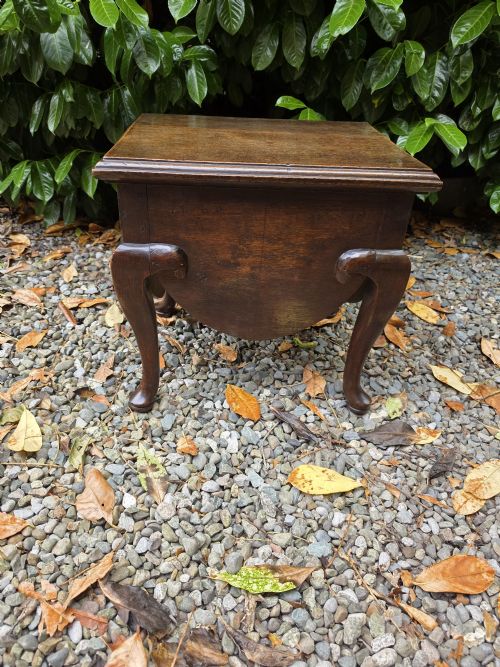
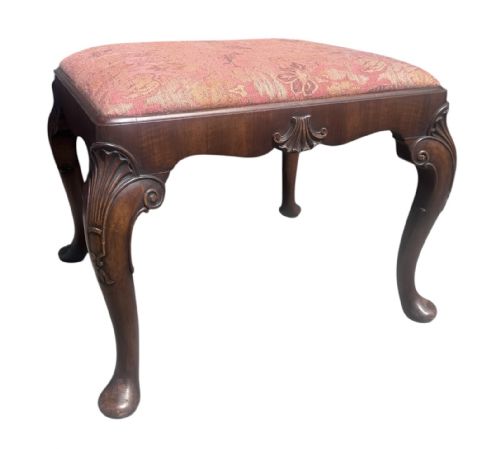
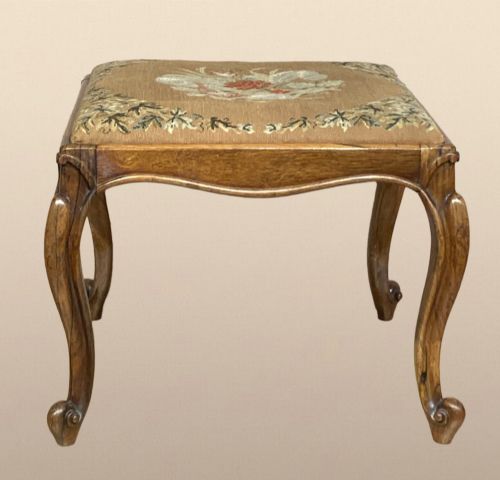
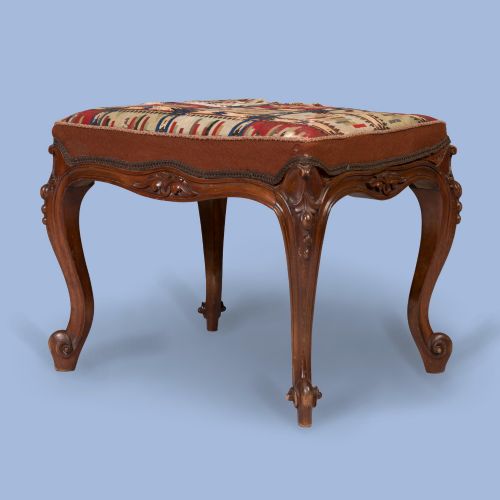
A brown cabriole stool centres on wooden frames shaped with characteristic double-curved legs, appearing in forms ranging from low footstools to piano seats and dressing stools. These pieces draw heavily on 18th-century forms, particularly through Queen Anne and George I revivals alongside period originals.
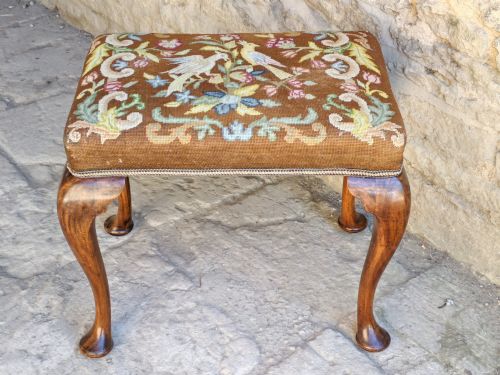
The materials visible across these listings rely predominantly on rich timbers like walnut and mahogany paired with varied textiles, wool, leather, and tapestry. Buyers encounter items spanning from the 18th century through Victorian and Edwardian eras into early 20th-century reproductions.
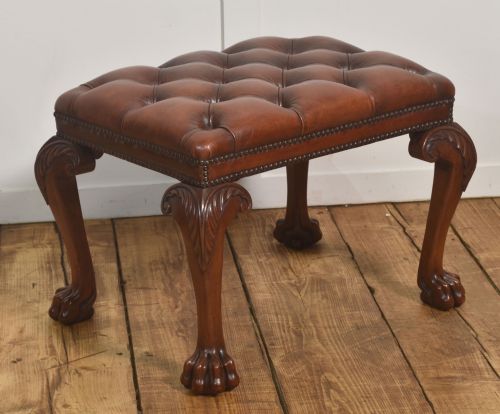
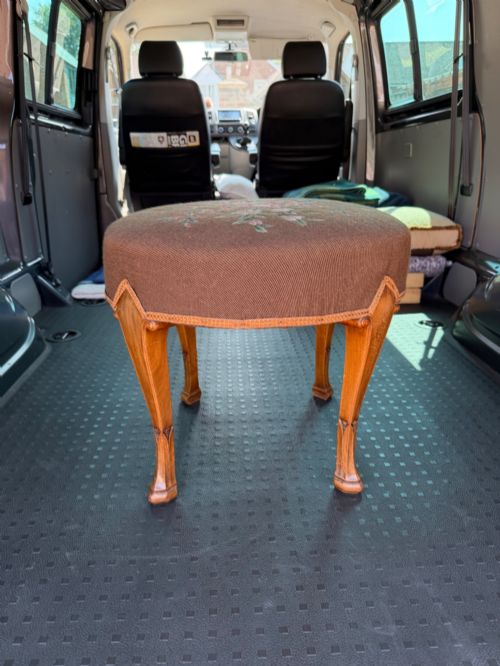
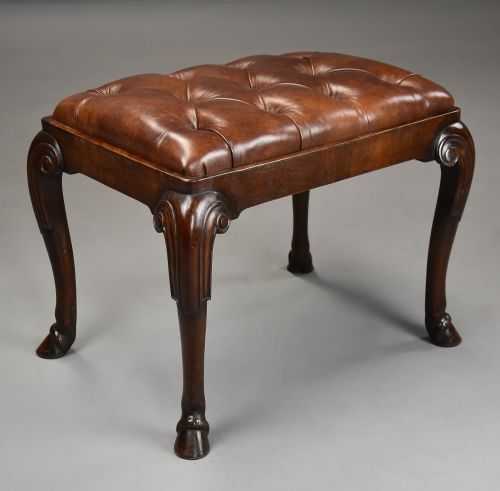
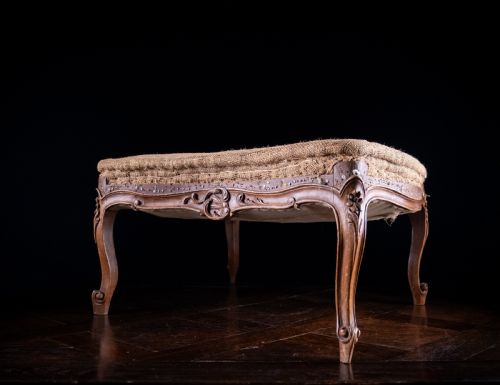
Most examples favour compact proportions suited for placement beside chairs, dressing tables, or pianos. The unifying feature remains the shaped leg terminating in scroll, pad, or claw-and-ball feet beneath upholstered tops.
Materials and construction methods
Makers fashioned the structural frames from dense hardwoods, primarily selecting walnut and mahogany for their strength and deep colouration. These timbers allowed craftsmen to carve intricate contours along the knees and ankles of the legs.
Upholstery techniques applied textiles, leather, tapestry, and wool directly over webbing or stuffing, occasionally retaining original fabric coverings. Brass accents occasionally appeared in hardware fittings or adjustable mechanisms on specialised piano stools.
Some adjustable piano stools from the 19th century still retain their original winding mechanisms for height.
Distinctions in craftsmanship
Quality reveals itself in the crispness of the timber carving and the fluidity of the leg curves rather than mere age. Superior examples demonstrate balanced proportions and seamless joinery where the rail meets the cabriole leg.
Morris & Co.
The Brown Cabriole Stool Glossary
- Cabriole leg
- A furniture leg that curves outward at the knee and inward at the ankle, mimicking animal limbs. This form became a defining characteristic of early 18th-century design.
- Queen Anne style
- A design movement originating in the early 18th century and revived later, noted for restrained ornament and curved lines. Walnut was the preferred timber for this aesthetic.
- George I period
- The era spanning from the early to mid 18th century, associated with early walnut cabriole furniture. Pieces from this time display refined joinery and carved shell motifs.
- Piano stool
- A seat designed for keyboard players, often featuring an adjustable height mechanism. Some variants include duet lengths for multiple players.
Brown Cabriole Stool: Frequently Asked Questions
How do I date a brown cabriole stool?
Dating relies on examining the timber species, construction joints, and stylistic revival cues. Early 18th-century originals exhibit hand-cut joinery and dense, aged walnut grain, whereas 19th-century revivals often utilise machine-sawn framing components.
Secondary indicators include the wear patterns on the feet and the method used to secure the upholstery webbing. Comparing these details against known period tolerances helps clarify whether a piece is an 18th-century antique or a later Edwardian interpretation.
What is the difference between Queen Anne and Chippendale styles?
Queen Anne design favours smooth, unadorned surfaces with simple pad feet and flowing cabriole curves. Walnut dominates this earlier aesthetic, creating a warm and understated silhouette.
Chippendale work introduces carved enrichment such as acanthus leaves, fretwork, and claw-and-ball feet executed primarily in mahogany. These later 18th-century interpretations and subsequent revivals offer a more robust and heavily ornamented appearance.
Were these stools used as footstools or seats?
Historic listings demonstrate that these items served multiple domestic functions depending on their scale and height. Low variants functioned strictly as footstools placed before firesides or armchairs.
Taller iterations served as dressing table stools, piano seats, or compact window benches. Their versatile sizing made them practical additions to various rooms throughout the house.
How should I care for antique upholstery?
Preserving historic fabric requires gentle vacuuming with a soft brush attachment to remove dust without stressing fragile fibres. Direct sunlight should be avoided to prevent fading in delicate wools and tapestries.
Leather surfaces benefit from occasional specialist conditioning to maintain suppleness. For original textiles, professional conservation advice ensures the longevity of fragile historic coverings.