
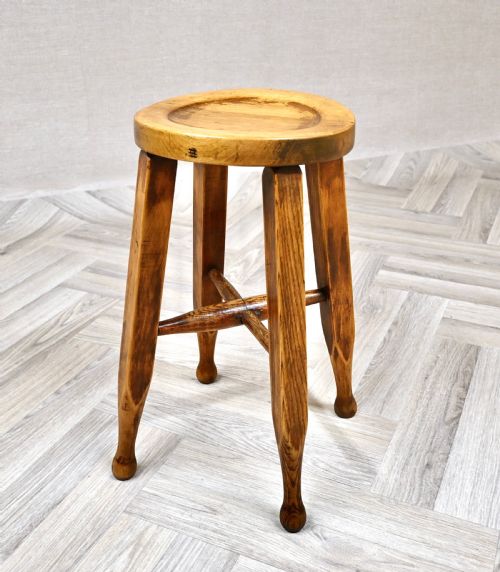
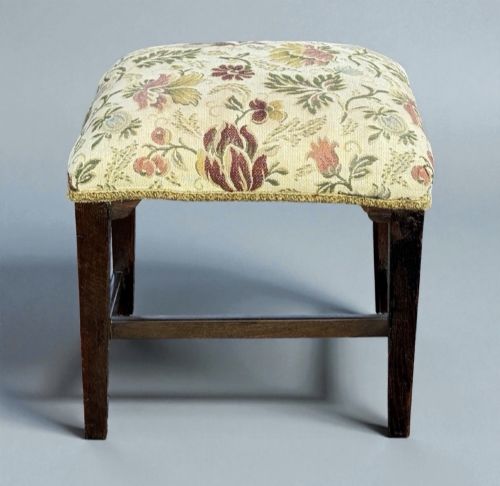


Carved Timber Footstool
These carved timber footstools offer solid construction and period character, bringing practical low seating and traditional craftsmanship to any room.
Carved Timber Footstool
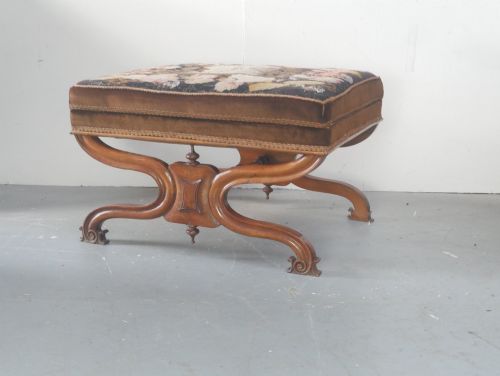
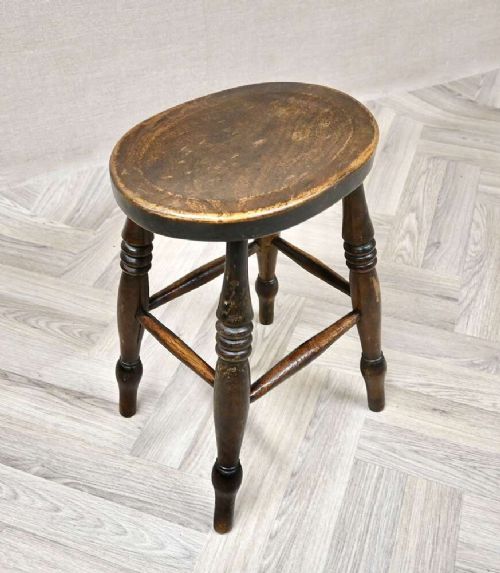
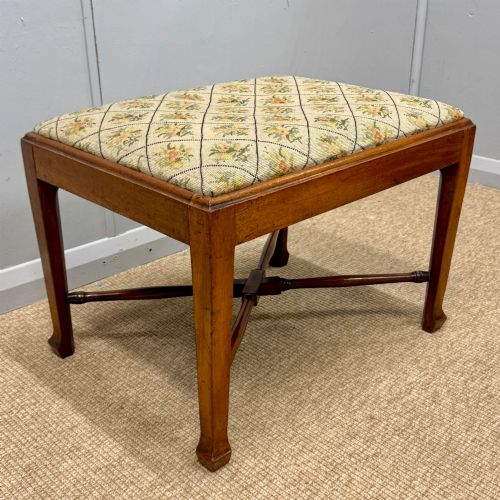
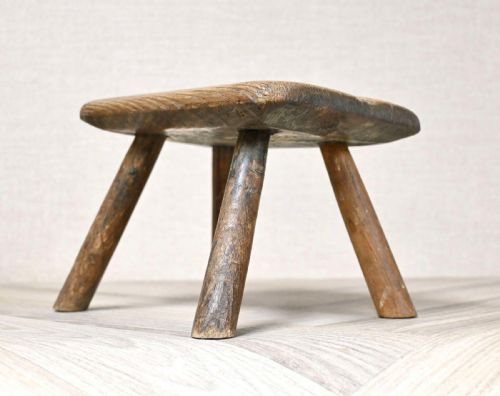
A carved timber footstool provides low seating or a rest for the feet, shaped from woods such as oak, walnut, mahogany, and teak. The examples found here span several centuries, reaching from the eighteenth century through the Victorian period and into the nineteen-twenties and thirties.
Buyers will encounter various forms in this selection, including primitive country pieces, Scottish Baronial designs, and George III styles. Many incorporate upholstered tops in velvet, tapestry, or textile fabrics, while others display bare sculpted wooden seats.
The assortment ranges from diminutive vernacular items to large hearth stools and dressing table seats. Simple turned wooden legs sit alongside elaborate carved frames reflecting regional and period tastes.
How they were made
Cabinet makers and vernacular joiners utilised native and imported hardwoods like oak, walnut, mahogany, and teak to build these frames. Joints were typically pegged, mortised, or turned to ensure the load-bearing strength required for daily use.
Surface ornamentation relied on hand carving, painted finishes, and wood turning, often paired with woven rattan or textiles. Upholstered variants utilised traditional stuffing techniques secured beneath fabrics such as velvet, tapestry, and printed cotton.
Styles represented include Scottish Baronial, Georgian, Art Deco, Primitive Country, and Victorian Country.
What varies in quality
The standard of a carved timber footstool rests on the crispness of the hand carving and the integrity of the timber joints. Superior examples display thoughtful proportions and dense hardwoods that withstand centuries of use.
Finer pieces maintain their original upholstery foundations and finish, whereas simpler vernacular versions rely on robust utility and straightforward joinery without decorative flourishes.
The Carved Timber Footstool Glossary
- Hearth stool
- A long, low seat designed to sit near an open fireplace for warmth. These pieces often feature generous proportions and sturdy wooden frames.
- Vernacular
- Objects built by local tradesmen using regional traditions rather than high-style metropolitan designs. This approach emphasises practical construction and available local materials.
- Cross stretcher
- Wooden rails connecting the legs below the seat to provide extra structural stability. They prevent the legs from wobbling under heavy downward pressure.
- Tapestry
- A heavy woven textile featuring pictorial or geometric designs used historically for upholstery. It adds both colour and tactile texture to the top of a stool.
Carved Timber Footstool: Frequently Asked Questions
What periods do these stools cover?
The selection includes pieces dating from the eighteenth century, the Georgian era, and the Victorian period, extending onward into twentieth-century twentieth-century designs from the nineteen-twenties and thirties.
Each period brings distinct stylistic traits, ranging from early country vernacular forms to decorative Revival pieces.
Which woods were used to build them?
Makers relied on a range of timbers including oak, walnut, mahogany, teak, and various hardwoods. Local woods often defined country pieces, while imported timbers appeared in formal town furniture.
Surface finishes vary from polished wood grain to painted coatings and upholstered textile tops.
How were these stools used historically?
They served primarily as movable seating near hearths, dressing tables, and windows. Their low profile made them practical for resting feet or providing an accessible seat in tight spaces.
Many were built to withstand heavy daily use in domestic settings across both rural and urban homes.
Are the upholstery fabrics original?
Upholstery on older pieces has frequently been replaced during repairs or restoration over the decades. Certain items retain period textiles such as tapestry or velvet, while others feature newer fabrics.
Examining the underside reveals whether webbing and stuffing materials date to the original period of manufacture.