




Embossed Silver Jewellery Box
These pieces of embossed silver jewellery box offer intricate metalwork and lasting storage for small valuables from the Victorian and Edwardian eras.
Embossed Silver Jewellery Box
An embossed silver jewellery box serves as a decorative and practical repository for rings, trinkets, and dressing table accessories. Buyers search for this phrase to acquire small containers that display elaborate metal relief work from the nineteenth and early twentieth centuries.
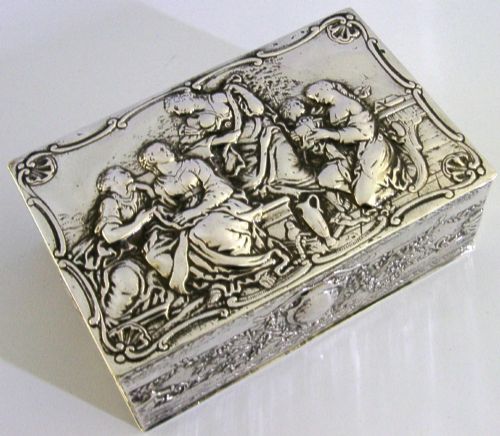
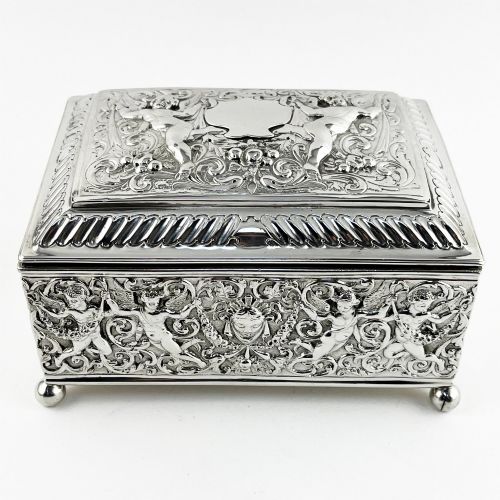
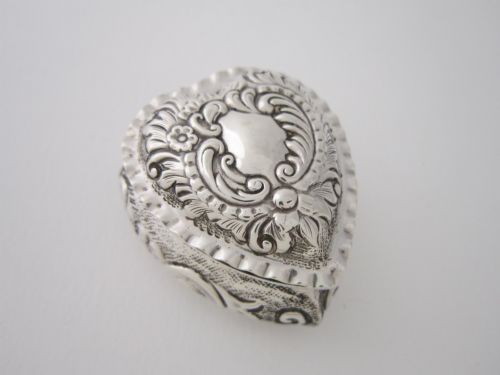
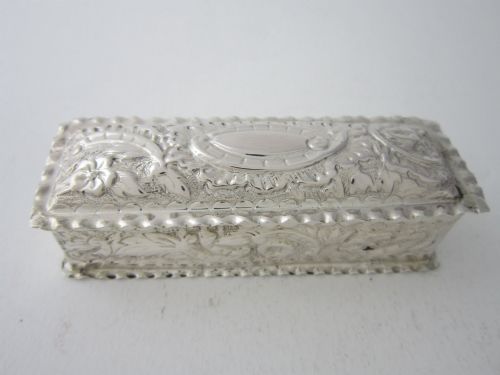
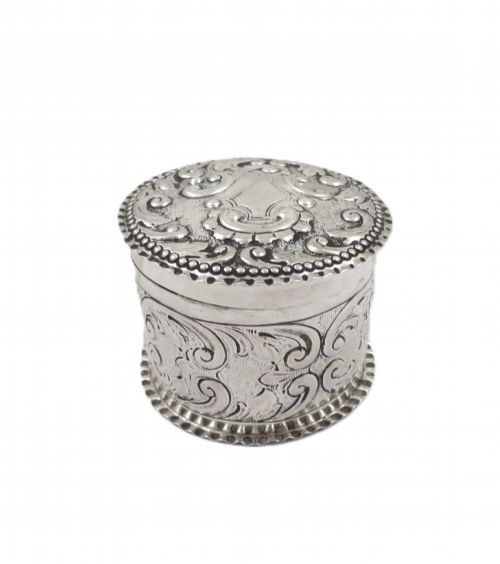
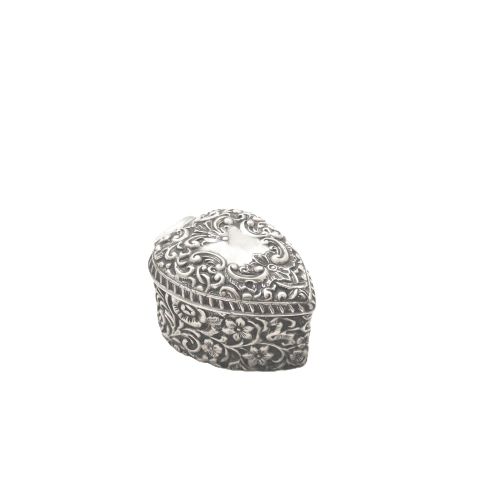
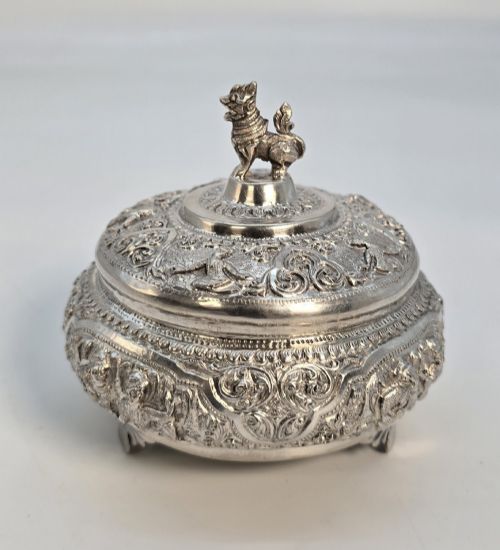
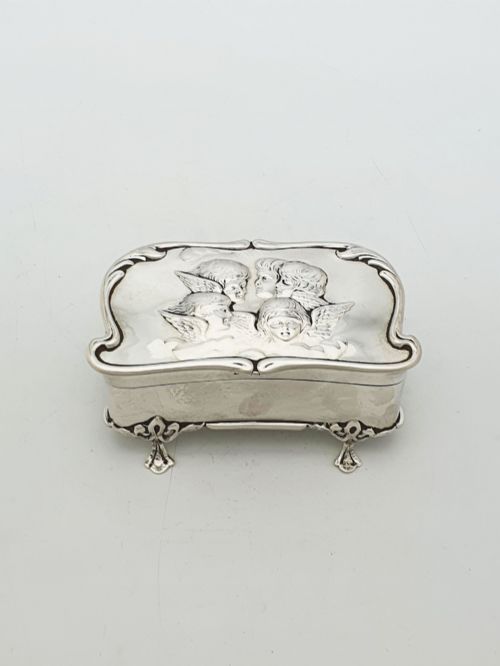
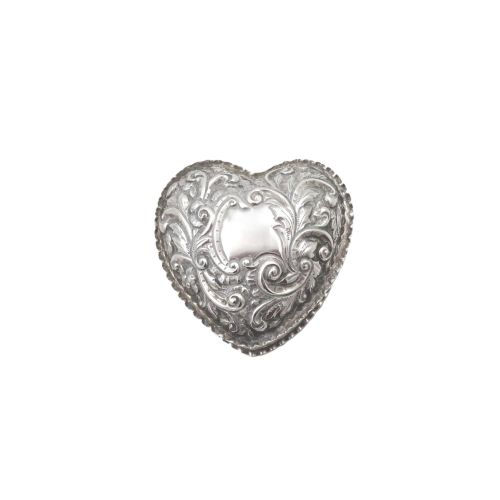
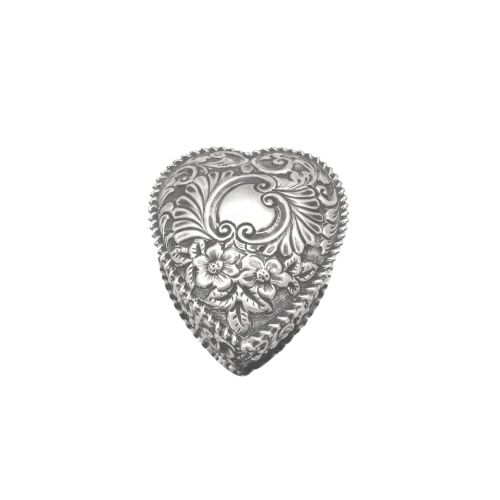
The pieces appearing on this page most frequently take the form of Victorian and Edwardian sterling silver trinket boxes, heart-shaped boxes, and larger jewellery caskets. Alongside these standard English forms, the selection includes Anglo-Indian and 19th Century Indian silver jars, pandan boxes, and German Hanau table boxes.
Makers and manufacturers ranging from William Comyns to William Neale and Sons produced these items in varied shapes including oval, circular, and heart designs. Interiors often feature gilt washes or simple linings to protect stored valuables.
How they were made
Silversmiths utilised sterling silver, solid silver, and silver plate, frequently employing embossing and chasing techniques to raise patterns from the metal sheet. This process created three-dimensional floral, scroll, and figural designs across the lids and sides of the boxes.
Many items combine silver with other materials such as cut glass for the body of vanity pots and trinket jars, paired with embossed silver covers. Gilt interiors, including silver gilt and gold gilt finishes, were applied to the inside of solid silver boxes for added contrast and luxury.
Heart-shaped boxes proved immensely popular for romantic tokens, ensuring many survive with their original gilt linings intact.
What varies in quality
The depth and crispness of the embossed detail distinguish standard domestic wares from exceptional pieces. Relief work executed by renowned makers such as William Comyns often displays superior definition in scrollwork and figural scenes compared to unmarked or generic production.
Material substance and structural complexity also determine the standing of a box. Heavy gauge solid silver, substantial weight, and fitted gilt interiors indicate higher manufacturing ambition than lighter silver-plated or silvered copper alternatives.
William Comyns·William Neale and Sons·H Matthews
The Embossed Silver Jewellery Box Glossary
- Embossing
- A metalworking technique where a design is raised from the reverse side using hammers and punches to create relief decoration on the surface.
- Sterling silver
- An alloy containing 92.5 percent silver by mass, which standard British and international makers utilised for high-grade boxes and caskets.
- Silver gilt
- Silver that has been coated with a thin layer of gold on its interior or exterior surfaces to provide a rich dual-tone appearance.
- Chasing
- A companion technique to embossing where metal is pushed inwards from the front to sharpen and refine the details of a raised design.
- Pandan box
- A traditional container originating from South Asia, often fashioned from silver or silver plate, used historically for carrying betel leaf preparations and aromatic spices.
Embossed Silver Jewellery Box: Frequently Asked Questions
What were embossed silver jewellery boxes used for?
These boxes served primarily on dressing tables and boudoirs to hold rings, brooches, pins, and delicate personal trinkets.
Their decorative embossed surfaces also made them suitable as display pieces on side tables and mantelpieces during the Victorian and Edwardian periods.
How can I tell a Victorian box from an Edwardian one?
Dating relies heavily on hallmarks stamped into the silver, which indicate the assay office, date letter, and maker's mark.
Stylistic shifts also help differentiate the eras, as Victorian pieces frequently feature heavy Neo-Rococo scrollwork while Edwardian examples often display lighter garland and floral motifs.
Why are some interiors gold coloured?
Many solid silver boxes feature a gilt interior, which involved applying a thin layer of gold wash over the silver.
This technique protected the silver from tarnishing when in contact with cosmetics or bodily oils from stored jewellery.
What is the difference between solid silver and silver plate?
Solid silver pieces are constructed entirely from precious silver alloy throughout their structure, meeting official standard fineness requirements.
Silver-plated items consist of a base metal core covered with a thin outer layer of silver.