
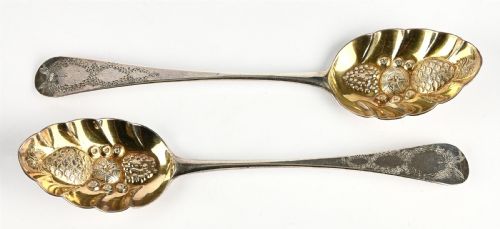


Embossed Fruit Spoons
Embossed fruit spoons are decorative silver utensils from the Georgian and Victorian eras that bring traditional elegance to modern dessert tables.
Embossed Fruit Spoons
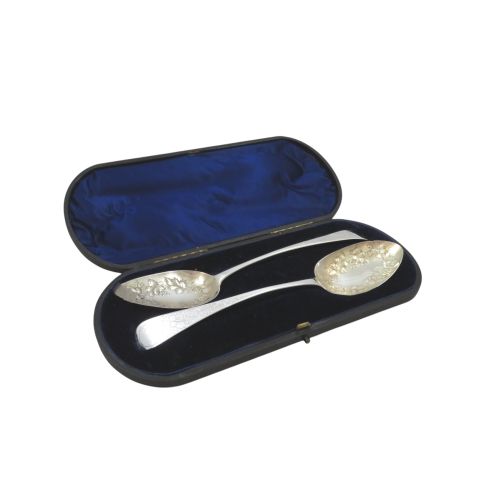
Embossed fruit spoons encompass a range of decorative serving utensils primarily originating from the Georgian and Victorian periods, often designed specifically for serving berries, fruit, or dessert. These pieces frequently appear as matched pairs or small sets housed in fitted cases lined with velvet or silk.
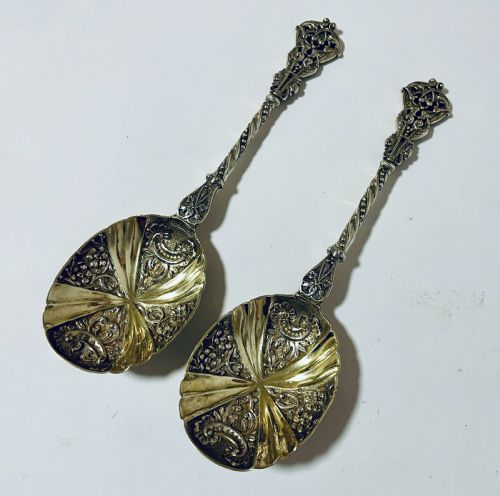
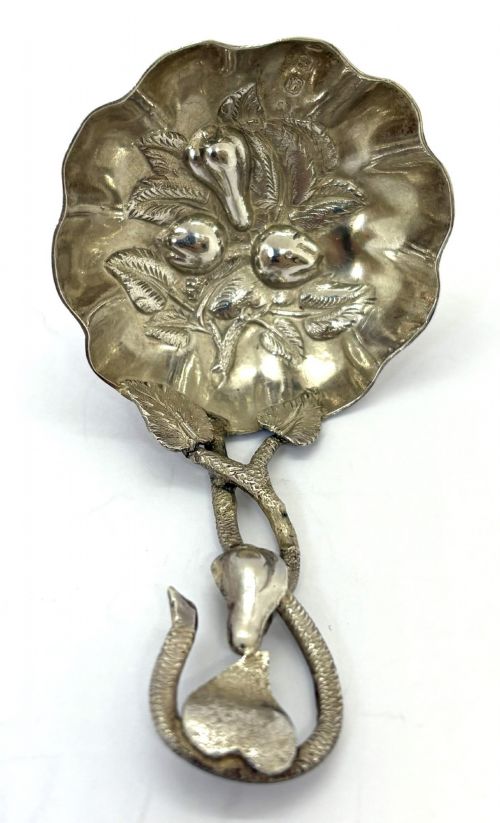
The items found on this page span the late eighteenth and nineteenth centuries, featuring distinct styles such as Georgian and Flemish Baroque. Buyers will encounter various configurations including berry spoons, caddy spoons, and larger serving utensils intended for formal dining tables.
How they were made
These items were constructed from sterling silver and silver gilt, utilising traditional silversmithing techniques to shape the bowls and handles. Artisans applied detailed surface work, including piercing and engraved handles, to achieve the ornate finishes characteristic of the period.
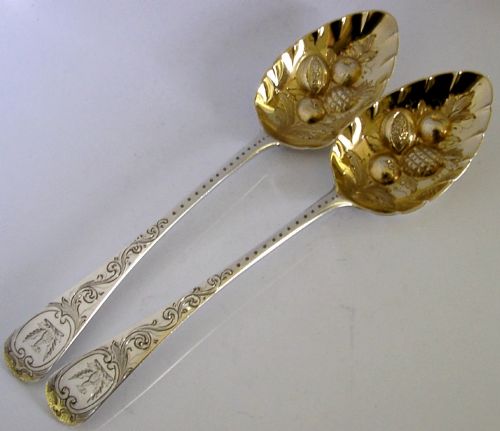
Many examples incorporate parcel-gilt treatments or silver-gilt surfaces, adding a dual-tone contrast between the bright silver body and the rich gilt bowl. Fitted presentation cases often combined wooden structures with interior linings of silk and velvet to protect the metal.
Listings feature sterling silver and silver-gilt pieces spanning the Georgian, Victorian, and late eighteenth-century periods.
What varies in quality
Quality in these pieces depends heavily on the crispness and depth of the embossed decoration upon the bowl and the execution of any engraved details along the handle. Superior examples maintain sharp relief without excessive thinning of the silver from enthusiastic historic cleaning.
The integrity of original fitted cases, where present, alongside clear hallmarks indicating maker and year, contributes significantly to the standing of a set. Well-preserved gilding on silver-gilt pieces also distinguishes finer specimens from heavily worn alternatives.
Peter & Anne Bateman·William Chawner II
The Embossed Fruit Spoons Glossary
- Berry spoon
- A large serving spoon, typically Georgian or Victorian, featuring heavily embossed and chased fruit designs added to the bowl at a later date or during manufacture. These spoons were specifically utilised for serving soft fruits and berries.
- Silver gilt
- Sterling silver that has been coated with a thin layer of gold, creating a rich golden finish over the silver base. This technique was frequently applied to the interior bowls of dessert and fruit spoons.
- Hallmark
- An official stamp applied by an assay office indicating the purity of the metal, the year of manufacture, and the maker's mark. These marks provide definitive evidence of age and origin.
- Caddy spoon
- A small spoon designed for measuring and serving loose tea leaves from a caddy. They often share stylistic embossing with contemporary fruit spoons.
Embossed Fruit Spoons: Frequently Asked Questions
How do I care for silver fruit spoons?
Care involves gentle washing in warm soapy water followed by thorough drying with a soft cloth to preserve the metal finish. Avoid harsh abrasive cleaners that can wear down the embossed relief and fine engraving.
Store them in tarnish-resistant cloth or their original fitted cases lined with velvet or silk when not in use.
How can I tell Georgian from Victorian spoons?
Georgian spoons typically date from the late eighteenth or early nineteenth centuries, displaying specific assay office marks and handle forms characteristic of that reign. Victorian pieces reflect the heavier, more ornate aesthetic prevalent later in the nineteenth century.
Examining the style of the embossing and the hallmarks provides the most reliable guide to the exact period of manufacture.
Were these spoons used only for fruit?
While primarily termed berry or fruit spoons and designed for dessert service, their large bowls made them versatile for various serving tasks. They frequently appeared alongside trifle sets and other ceremonial table dishes.
Some smaller variants, such as caddy spoons, served specialised functions like measuring tea.