

Elm Spindle Armchair
An elm spindle armchair offers honest country craftsmanship, combining a sturdy wooden seat with slender uprights for daily comfort.
Elm Spindle Armchair
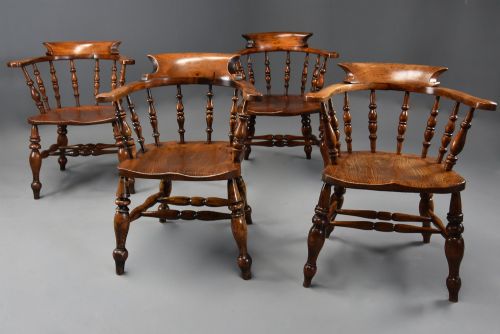
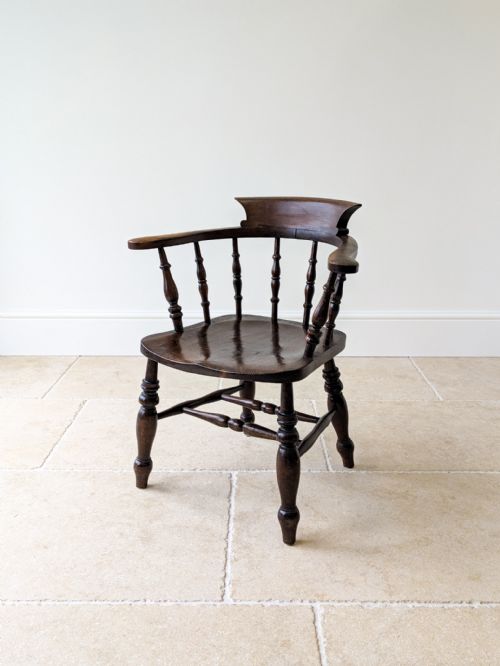
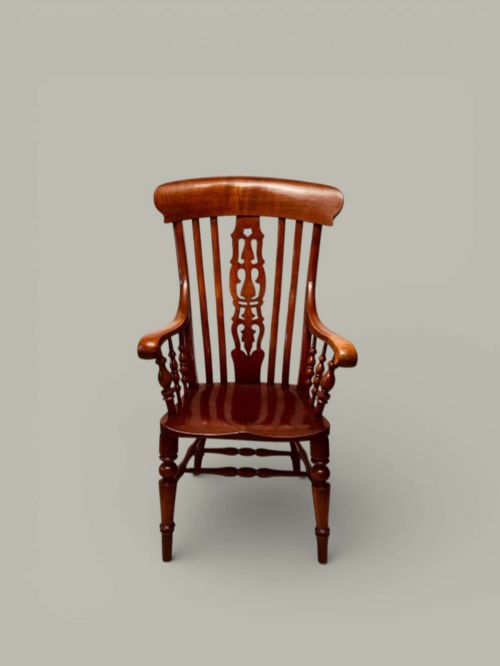
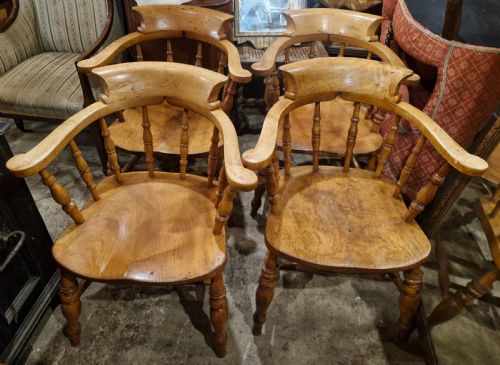
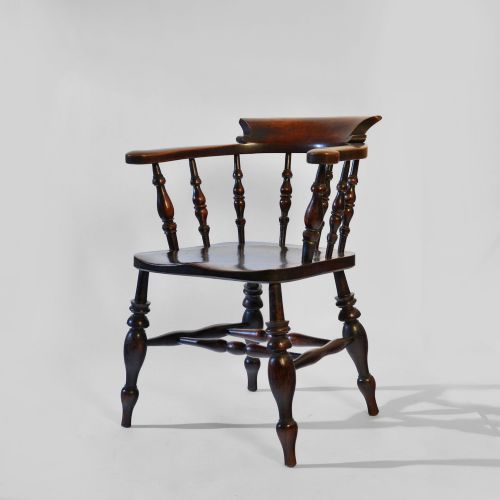
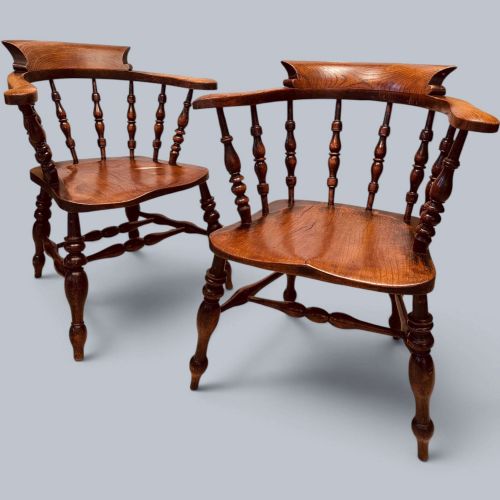
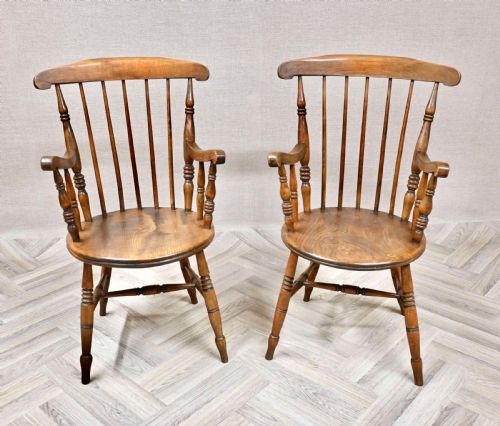
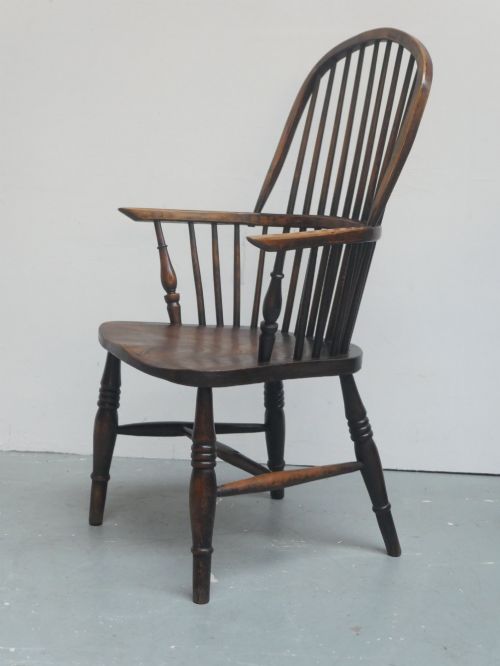
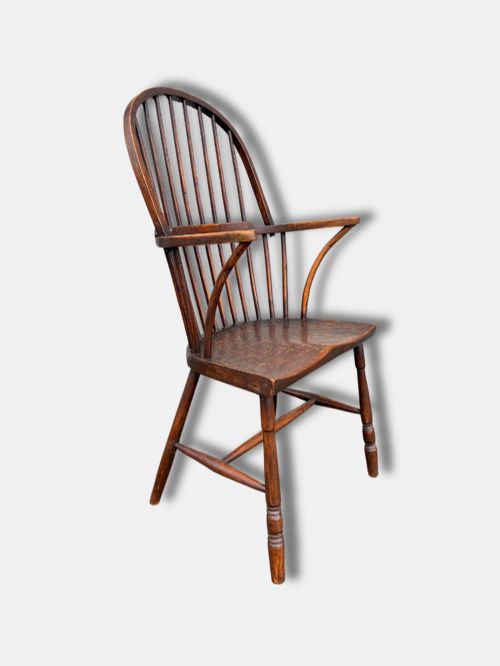
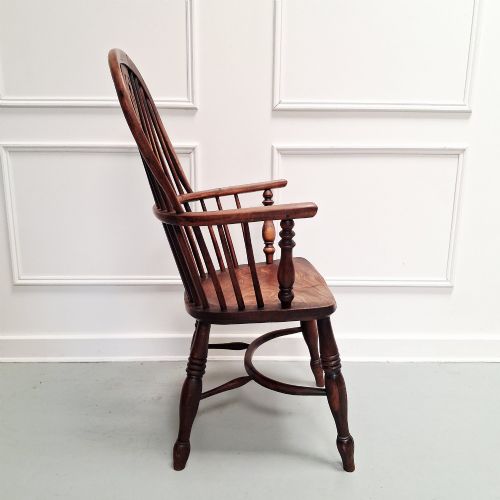
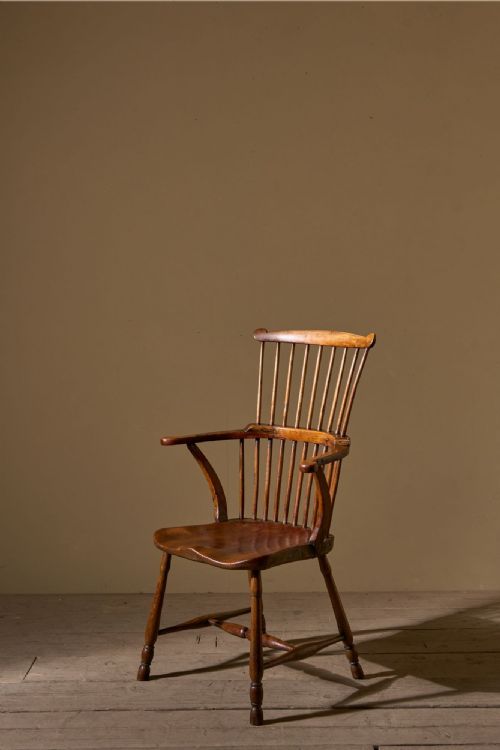
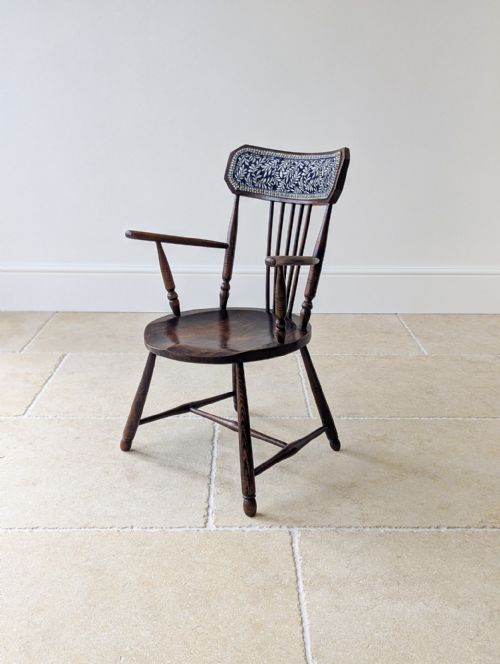
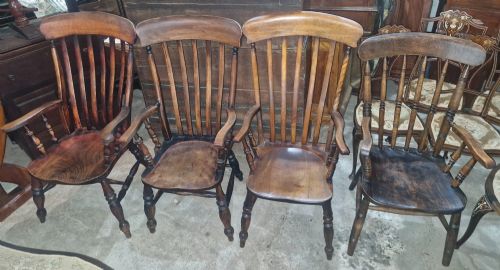
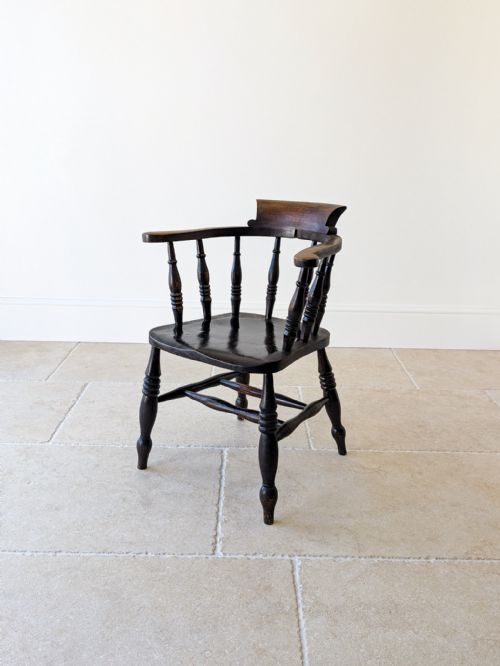
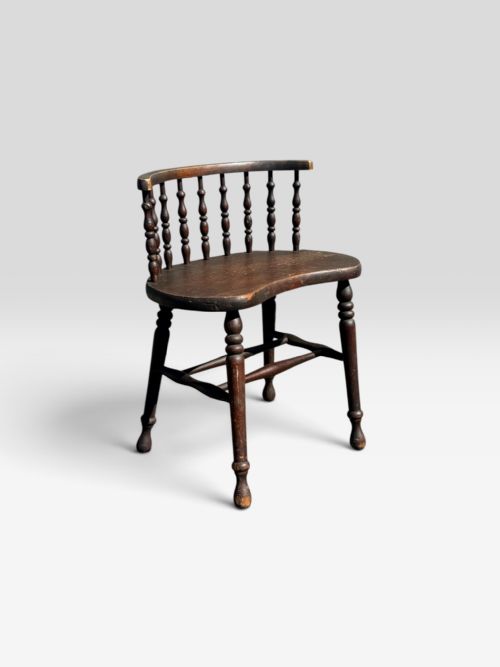
An elm spindle armchair is a traditional country seat built primarily for utility and endurance in rural homes. When searching for an elm spindle armchair, buyers encounter various regional forms spanning the Georgian, Victorian, and Edwardian eras, including Windsor chairs, captain's chairs, and smoker's bows.
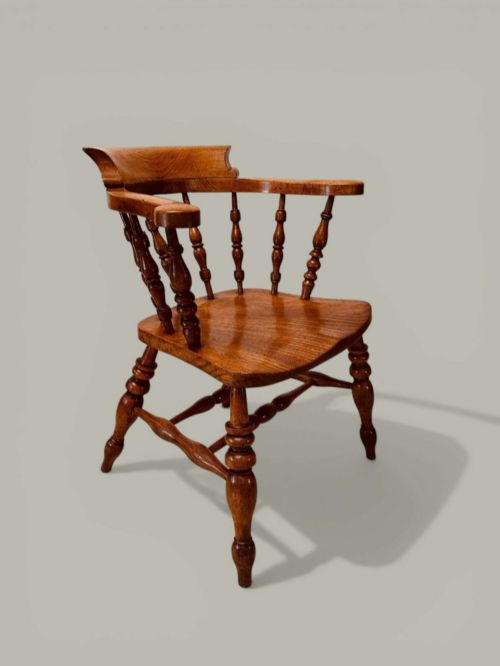
The construction typically relies on a solid sculpted elm seat that receives turned legs and a supportive backrest made of spindles. These rustic armchairs served diverse roles in farmhouses, cottages, and studies, reflecting vernacular English design traditions rather than formal courtly styles.
How they were made
Maker traditions combined multiple native timbers to harness the specific strengths of each wood. Elm provided a tough, non-split seat carved from a single thick slab, while ash or beech supplied flexible strength for bentwood hoops and turned spindles.
Joinery depended on wedged tenon joints, where leg and spindle tops passed entirely through the seat board and were locked in place with wooden wedges. This method created rigid frames without relying on metal fixings.
Elm Spindle Armchair Retail Price Guide 2026
Typical asking prices for elm spindle armchair among the pieces listed under this phrase on Sellingantiques today, from the lower quarter to the upper quarter. They describe what is for sale here now, not the wider market.
Selected chairs include dedicated spaces for tiny hands, featuring high chairs and children's seating built to miniature farmhouse proportions.
What varies in quality
Quality rests upon the harmony of the timber selection and the elegance of the turning work on the spindles and legs. Examples featuring deeply saddled elm seats paired with crisp, well-defined spindle turnings demonstrate superior workshop skill.
Proportion and structural integrity dictate the standing of a piece within its type. Chairs retaining their original patination and balanced regional bracing, such as crinoline stretchers, represent the higher tiers of country vernacular output.
J SPENCER
The Elm Spindle Armchair Glossary
- Spindle
- A slender, rounded wooden rod turned on a lathe to form part of the chair back. Spindles distribute back support evenly while keeping the frame light.
- Windsor
- A chair built with a solid wooden seat into which the legs and back components are directly joined. The style developed deep regional roots across the English countryside.
- Crinoline stretcher
- An arched under-framing connecting the legs of a Windsor chair to provide stability. This curved brace often curves backward in the manner of a hoop skirt.
- Smoker's bow
- A low-backed Windsor armchair featuring a continuous curved arm rail resting on short turned spindles. It gained popularity in Victorian parlours and public houses.
- Vernacular
- Architecture or object design created by local craftspeople using traditional methods and native materials. These pieces prioritize practical function over academic style rules.
Elm Spindle Armchair: Frequently Asked Questions
How do I identify a Windsor chair?
A Windsor chair is distinguished by its thick solid timber seat, which serves as the central anchor for all other components. Legs and back spindles are driven directly into bored holes within this heavy plank.
This method differs from standard framed furniture by eliminating traditional mortise and tenon skeleton frames in favour of direct socket joints.
Which woods were used?
Maker workshops paired elm seats with ash, beech, fruitwood, and oak for the structural parts. Elm was chosen for the seat base because its interlocking grain resisted splitting under heavy use.
Flexible timbers like ash and beech were selected for steam-bending into arched back hoops and turning into slender spindles.
How do I care for antique elm?
Antique elm furniture responds best to stable indoor humidity and occasional applications of natural beeswax to nourish the dry wood. Avoid placing wooden seating near direct heat sources or strong sunlight.
Gentle dusting with a soft cloth preserves the historic surface patination built up over generations of use.