

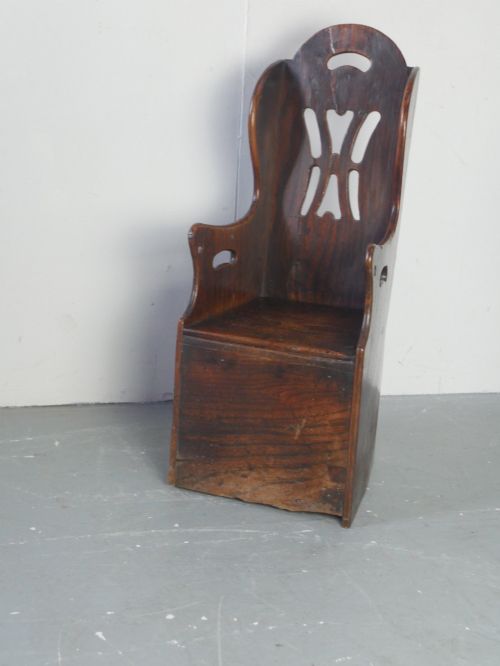


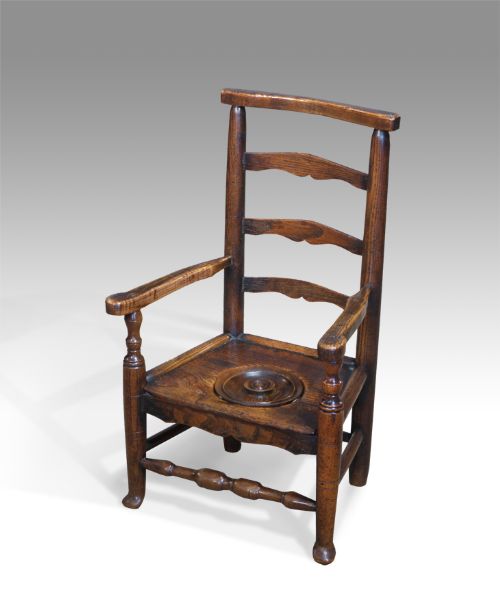

Elm Childrens Chair
An elm childrens chair brings authentic vernacular craftsmanship and compact domestic history straight into a room.
Elm Childrens Chair
When you search for an elm childrens chair, you are looking at scaled-down seating intended for domestic use across several centuries. These pieces reflect the functional forms of adult vernacular furniture, adapted carefully for younger members of the household.
You are most likely to meet 19th century examples on this page, though earlier pieces from the Georgian and 18th century periods appear regularly. The forms range from simple stick back and spindle back windsors to commode, potty and rocking chairs.
Makers working within English country traditions shaped these seats to endure everyday family life. The surviving examples demonstrate how small-scale utilitarian items received the same careful attention to construction as full-sized furniture.
Materials and construction methods
Makers relied on elm for seats because its interlocking grain resisted splitting under heavy use. This primary timber was typically paired with ash, beech, oak, fruitwood or yew for spindles, legs and bow backs.
The construction follows traditional country vernacular techniques, utilising solid plank seats bored to receive turned legs and back uprights. Steam bending shaped the continuous arm bows and crest rails on windsor variants.
Elm Childrens Chair Retail Price Guide 2026
Typical asking prices for elm childrens chair among the pieces listed under this phrase on Sellingantiques today, from the lower quarter to the upper quarter. They describe what is for sale here now, not the wider market.
Some miniature chairs included built-in potty holes, proving that historic potty training was taken very seriously indeed.
Judging quality in miniature seating
Quality rests upon the balance of proportion and the integrity of the timber selection. Superior examples display thoughtful integration of contrasting woods, such as yew wood arms or ash spindles contrasting against the elm seat.
The sophistication of the turning on the legs and uprights distinguishes finer workshop output from basic utilitarian output. Patina accumulated through generations of use also separates pieces that retain their original surface character.
The Elm Childrens Chair Glossary
- Vernacular furniture
- Domestic pieces made by local craftspeople using regional traditions rather than high-style metropolitan designs. These items prioritize utility and sturdy construction.
- Windsor chair
- A chair built with a solid wooden seat into which the legs and back laths are separately inserted. The back typically incorporates a bentwood bow.
- Potty chair
- A specialised seated piece featuring a cutout in the wooden seat designed to accommodate a chamber pot underneath. They often include a hinged or pierced cover.
- Commode chair
- A piece of seating furniture enclosing a receptacle for sanitary use. In smaller domestic forms, these served young children.
- Stick back
- A chair construction method where turned or cleft sticks form the back rest rather than a solid carved splat. This method is common in country workshop production.
Elm Childrens Chair: Frequently Asked Questions
What periods do these small chairs come from?
The pieces span from the mid 18th century through the Victorian era and into the early 20th century. Earlier examples often date back to the Georgian period.
Craftsmen built them using traditional regional methods that changed very little over generations.
Were these miniature seats actually used by children?
Yes, domestic archives and wear patterns show they served everyday domestic functions for young family members. Specialised forms like rocking chairs and potty chairs directly reflect historical childcare routines.
Their robust construction ensured they survived decades of active household life.
What woods were used to build them?
Elm served as the primary choice for the solid plank seats because its interlocking grain prevented cracking. Makers combined it with ash, beech, yew, oak and fruitwood for the turned spindles and structural members.
Different timbers were selected for their specific mechanical properties, such as flexibility for bent parts.
How do you date an antique child chair?
Dating relies on examining the turning styles of the legs, the construction details of the seat joints and the wear patterns on the timber. Regional building traditions also offer clues about the era of manufacture.
Comparing the form to dated adult furniture helps narrow down the period.