


Georgian Children Furniture
Georgian children furniture brings domestic history into focus through miniature chairs, high chairs and desks made for domestic life.
Georgian Children Furniture
Georgian children furniture encompasses a range of seating and small-scale forms built for domestic use, including childs chairs, high chairs, armchairs, rocking chairs and desks. The selection includes Windsor designs, potty chairs and metamorphic high chairs designed to adapt as a child grew.
Originating largely from the Georgian, Regency and William IV periods, these items draw upon English and Welsh country traditions alongside formal styles. Makers produced pieces in formats such as stick backs, hoop backs and chairs mounted on stands for dining or play.
Materials and construction
Cabinetmakers and country craftsmen built georgian children furniture using native timbers like elm, oak, ash, fruitwood, yew and mahogany. These woods were chosen for durability, allowing delicate proportions to withstand daily domestic use.
Construction techniques combine traditional joinery with turned spindles, caned seats and brass fittings. Examples feature applied fabric, leather or cane panels to seats, while structural elements rely on robust pegging and mortise and tenon joints.
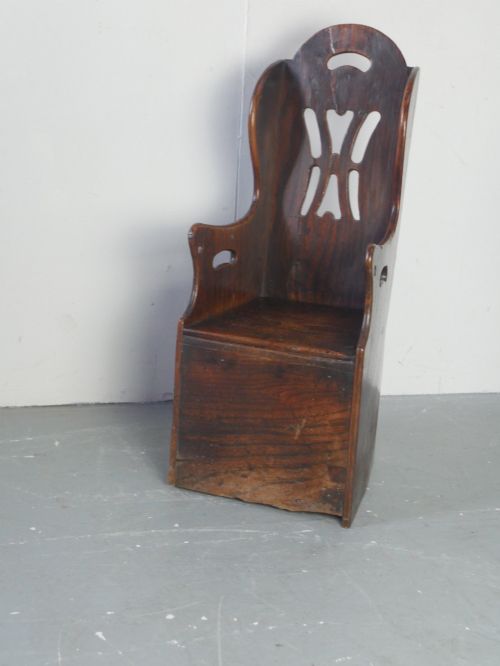
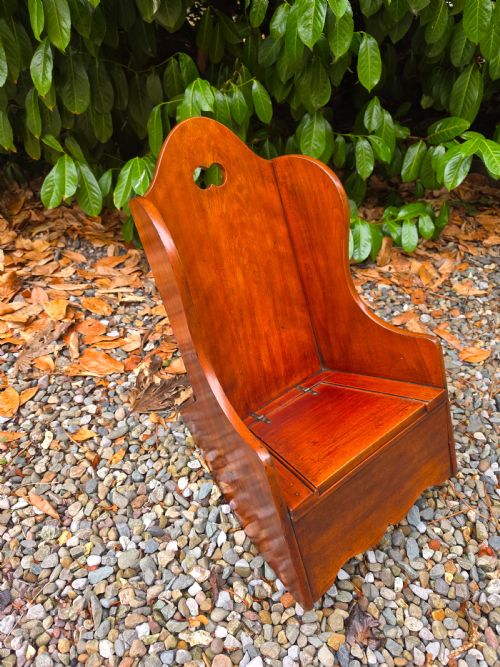
Early potty rockers offered tiny occupants a gentle motion alongside practical domestic concealment.
Judging quality
Quality in georgian children furniture rests upon the harmony of proportion and the integrity of the timber. Pieces that retain their original surfaces, unaltered stands and untouched timber patination stand apart from those with extensive timber replacement or later alterations.
The sophistication of the turning on spindles and legs indicates the maker's skill. Refined mahogany pieces show precise cabinetmaking, whereas country vernacular items demonstrate robust functional design through well-chosen elm and ash.
The Georgian Children Furniture Glossary
- Windsor chair
- A chair built with a solid wooden seat into which the legs and back spindles are wedged directly. These country forms often employ elm for seats and ash for bent parts.
- Metamorphic high chair
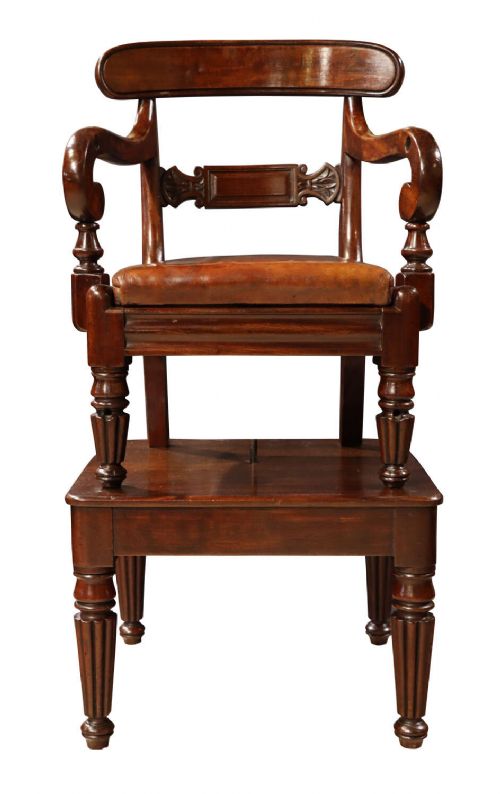
- A multi-functional seating item designed to transform from a high chair into a low chair and table combination. This engineering allowed pieces to adapt as children grew older.
- Potty chair
- A enclosed chair featuring a cut-out seat designed to hold a chamber pot beneath. They frequently incorporate cupboard doors or drawers to conceal the interior.
- Bergere
- An enclosed armchair with cane webbing panels to the back and sides. This formal seating style appeared in miniature for affluent domestic nurseries.
- Stick back
- A chair construction method utilising plain turned wooden rods inserted into the seat. These functional country designs provided sturdy support for daily use.
Georgian Children Furniture: Frequently Asked Questions
How were high chairs used?
High chairs elevated small children to table height for family meals. Many incorporated separate wooden stands or metamorphic designs to secure the child safely.
Craftsmen built these items with sturdy footrests and enclosed rails. This ensured the child remained supported during dining hours in the domestic interior.
How do I identify a Windsor chair?
A Windsor chair is defined by distinct construction where legs and back sticks are fitted straight into a thick carved wooden seat. Hoop backs and stick backs are typical variations within this tradition.
Country makers utilised contrasting timbers such as elm for the solid seat and ash or yew for the bent limbs. This combination provided natural resilience to the frame.
Where were these pieces used?
These miniature furnishings belonged in domestic nurseries, parlours and dining rooms of period homes. They served the practical daily needs of infants and young children.
Craftsmen produced both refined parlour seating in mahogany and robust vernacular furniture in local woods. Both categories functioned within the heart of the family household.