
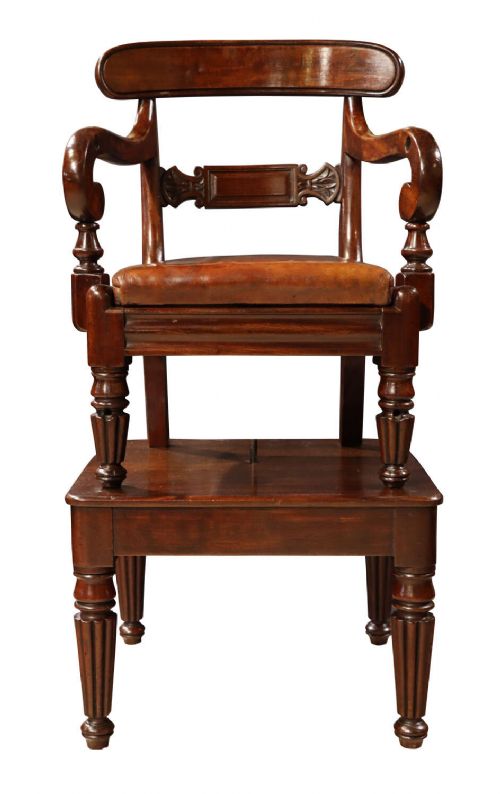


Convertible Child Seat
These pieces of antique children's seating, known as a convertible child seat, transform from high chairs to low chairs for everyday nursery use.
Convertible Child Seat
A convertible child seat provides adaptable seating for young children across the Georgian, Regency, and Victorian periods. These practical nursery pieces shift between a high chair configuration for feeding and a low chair on a stand for play.
Mahogany predominates among the surviving examples on this page, alongside beech, cane, and painted pine. Forms range from simple tub highchairs to sophisticated pieces that separate from their stands into two independent items.
How they were made
Cabinetmakers constructed these frames primarily in solid mahogany, beech, and painted pine using traditional joinery. Turned wooden supports and brass fittings secure the mechanical transformations between high and low positions.
Seating surfaces often feature woven cane or upholstered pads covered in fabric, leather, or tapestry. These materials combined durability with the comfort required for daily nursery routines.
Listings span the Georgian, Regency, and Victorian periods, featuring mahogany, beech, pine, cane, and brass materials in various seating formats.
What varies in quality
The sophistication of the conversion mechanism distinguishes standard regional pieces from finer cabinet work. Clever engineering that conceals hinges and locking pins marks out superior examples.
The choice of timber and the fineness of the turning on the uprights and stands dictate the visual hierarchy. Original surfaces and retained caning or leather also elevate a piece above heavily restored alternatives.
The Convertible Child Seat Glossary
- Metamorphic
- Describing furniture designed to transform from one form into another, such as a high chair converting into a low chair and table combination. This ingenuity defined much domestic utility design.
- Caned
- Woven rattan or cane panels utilised for seat bases and backs to provide a flexible and breathable surface. This technique lightened the visual weight of heavy timber frames.
- Stand
- A separate lower table or base frame upon which the upper chair secures to create a highchair. The chair lifts off the stand to form a low child seat.
- Tub highchair
- A rounded, enclosed seating form designed to keep small children secure during meals. The curved backrest wraps around the occupant for safety.
Convertible Child Seat: Frequently Asked Questions
How do convertible child seats work?
These pieces typically separate from a wooden stand to form a low chair and table combination. The dual functionality served families across generations for feeding and nursery activities.
The mechanical joints rely on pegged tenons or simple resting brackets. Users lift the upper section off the base to alter the height.
What woods were used for these chairs?
Mahogany is the dominant timber seen across Georgian and Victorian examples on this page. Beech and painted pine also appear in regional and Scandinavian pieces.
Finer versions utilise dense grain patterns and polished finishes. Softer woods often received paint layers to protect the surface.
Are these chairs safe for modern use?
These items are primarily treated as decorative antiques and collector pieces rather than modern nursery equipment. Safety standards for children's furniture have changed significantly.
Buyers usually display them as historic examples of domestic woodworking. Modern safety straps and harnesses are absent from these historic designs.