
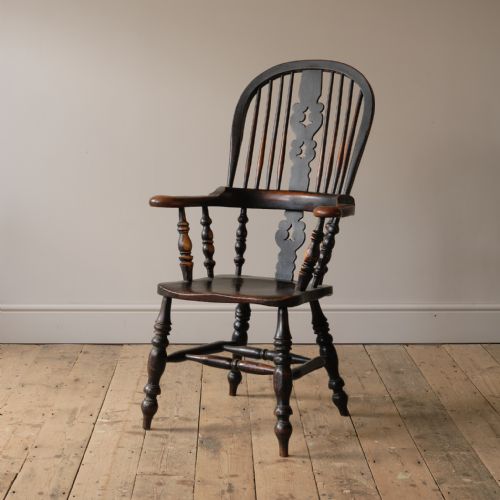

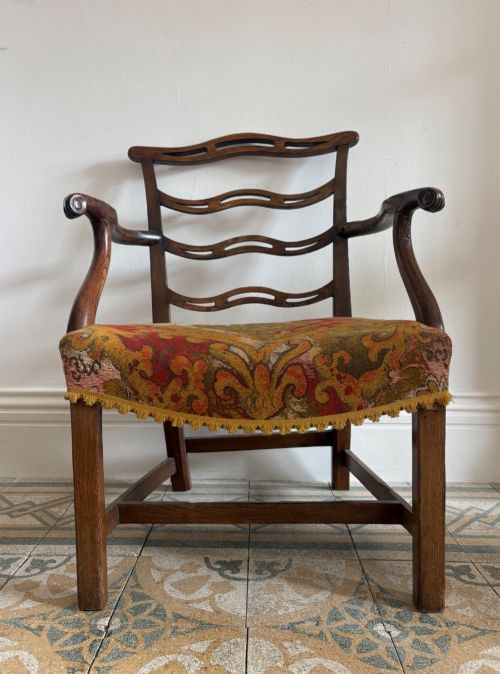
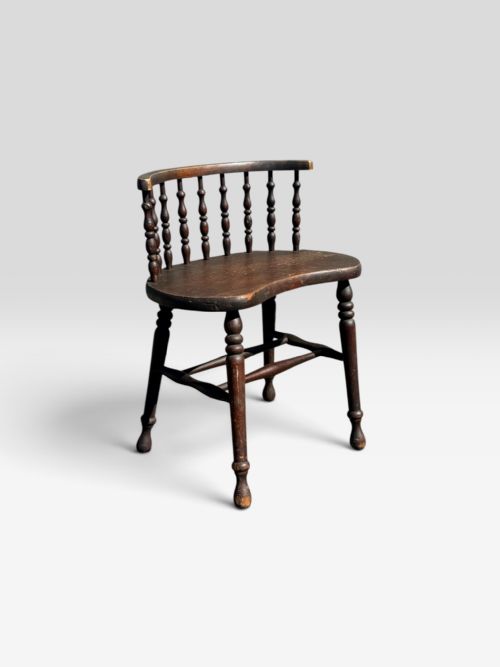
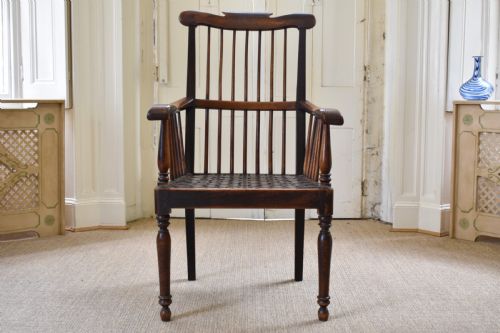
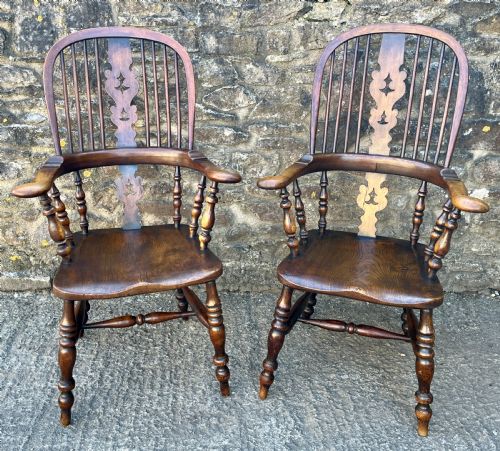


Elm Arm Chair
When you search for an elm arm chair, you enter a tradition of vernacular seating shaped by English and regional cabinet makers.
Elm Arm Chair
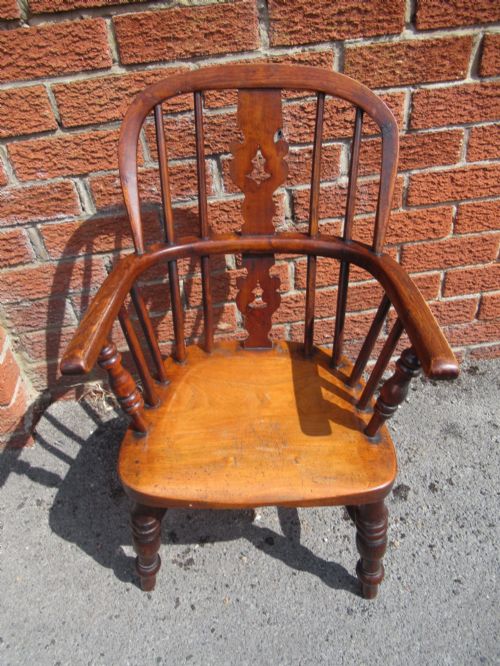
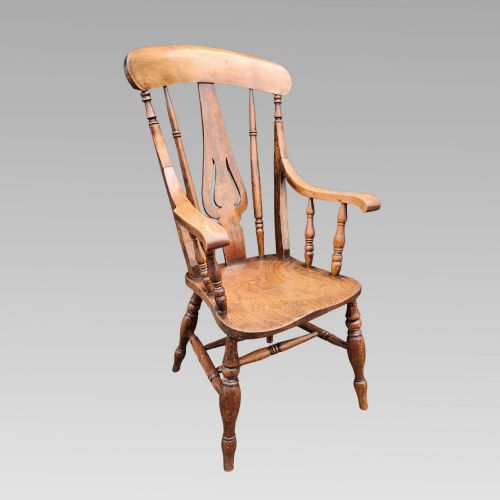
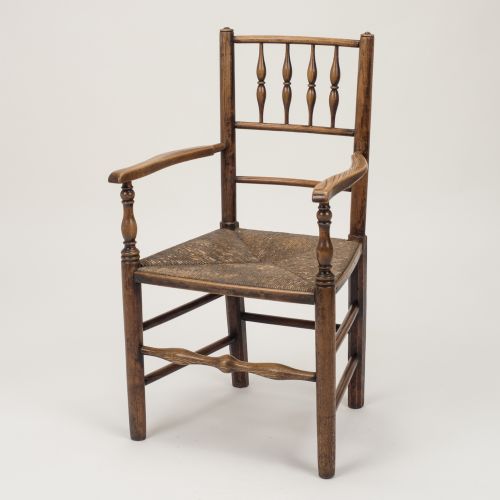
An elm arm chair encompasses sturdy vernacular seating from the 18th, 19th, and early 20th centuries, spanning Georgian, Victorian, and Edwardian periods. The most common varieties met here are Windsor chairs, ladderbacks, and smokers' bows originating from English regional workshops.
Makers utilised local timbers for specific parts, combining an elm seat with ash spindles, beech frames, or yew wood bows. Pieces range from high back Windsor chairs to low stick backs, rocking chairs, and children's armchairs.
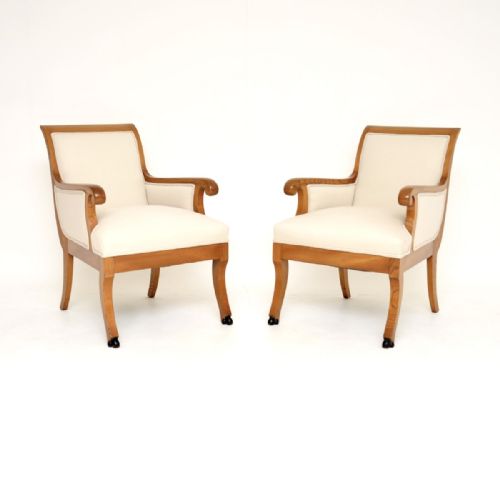
Regional styles include Thames Valley, Welsh vernacular, and Lancashire farmhouse chairs, alongside occasional international examples such as Swedish neoclassical solid elm armchairs and Chinese carved designs.
Materials and Technique
Elm was chosen specifically for seats because its interlocking grain resisted splitting when driven into by heavy leg joints and spindles. Chairmakers paired this tough timber with straight-grained ash for flexible steam-bent hoops and load-bearing spindles.
Secondary woods like beech, oak, and fruitwood appear throughout frames and arms, while rush or fabric was sometimes added for padded seats. Construction relied on traditional joinery, turning, and green woodworking techniques tailored to domestic and farmhouse use.
Childs and dolls rocking chairs appear in miniature, built with the exact same elm seats and ash spindles as adult versions.
Evaluating Construction and Age
Quality rests upon the integrity of the original timber selection, structural balance, and the retention of honest surface wear accumulated over centuries. Early examples demonstrate finer turning in the spindles and more sculptural, deeply dished solid elm seats.
The refinement of the comb back, the sweep of the broad arm, and the harmony between contrasting woods such as yew and elm distinguish standard utilitarian seating from superior vernacular craftsmanship.
The Elm Arm Chair Glossary
- Windsor chair
- A chair built with a heavy solid wooden seat into which the legs and back spindles are separately raked and wedged. This form dominated English country seating throughout the Georgian and Victorian eras.
- Smokers bow
- A low-backed Windsor derivative with a continuous curved arm rail, frequently found in elm and beech for use in public houses and farmhouses.
- Comb back
- A Windsor chair variation where the top rail resembles a small comb, often supported by vertical spindles extending above the main back bow.
- Broad arm
- An armchair featuring an enlarged, flattened wooden arm rest designed for writing or comfort, typical of regional Windsor forms.
- Dish seat
- A wooden seat hollowed out by adze and scorper into a concave shape to fit the user.
Elm Arm Chair: Frequently Asked Questions
How do I identify a Thames Valley chair?
Thames Valley chairs are regional English Windsor chairs known for distinctive wheel or crinoline stretchers and refined wood selection. They often pair yew wood or ash with a substantial elm seat.
Makers in this region produced balanced, elegant stick-back and hoop-back forms during the late 18th and early 19th centuries.
Were these chairs used for dining?
Many sturdy elm and ash armchairs served as carvers or kitchen dining chairs in country houses and farmhouses. Their robust construction suited daily domestic service around large tables.
Matching sets of farmhouse chairs appear alongside individual carvers designed to sit at the head of a table.
What makes yew and elm chairs different?
Chairs incorporating yew wood alongside elm generally represent higher status regional craftsmanship due to yew's desirable grain and rich natural tone. Yew was frequently utilised for the bent hoops and upper spindles of finer Windsor armchairs.
Elm remained the standard choice for the heavy solid seat across both common and premium variants.