
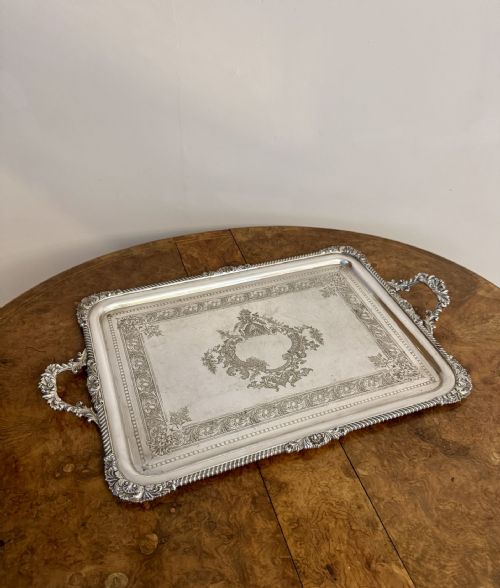


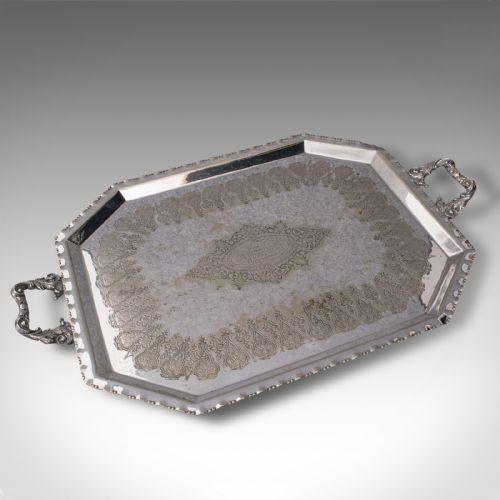
Electroplated Silver Tray
An electroplated silver tray offers the bright gleam of solid silver without the heavy cost, making it a practical centrepiece for any formal table or drinks trolley.
Electroplated Silver Tray
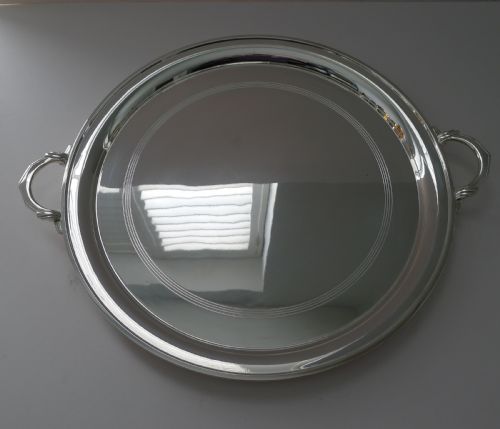
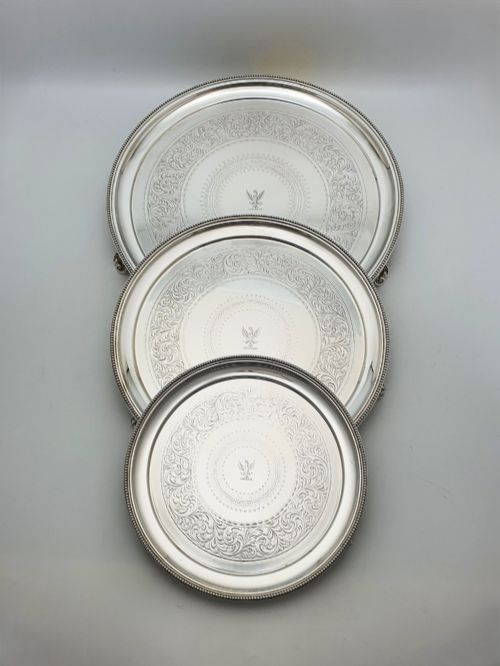
An electroplated silver tray is a serving piece formed from a base metal and coated with a thin layer of silver through electrolysis, appearing in forms such as tea trays, cocktail trays, salvers, and serving dishes. These domestic items span the nineteenth and twentieth centuries, emerging from periods including the Victorian and Edwardian eras alongside the Art Deco movement.
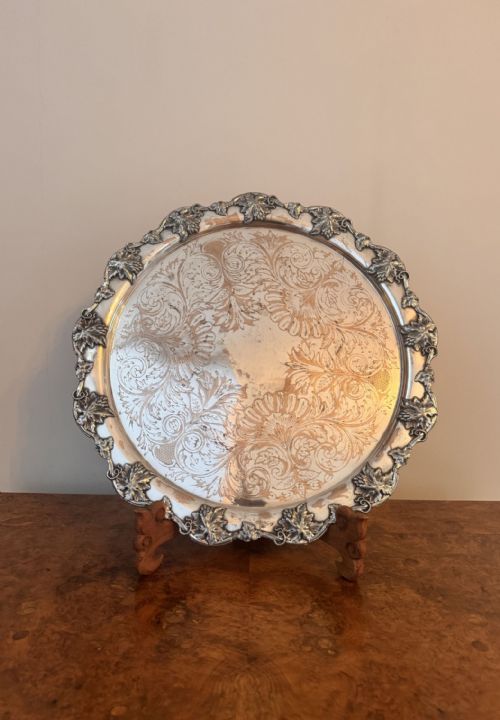
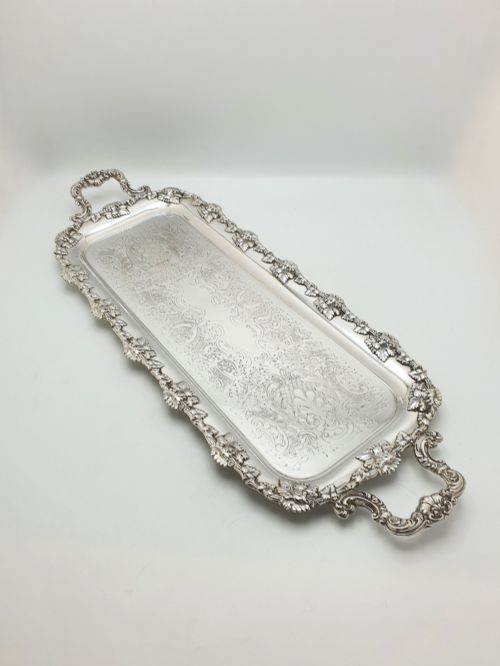
Buyers meet circular trays with engraved floral motifs, large tea trays with grapevine borders, and geometric cocktail trays designed for entertaining. Makers apply these silver coatings to metals like nickel silver and EPNS to create durable servants for the dining room and parlour.
How they were made
Workers shaped base metals such as nickel silver, brass, or other metal alloys into plates, dishes, and chargers before applying a thin skin of silver using electrical current. This electroplating process bound the precious metal to the tougher base material beneath, allowing workshops to produce substantial serving ware more efficiently than solid silver casting.
Casting and stamping formed the raised borders and handles, whilst artisans hand-engraved floral scrolls, geometric patterns, or presentation inscriptions onto the surface. Makers then polished the pieces to a bright finish, adding applied edges like grapevine motifs or beaded rims.
What varies in quality
Quality rests upon the thickness of the applied silver layer and the crispness of the chased or engraved detail across the surface. Thicker plating resists wear through decades of polishing, whilst inferior pieces show the grey base metal beneath where the silver coating has worn thin.
The weight and gauge of the underlying metal dictate the rigidity of the tray, separating flimsy stampings from heavy, substantial serving dishes. Workshops of high repute employed skilled engravers whose floral borders and geometric lines remain sharp and deep.
Mappin & Webb·Elkington·Walker & Hall·James Dixon & Sons·Fenton Russel·Atkin Brothers
The Electroplated Silver Tray Glossary
- EPNS
- Electroplated Nickel Silver. This acronym denotes a base alloy of copper, nickel, and zinc coated with a layer of pure silver.
- Salver
- A flat tray, usually circular and often standing on small feet, used for serving glasses or presenting calling cards.
- Charger
- A large decorative plate or tray placed beneath other courses or hung upon a wall for display.
- Entree dish
- A covered serving vessel designed for holding portions of meat, vegetables, or other course items at the dining table.
- Cocktail tray
- A specialised serving surface popular during the Art Deco period, intended specifically for holding decanters, glasses, and cocktail shakers.
Electroplated Silver Tray: Frequently Asked Questions
How do I clean an electroplated silver tray?
Use a gentle silver cream and a soft cloth to remove tarnish, avoiding harsh abrasives that scratch the thin metal layer. Rinse with warm water and dry immediately to prevent water spots.
Store the tray in a dry environment wrapped in acid-free tissue or flannel to slow down the natural tarnishing process between uses.
Can I use these trays for serving food?
Most pieces serve well for presenting dry foods, bottled drinks, or teapots during formal gatherings. Ensure the silver coating remains intact and undamaged before placing unwrapped food directly onto the surface.
Acidic foods and prolonged moisture can tarnish or react with older plate, so lining the tray with a doily is standard practice.
How do I tell Victorian trays from Art Deco ones?
Victorian trays typically feature heavy floral engraving, grapevine borders, and ornate handles suited to formal nineteenth-century tea service. They prioritize ornate decoration and traditional shapes.
Art Deco trays embrace geometric lines, clean angles, and minimalist decoration designed for modern cocktail service. Keith Murray and James Dixon pieces exemplify this sleeker aesthetic.
What is base metal underneath the silver?
Makers utilised nickel silver, brass, or mixed white metal alloys as a sturdy foundation for the electroplating process. These metals provided strength and weight at a fraction of solid silver cost.
When the top silver layer wears away through decades of polishing, this grey or yellowish base metal gradually becomes visible.