
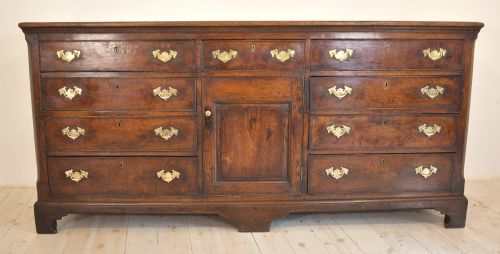


Eighteenth Century Oak Cupboard
An eighteenth century oak cupboard brings the honest texture of regional timber and centuries of daily domestic use straight into a room.
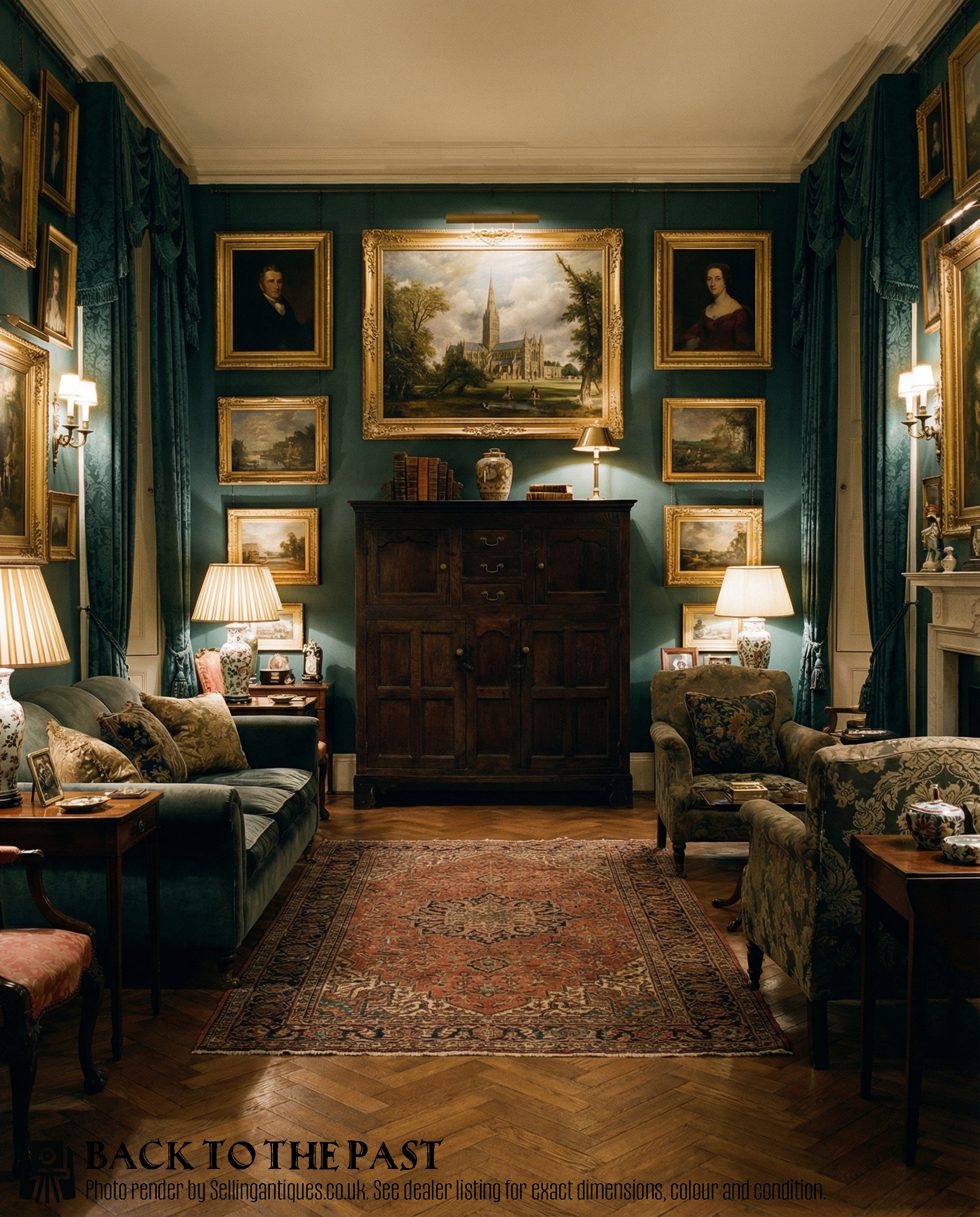
Eighteenth Century Oak Cupboard
When you search for an eighteenth century oak cupboard, you find sturdy storage pieces shaped by regional British and French provincial traditions. These items range from corner cupboards and wall-hung units to imposing press cupboards, deuddarns, and dresser bases with open potboards.
The versions you meet most frequently on this page belong to the Georgian period and rural workshops of Wales, Lancashire, and France. They were built to store food, harness, or household linen, and their honest construction reflects the practical needs of past rural life.
Makers utilised native hardwoods, working within distinct local styles like French Provincial or Welsh Country. Each piece carries the marks of its origin, from the specific grain of the timber to the proportions dictated by regional domestic architecture.
How they were made
Carpenters built these pieces using solid oak, often supplemented with walnut or fruitwood for secondary elements and decorative contrasts. Timber was cleft or sawn by hand, producing boards with irregular grain patterns that respond distinctively to age and wax polishing.
Construction relied on traditional joinery techniques such as mortise and tenon frames, pegged joints, and panelled doors that allowed the wood to expand and contract seasonally. Iron hinges and brass escutcheons or handles secured the doors and drawers, combining functional utility with straightforward metalwork.
Several pieces preserve the specific aroma of aged beeswax and timber that has absorbed centuries of country farmhouse life.
What varies in quality
The distinction between standard provincial items and finer examples rests on the crispness of the mouldings, the selection of figured timber, and the integrity of the original construction. Better pieces retain their unclipped boards, original panel configurations, and harmonious proportions.
Quality also shows in the retention of original brass or iron hardware and the minimal replacement of structural timbers. Pieces that have survived with their original backboards and undisturbed surfaces command greater respect among collectors of early furniture.
The Eighteenth Century Oak Cupboard Glossary
- Deuddarn
- A traditional Welsh two-tier cupboard featuring enclosed upper and lower sections, often decorated with panelled doors.
- Potboard
- An open lower shelf built into a dresser base, originally designed to hold pots and heavy earthenware.
- Press cupboard
- A large storage furniture form with enclosed upper compartments used traditionally for linen and clothing.
- Fruitwood
- A dense timber such as pear or apple, utilised by provincial makers for contrast mouldings or smaller cabinet work.
- Escutcheon
- A protective metal plate surrounding a keyhole, usually fashioned from brass or iron on period cabinet work.
Eighteenth Century Oak Cupboard: Frequently Asked Questions
What is a deuddarn?
A deuddarn is a traditional Welsh two-tier cupboard characterised by an enclosed upper section supported on posts above a lower cabinet.
These pieces were built in regional workshops during the period to store household linens and provisions.
How do I care for antique oak?
Maintain antique oak by applying a traditional beeswax polish sparingly and buffing with a soft cloth to nourish the dry timber.
Keep the piece away from direct heat sources and sudden humidity changes to prevent the wood from splitting.
Where were these cupboards made?
These cupboards originated in regional workshops across rural Britain and France, including Wales, Lancashire, and provincial French districts.
Local cabinet makers shaped the designs to suit the domestic requirements and available timbers of their specific areas.
What is a potboard base?
A potboard base is an open lower shelf fitted between the legs of a dresser or cupboard base.
It provided accessible storage for heavy kitchen pots and earthenware in daily rural domestic use.
How do I distinguish regional styles?
Regional styles appear in the specific choice of timber, the moulding profiles, and the overall proportions dictated by local workshop traditions.
Welsh and French provincial pieces often display distinct joinery methods and hardware choices compared to English urban furniture.