

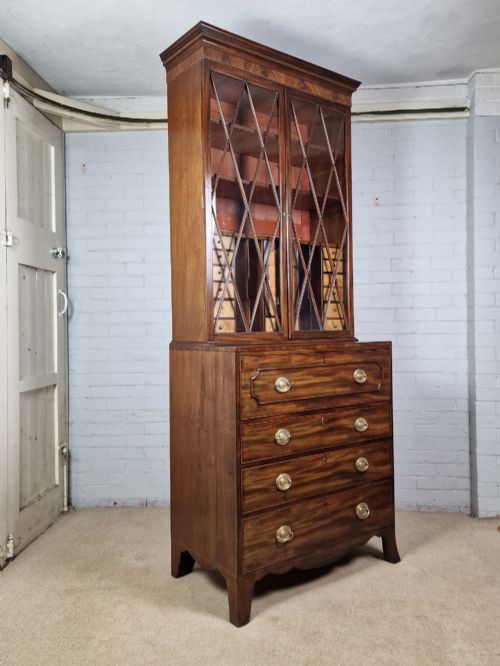
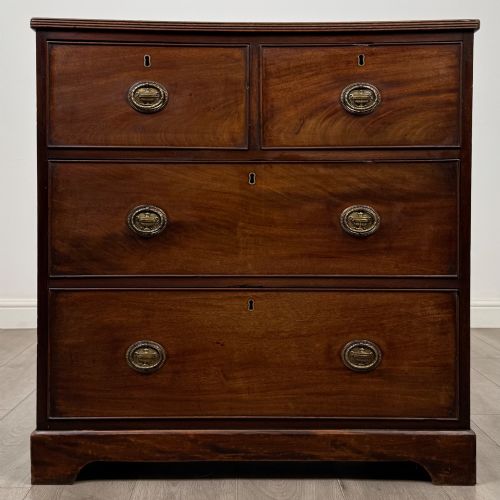
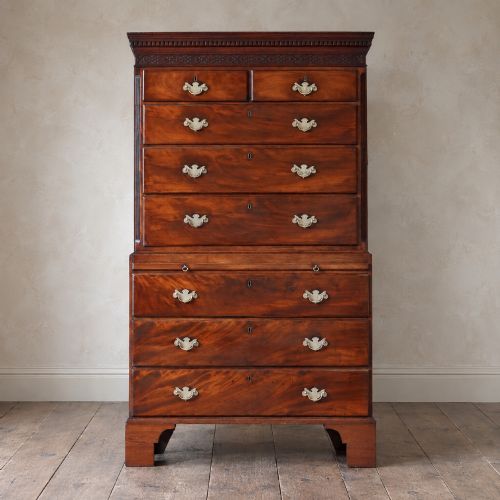
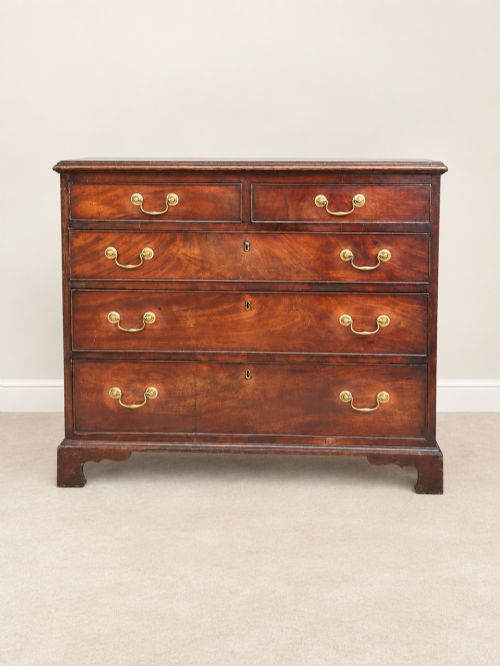


Eighteenth Century Mahogany Furniture
Eighteenth century mahogany furniture brings rich grain and solid proportions into a room, offering practical storage and writing spaces built to last.
Eighteenth Century Mahogany Furniture
Eighteenth century mahogany furniture comprises functional domestic items made primarily during the Georgian and George III periods. Buyers searching for eighteenth century mahogany furniture typically encounter practical forms designed for daily household use.
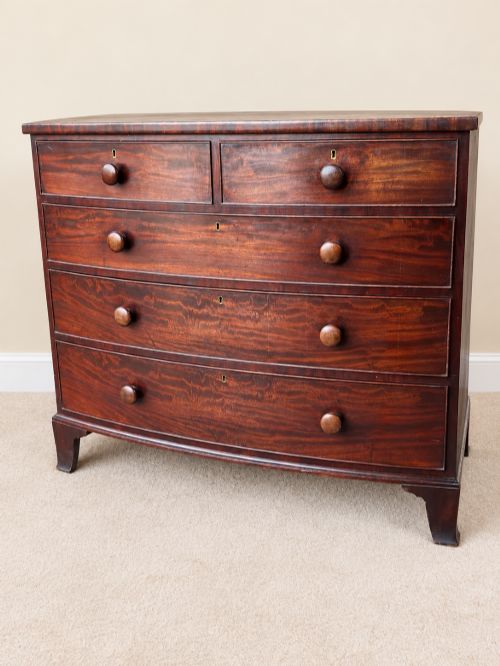
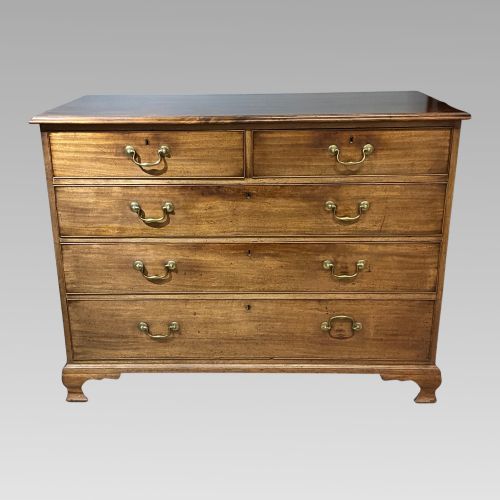
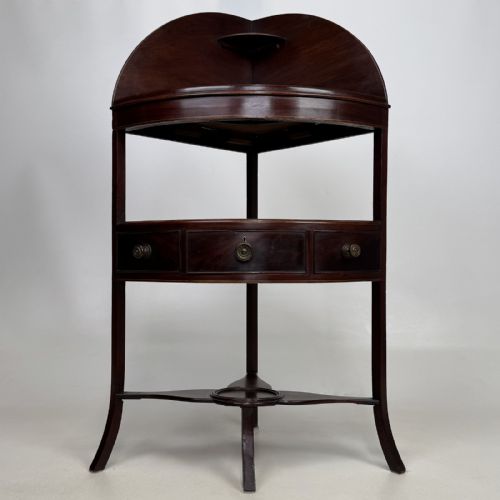
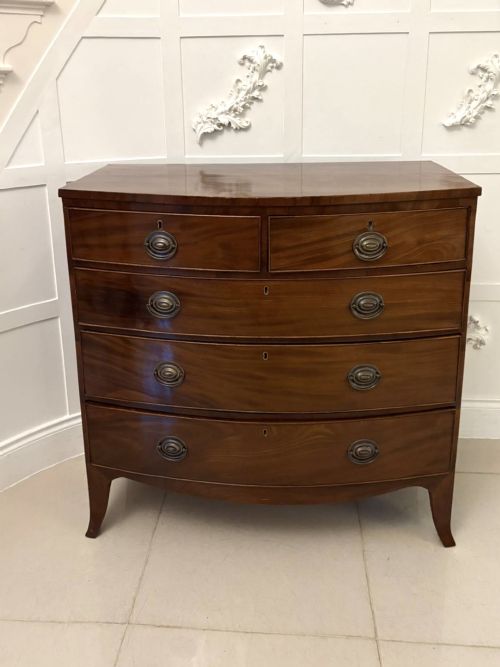
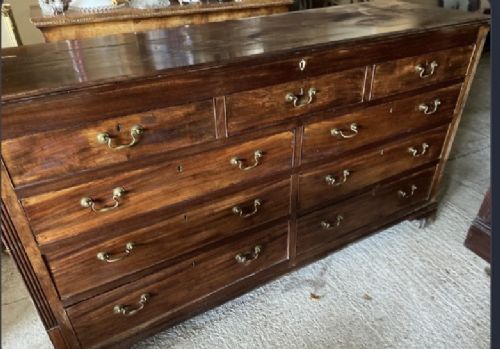
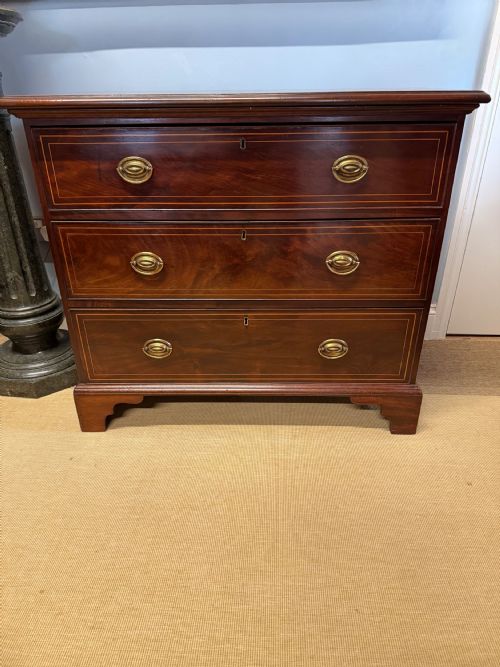
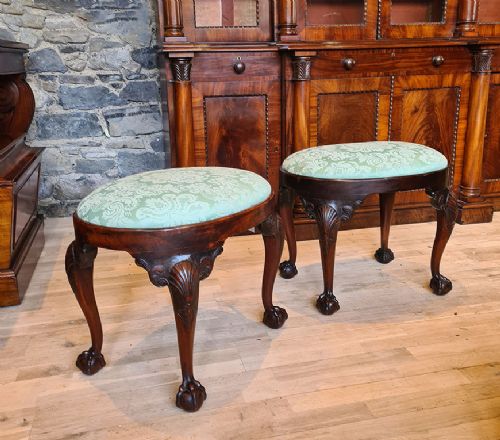
The most common forms on this page are chests of drawers, desks, and cellarets, alongside occasional tables, stools, and linen presses. Pieces span regional English styles as well as Dutch Rococo and French Directoire designs.
Makers often combined mahogany with secondary timbers like oak and pine, incorporating brass hardware and boxwood inlay for functional reinforcement and visual contrast.
How they were made
Cabinet makers utilised dense mahogany for primary visible surfaces, selected for deep colour and grain movement. Secondary timbers such as oak and pine appear inside drawer linings and carcass backs.
Construction relied on traditional joinery methods combined with brass fittings, boxwood inlay, and occasional glass elements. Surface decoration ranged from plain polished timber to detailed carving and boxwood stringing.
Eighteenth Century Mahogany Furniture Retail Price Guide 2026
Typical asking prices for eighteenth century mahogany furniture among the pieces listed under this phrase on Sellingantiques today, from the lower quarter to the upper quarter. They describe what is for sale here now, not the wider market.
Materials recorded across the selection combine solid mahogany with brass, oak, fabric, boxwood, glass, and pine.
What varies in quality
Quality rests in timber selection and the precision of the construction. Figured mahogany grain and careful matching across drawer fronts separate standard items from finer examples.
The integration of secondary timbers, the crispness of carved details, and the survival of original brass hardware and locking mechanisms determine the standing of each piece.
Gamichon A Paris
The Eighteenth Century Mahogany Furniture Glossary
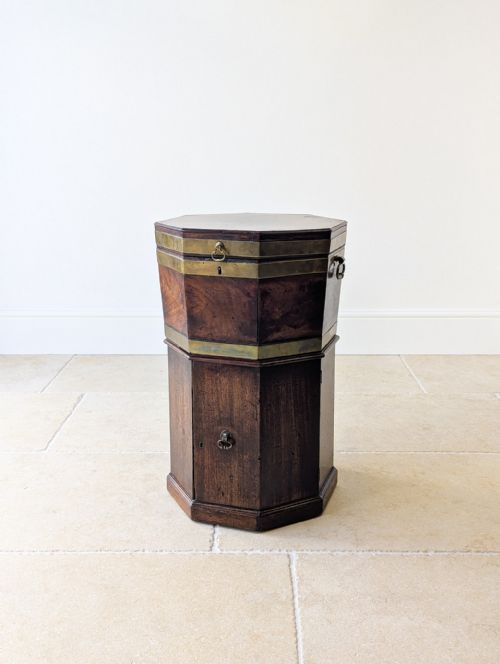
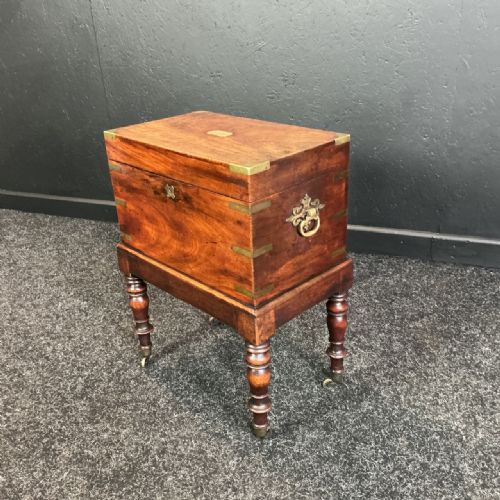
- Cellaret
- A freestanding timber container used for storing wine bottles, frequently fitted with brass bands and internal partitions.
- Brushing slide
- A pull-out shelf integrated into the upper section of a chest of drawers or desk to provide a temporary writing or display surface.
- Bachelor's chest
- A compact chest of drawers featuring a fold-over top or sliding shelf, designed for small domestic spaces.
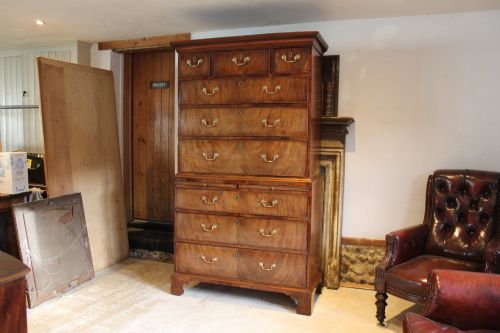
- Chest on chest
- A tall storage unit formed by stacking a smaller chest of drawers directly on top of a larger base chest.
- Boxwood inlay
- Narrow strips or motifs of pale boxwood inserted into mahogany surfaces to create linear borders and geometric patterns.
Eighteenth Century Mahogany Furniture: Frequently Asked Questions
What is a cellaret used for?
Cellarets served as portable or freestanding cellars for keeping wine bottles cool and secure near the dining table.
Inside, makers divided the interiors into compartments lined for bottle storage, often secured with brass bands on the exterior.
How do I identify a bachelor's chest?
A bachelor's chest is generally smaller in scale than a standard chest of drawers and includes a pull-out brushing slide.
These compact units provided multipurpose functionality for sleeping quarters where floor space was limited.
What timber is used inside these pieces?
While exterior surfaces utilise mahogany, cabinet makers frequently employed secondary timbers such as oak and pine for drawer linings and internal framing.
These woods provided structural stability and durability where visible grain was unnecessary.
Where were these pieces made?
The majority originate from English workshops operating during the Georgian period, spanning regional production and metropolitan centres.
Examples from Dutch and French workshops also appear, showing distinct continental proportions and decorative finishes.