



Eighteenth Century Ceramic Figures
Eighteenth century ceramic figures bring the theatre of the Georgian parlour to life through modelled porcelain and painted enamel.
Eighteenth Century Ceramic Figures
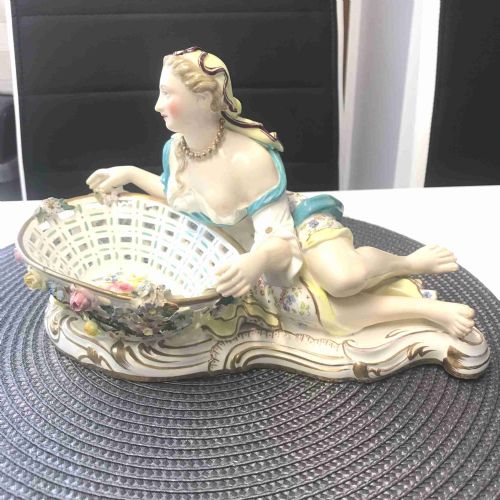
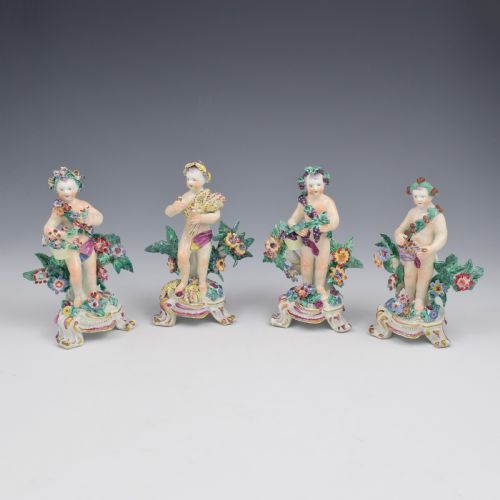
Eighteenth century ceramic figures encompass porcelain figurines, candelabra, and sweetmeat dishes produced across European and Chinese kilns. The selection here leans heavily towards German and English factories, featuring mythological subjects, allegories of the seasons, and rustic characters.
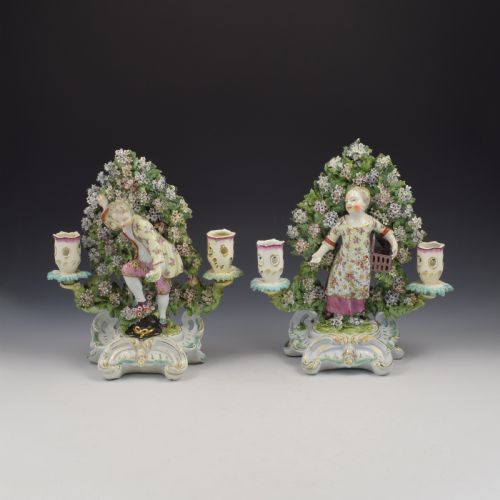
Most pieces meet the eye as modelled porcelain decorated in enamel and gold leaf, often framed by the leafy foliage known as bocage. Figures of gardeners, musicians, and classical deities dominate the groups available on this page.
Originating largely from the eighteenth century, these objects range from intimate single figures to elaborate multi-figure groups. They represent the high point of European porcelain modelling, capturing pastoral ideals and courtly pastimes in three dimensions.
Materials and Technique
Factories utilised both hard-paste porcelain and soft-paste porcelain, shaping the clay in press-moulds before skilled modellers refined the surface details by hand. Artisans then applied vibrant enamel colours and gold leaf highlights, fixing the decoration in a muffle kiln.
Many English and continental compositions incorporated delicate bocage work, requiring complex assembly of individual leaves and flowers around the central figures. Gilding and meticulous brushwork completed the decorative scheme on these porcelain bodies.
Eighteenth century modellers populated European drawing rooms with cheerful putti, street traders selling grapes, and musicians playing hurdy-gurdies.
Assessing Quality
Quality rests upon the crispness of the modelling and the sensitivity of the hand-painting rather than the mere age of the porcelain body. Superior pieces display finely articulated facial expressions and delicate, naturalistic drapery that avoids stiffness.
The complexity of the composition also dictates worth, particularly in multi-figure groups or examples featuring intricate bocage and applied floral details. Earlier periods and renowned factories maintain a greater fidelity of line and colour application.
Meissen·Derby Porcelain·Bow Porcelain·Chelsea Porcelain·Ludwigsburg Porcelain·Fürstenberg Porcelain·Samson Paris
The Eighteenth Century Ceramic Figures Glossary
- Bocage
- Applied background foliage made of porcelain, common in eighteenth century English and continental figures. It frames the subject with leaves and blossom.
- Hard-paste porcelain
- A true porcelain composed of kaolin and petuntse fired at high temperatures. It produces a dense, vitreous body.
- Soft-paste porcelain
- An artificial porcelain mixture fired at lower temperatures, characteristic of early English factories. It yields a warmer texture and softer glaze.
- Enamel
- Vitreous colours painted onto the fired porcelain surface and fixed in a second, lower-temperature kiln. It provides the vivid palette seen on garments and faces.
- Gilding
- The application of gold leaf or gold paint to highlights on garments and bases. It accentuates the richness of the model.
Eighteenth Century Ceramic Figures: Frequently Asked Questions
How were eighteenth century ceramic figures used?
These figures served primarily as decorative ornaments for dining tables, mantelpieces, and display cabinets during the Georgian period. They often functioned as conversation pieces or symbolic representations of classical themes and seasonal allegories.
More elaborate models incorporated candle sockets or sweetmeat bowls, combining practical utility with sculptural display in aristocratic homes.
How do I tell Meissen from English porcelain?
Continental factories like Meissen typically utilised hard-paste porcelain, which exhibits a bright, vitreous body and sharp moulding. English works from Bow and Chelsea often employed soft-paste porcelain, showing a warmer tone under the glaze.
Markings also assist identification, as factories applied distinct symbols such as crossed swords for Meissen or anchor marks for early English pieces.
What is bocage on a figurine?
Bocage represents the thicket of applied porcelain leaves and flowers that frames the rear and sides of many eighteenth century figures. It creates an arbour effect derived from pastoral theatre and garden design.
This technique required immense skill from the ceramicist, who had to construct delicate foliage that could survive the extreme heat of the kiln without collapsing.
How should I care for antique porcelain?
Antique porcelain figures require dusting with a soft, dry brush rather than washing, particularly when they feature delicate enamel painting or applied gold leaf. Keeping them away from direct sunlight protects the pigments from fading over time.
Displaying them in stable, enclosed cabinets prevents accidental damage to fragile elements like fingers, musical instruments, and bocage leaves.