


Eighteenth Century Bureau Bookcase
An eighteenth century bureau bookcase is a dual-purpose piece for storage and writing that anchors a room with profound architectural presence.
Eighteenth Century Bureau Bookcase
An eighteenth century bureau bookcase combines a sloping desk compartment with upper shelving enclosed by glazed or solid panel doors. These dual-purpose pieces served the dual needs of domestic administration and book storage in prosperous households.
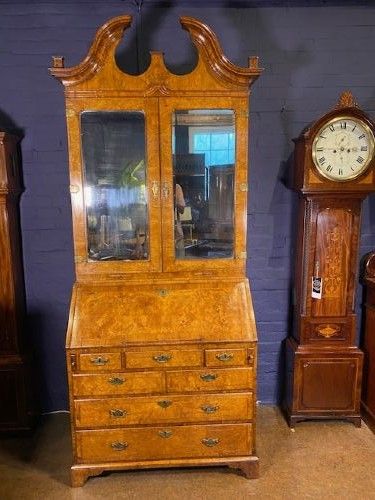
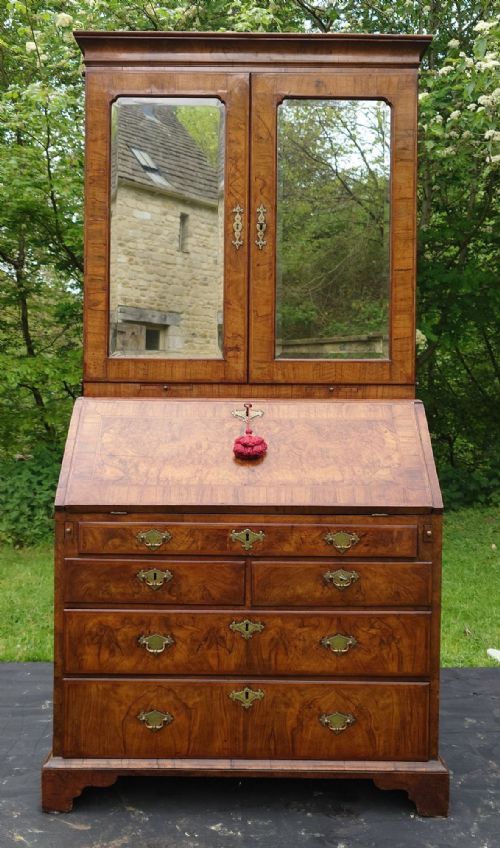
The dominant forms on this page span walnut, mahogany, and rosewood constructions, often carrying Queen Anne, George I, or George III stylistic markers. Double-dome tops and astragal glazing define the more ambitious examples encountered here.
How they were made
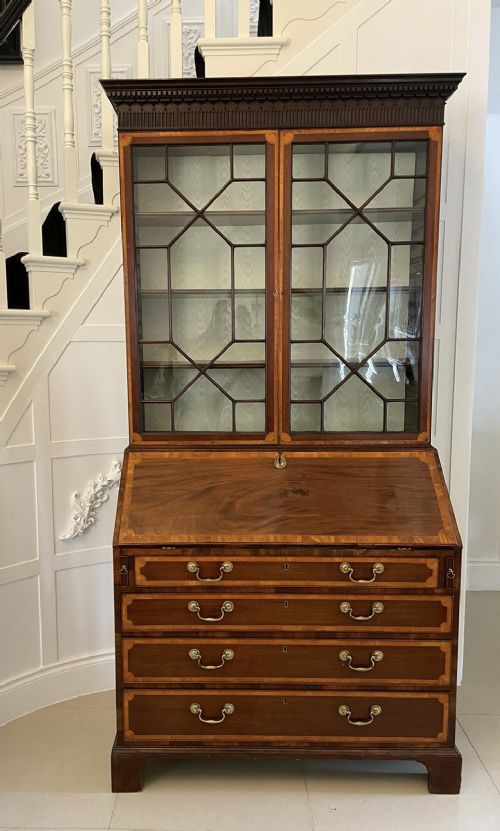
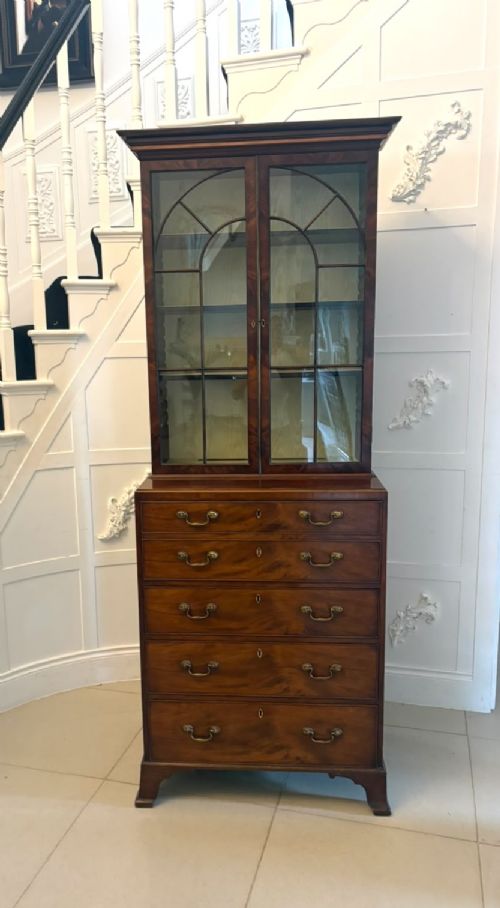
Cabinet makers built these pieces using solid and veneered timbers such as walnut, mahogany, burr walnut, and oak, applying brass hardware for handles and escutcheons. Glass panes were fitted into upper doors, sometimes divided by wooden astragal bars into geometric patterns.
Construction techniques involved careful matching of figured wood veneers over secondary woods like pine and oak, complemented by hand-cut dovetails on drawer construction. Surface finishes relied on traditional polish and wax applied over carefully smoothed timbers.
Listings feature eighteenth century bureau bookcases constructed from walnut, mahogany, rosewood, and ebonised wood.
What varies in quality
Quality rests in the choice of timber figuring, such as highly figured walnut or burr veneers, and the precision of the cabinet work in the interior fittings. The sophistication of the architectural top, whether double dome or straight cornice, also separates standard pieces from the finest.
Integration of marquetry work, inlay, and original brass hardware contributes to the distinction between workshop output and exceptional commissions. The balance of proportions between the upper bookcase and the lower bureau section dictates visual success.
Gillows
The Eighteenth Century Bureau Bookcase Glossary
- Bureau bookcase
- A dual-purpose furniture form comprising a sloping fall-front desk above drawers, surmounted by a shelved cabinet. This combination provided both writing space and a secure library enclosure.
- Astragal glazed
- Fitted with small wooden bars that divide the glass in a cabinet door into panes. These bars often form delicate geometric lattices on Georgian bookcases.
- Fall-front
- A sloping or vertical hinged panel on a bureau that drops down to form a writing surface. It conceals a fitted interior of small drawers and pigeonholes.
- Double dome
- An upper cabinet profile featuring two arched or domed curves side by side. This sophisticated architectural top is typically found on high-status examples from the eighteenth century.
- Marquetry
- Decorative veneer work formed by fitted pieces of various woods or other materials to create pictorial or abstract patterns. Dutch workshops frequently employed this technique on cabinet furniture.
Eighteenth Century Bureau Bookcase: Frequently Asked Questions
What is an eighteenth century bureau bookcase?
An eighteenth century bureau bookcase is a tall combination furniture piece featuring a lower writing desk with a sloping lid and an upper shelving cabinet enclosed by doors.
These pieces were designed to hold library collections and provide a private space for correspondence and domestic accounts.
How do I identify the period?
Period identification relies on observing timber choices, hardware styles, and architectural details such as cornices and bracket feet.
Walnut and marquetry often point towards earlier eighteenth century and continental origins, while later pieces frequently utilise mahogany and Sheraton styling.
How were they used historically?
The upper section served to display and store leather-bound books, while the drop-front desk provided a writing surface with concealed compartments for papers.
They functioned as the administrative centre of a well-appointed home during a period when paper records required secure storage.
How do I live with one?
Placing a bureau bookcase requires adequate wall space and stable indoor humidity to protect aged timbers and veneers from warping.
The deep footprint and heavy construction mean they must be positioned away from direct heat sources and anchored securely.