

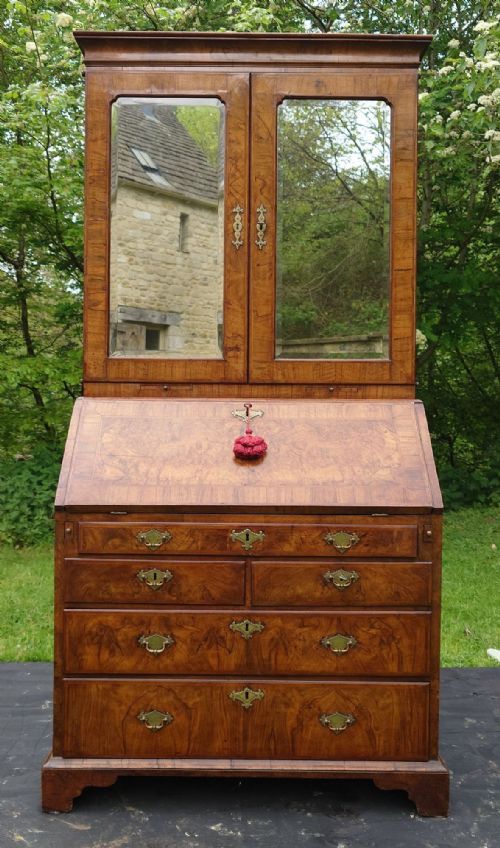


Eighteenth Century Bookcase
An eighteenth century bookcase brings architectural order and rich timber grain to a room, offering both display space and concealed writing surfaces.
Eighteenth Century Bookcase
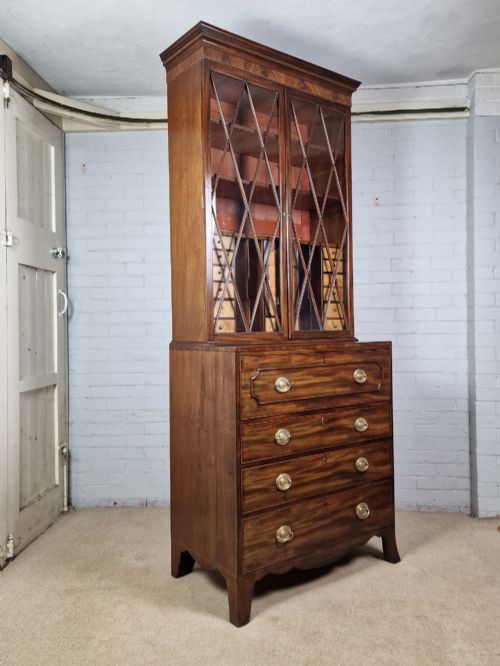
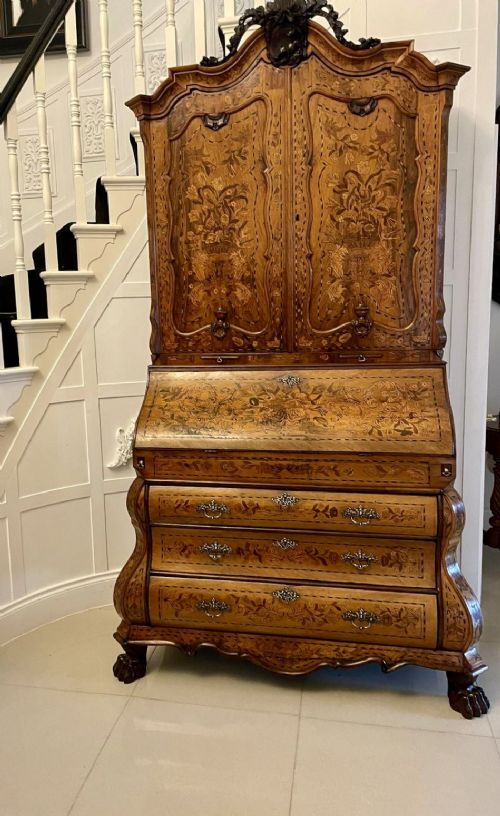
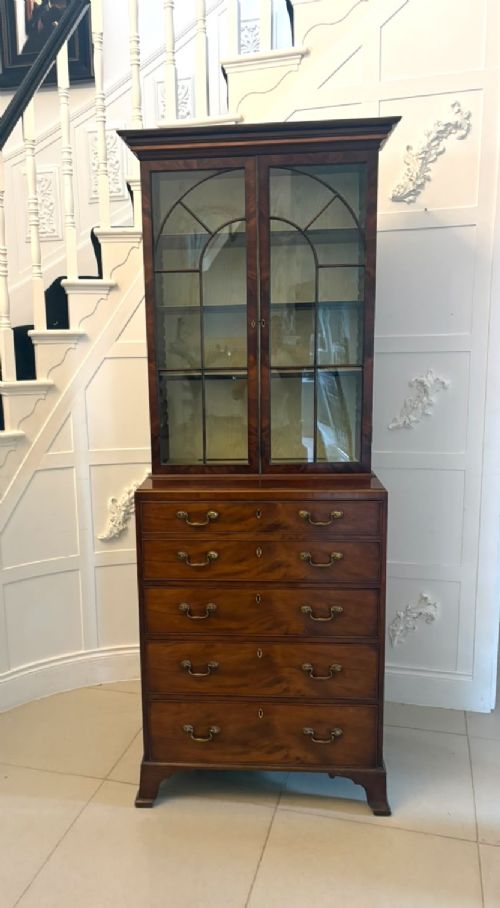
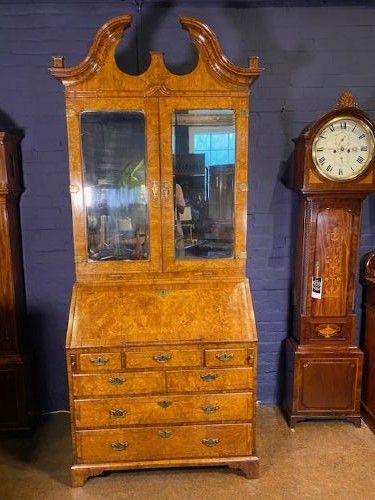
When you search for an eighteenth century bookcase, you encounter substantial library furniture designed to house and protect valuable volumes behind glazed doors. The examples listed here span the Georgian and late George III periods, displaying the architectural proportions characteristic of the era.
The predominant form on this page is the secretaire bookcase, which integrates a pull-down writing drawer fitted with pigeonholes and small drawers behind the main facade. You also find breakfront bookcases that project forward centrally, creating a commanding presence in a room.
Most pieces combine upper display compartments with lower cupboards or drawers, constructed during the eighteenth and early nineteenth centuries. Their origins are rooted in British cabinet-making traditions, utilising native and imported hardwoods shaped by prevailing neoclassical tastes.
How they were made
Cabinet-makers built these bookcases using solid and veneered mahogany, often enhanced with satinwood inlay and banding to define structural panels. The timber was selected for its grain figure and depth of colour, then polished to a smooth finish.
Glass panes within the upper doors are held by slender wooden astragal bars, forming geometric or Gothic-arched glazing patterns that required considerable joinery skill. Brass hardware, including hinges, escutcheons and drop handles, secures and articulates the moving parts.
Internal components incorporate secondary softwoods for drawer linings and backing boards, assembled with traditional dovetail joints to ensure long-term stability. Writing compartments feature fitted arrangements of miniature drawers and pigeonholes constructed with equal care.
Eighteenth Century Bookcase Retail Price Guide 2026
Typical asking prices for eighteenth century bookcase among the pieces listed under this phrase on Sellingantiques today, from the lower quarter to the upper quarter. They describe what is for sale here now, not the wider market.
Listings feature mahogany, satinwood, brass and glass across pieces dated to the eighteenth and nineteenth centuries.
What varies in quality
Quality in these pieces is dictated by the sophistication of the architectural detailing and the choice of timber veneers. Finer examples display carefully matched flame mahogany figures across the drawer fronts and cabinet doors, creating a harmonious visual rhythm.
The complexity and precision of the glazing bars separate standard production from superior cabinet-making. Slender, crisp astragal mouldings require advanced hand-working skills that elevate the architectural dignity of the upper cabinet.
Internal fittings also indicate distinction, particularly the complexity of the secretaire drawer layout and the integration of satinwood crossbanding. The use of robust brass furniture and well-proportioned cornices completes the distinction between ordinary and exceptional pieces.
Gillows
The Eighteenth Century Bookcase Glossary
- Astragal glazed
- Glazed doors divided into smaller glass panes by slender wooden mouldings. These bars form geometric patterns across the cabinet front.
- Secretaire bookcase
- A tall storage unit featuring a dedicated writing drawer with a drop-down front. This drawer conceals small internal compartments and writing surfaces.
- Breakfront
- A cabinet design where the central section projects forward from the flanking wings. This creates a staggered facade with strong architectural presence.
- Satinwood
- A lustrous, fine-grained timber with a yellowish colour used for contrasting stringing and inlay. It gained popularity during the late Georgian period.
- George III
- The stylistic period spanning the long reign of the third British monarch, encompassing refined classical proportions. Furniture from this era often reflects neoclassical design principles.
Eighteenth Century Bookcase: Frequently Asked Questions
What is a secretaire bookcase?
A secretaire bookcase combines a tall library cabinet with a multifunctional writing drawer. The middle section drops open to reveal small drawers and pigeonholes for correspondence.
This built-in desk function allows the piece to serve as both a bookcase and a writing bureau without requiring a separate piece of furniture.
How do I identify George III furniture?
George III pieces are identified by balanced classical proportions, architectural cornices and refined timber selection. They often utilise mahogany with subtle inlay work.
Cabinet-makers of this period drew inspiration from Roman and Greek design, leading to straight lines and restrained ornamentation compared to earlier styles.
What are astragal glazed doors?
Astragal glazed doors use thin wooden bars to hold multiple small panes of glass within a single frame. This technique was essential before large sheets of plate glass were manufactured.
The resulting grid patterns contribute significantly to the aesthetic character of eighteenth-century library furniture.
Where should I place a breakfront bookcase?
A breakfront bookcase requires a substantial wall with adequate clearance to accommodate its projecting central section and wide footprint. These pieces function well in studies or principal reception rooms.
Because of their height and depth, they anchor a room visually and need to be positioned away from damp or direct heat sources.