
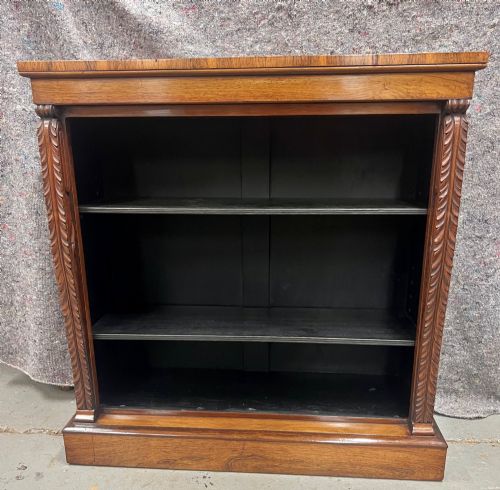

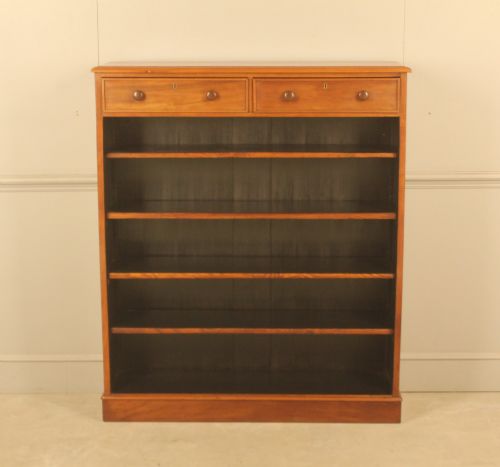


Antique Mahogany Bookcase Base
These antique mahogany bookcase base sections offer solid timber construction and practical proportions, serving as versatile storage units for any room.
Antique Mahogany Bookcase Base
An antique mahogany bookcase base represents the lower section of a larger library piece or stands alone as a cabinet, sideboard, or open shelf unit. Buyers seek these items for their rich timber tones and functional enclosed or open storage capabilities.
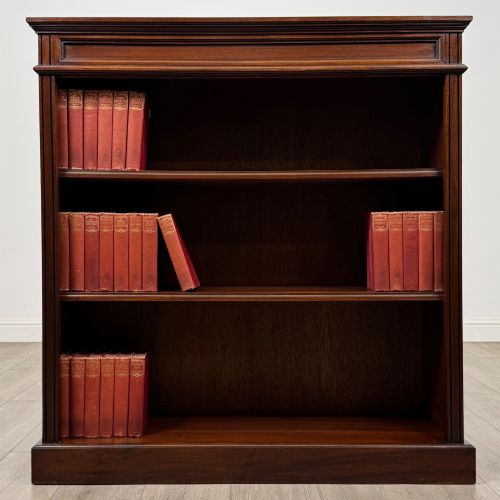
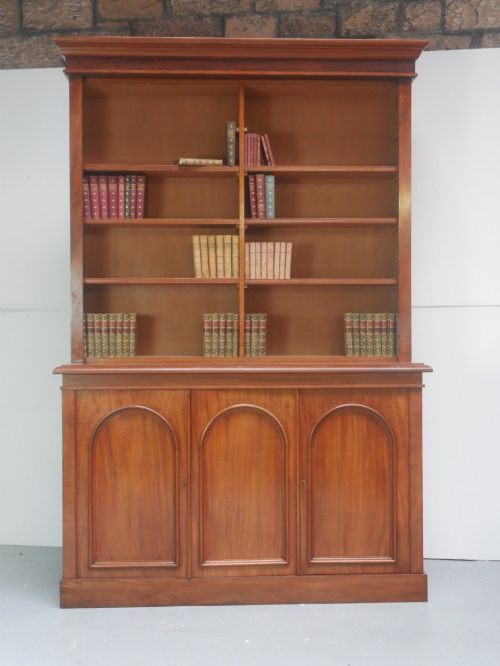
The pieces appearing on this page span several distinct periods including Georgian, Regency, and Victorian eras. You will encounter open library shelves, breakfront configurations, and two-door cupboard bases designed for domestic book and document storage.
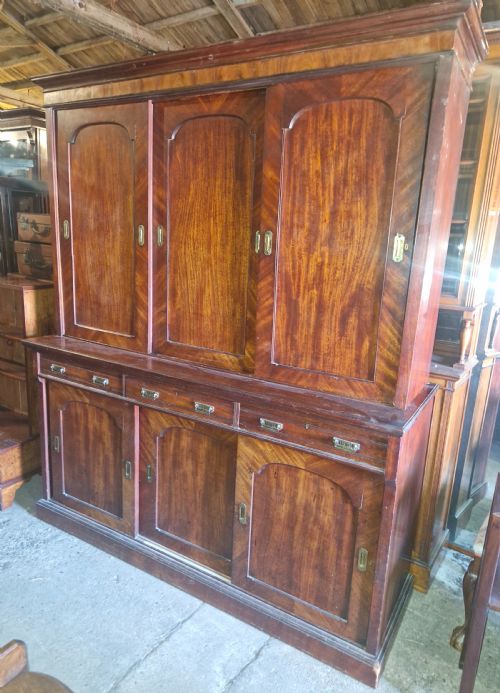
Cabinet makers constructed these lower sections from sturdy woods such as mahogany, oak, and pine, often incorporating flame mahogany veneer on visible drawer and door fronts. Many examples feature brass hardware and glass elements that complement the dense tropical timber.
What varies in quality
The grade of timber and the choice of veneer significantly separate standard examples from finer commissions. Artisans selected deeply figured flame mahogany for prominent surfaces on superior pieces, leaving plainer straight-grained timber for utility items.
The precision of the cabinet joinery and the originality of the brass hardware dictate the standing of an individual piece. Refined mouldings, well-executed bracket feet or plinth bases, and intact original finishes distinguish the most accomplished workshop output.
Listings feature items spanning the Georgian, Regency, and Victorian periods, constructed primarily from mahogany with brass and glass details.
The Antique Mahogany Bookcase Base Glossary
- Breakfront
- A piece of furniture featuring a central section that projects forward from the flanking wings. This architectural layout creates visual depth in large library furniture.
- Flame mahogany
- A veneer cut from the fork of the mahogany tree where the branch meets the trunk. It produces a distinctive flickering flame-like grain pattern highly prized by cabinet makers.
- Chiffonier
- A low sideboard or cabinet featuring shelves or enclosed storage, popular during the Regency and Victorian periods. These units often sat in parlours to hold books and decorative objects.
- Wellington chest
- A tall, narrow chest of drawers secured by a hinged locking stile on one side. This locking mechanism bars access to all drawers simultaneously.
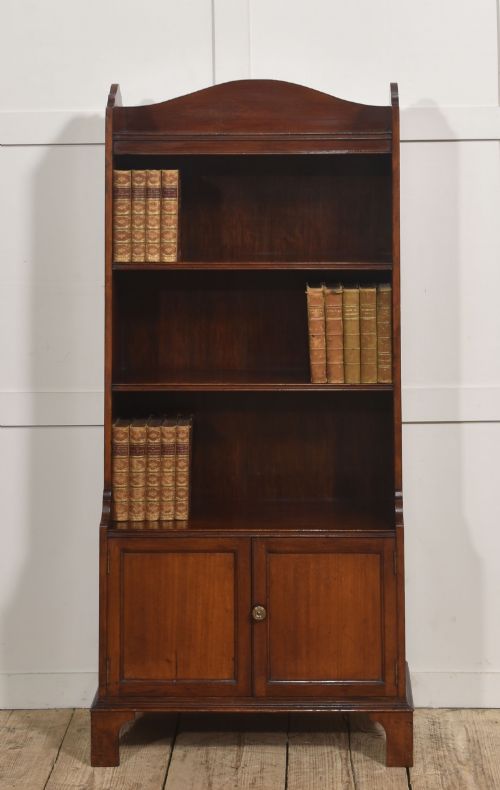
- Waterfall bookcase
- A tiered set of open shelves where each successive shelf steps back from the one below. The sides typically follow this descending profile.
Antique Mahogany Bookcase Base: Frequently Asked Questions
What is a bookcase base?
A bookcase base is the lower portion of a larger library bookcase, or a standalone low cabinet designed for book storage. These units provide enclosed cupboard space or open shelving beneath a flat top surface.
Historically, many tall library bookcases were built in two distinct sections to ease transport and placement within grand houses. Today, these lower sections function independently as side cabinets, low bookcases, or serving surfaces in modern homes.
How do I date an antique mahogany piece?
Dating relies on examining construction methods, timber choices, and stylistic details characteristic of periods like Georgian, Regency, and Victorian. Secondary woods inside drawers and the type of fixings used provide reliable chronological clues.
Early pieces from the Georgian era often feature hand-cut dovetails and solid mahogany boards, whereas later Victorian examples might incorporate machine-sawn elements and pine secondary framing.
Are these pieces solid mahogany?
Most examples combine solid mahogany for structural components with flame mahogany veneers applied to prominent flat surfaces. Secondary timbers such as oak, pine, or deal frequently appear inside drawer linings and carcase backs.
Cabinet makers used veneers to display dramatic grain patterns without wasting scarce tropical hardwoods, a standard practice across high-end workshops of the eighteenth and nineteenth centuries.
How should I care for mahogany furniture?
Maintain mahogany furniture by keeping it away from direct sunlight and strong heat sources that can dry out the timber and crack veneers. Regular dusting with a soft, dry cloth preserves the polished surface.
Apply high-quality beeswax sparingly when the wood appears dry, avoiding modern silicone-based polishes that can degrade antique finishes over time.