





Eight Oak Dining Chairs
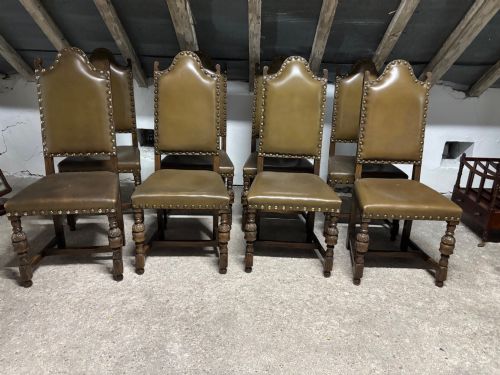
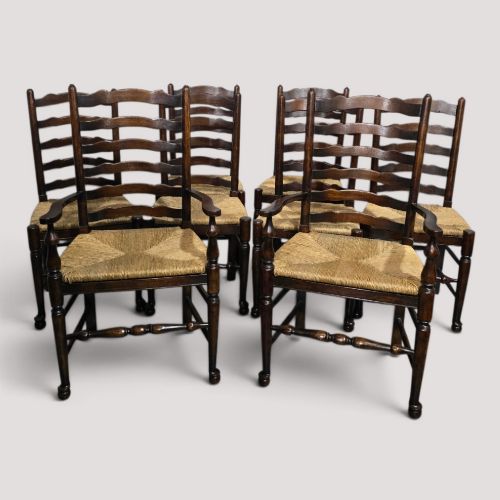
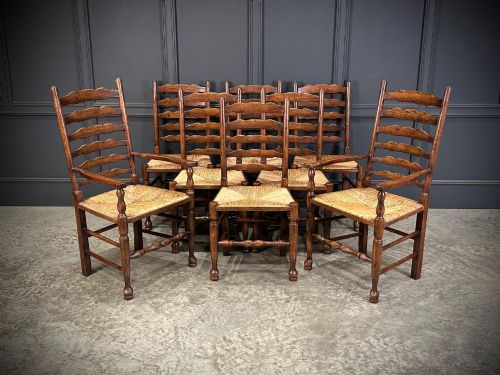
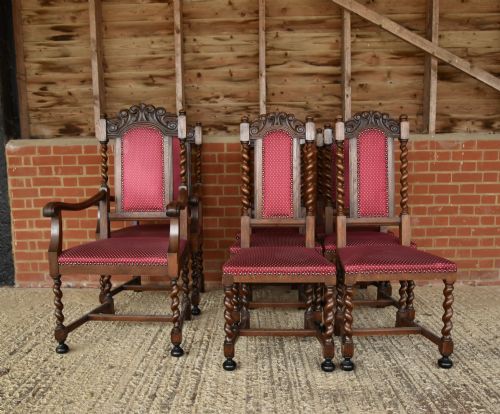
These eight oak dining chairs offer substantial seating for larger tables, uniting robust construction with centuries of traditional woodworking.
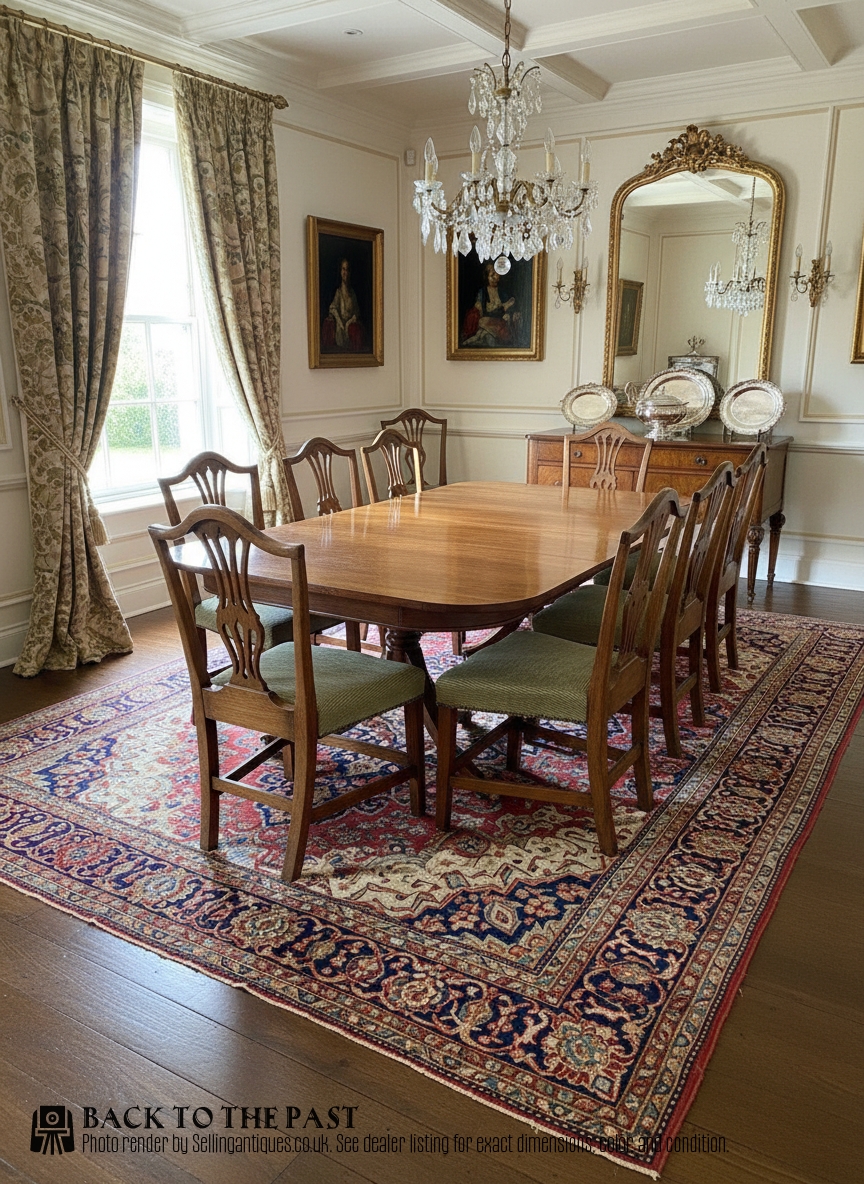
Eight Oak Dining Chairs
Eight oak dining chairs bring together matching sets of robust seating designed to accommodate larger dining tables in domestic settings. Finding eight matching chairs from earlier periods requires careful assembly or fortunate survival, as many original sets were dispersed over time.
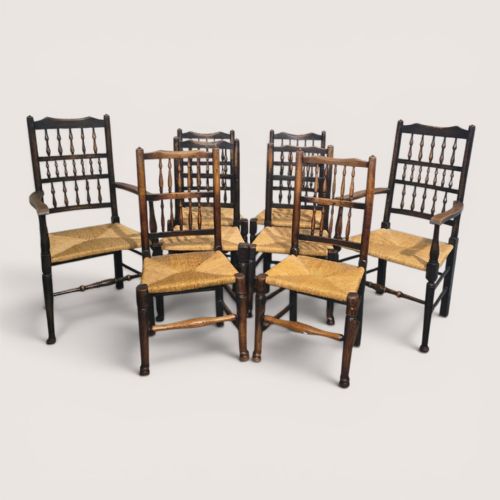
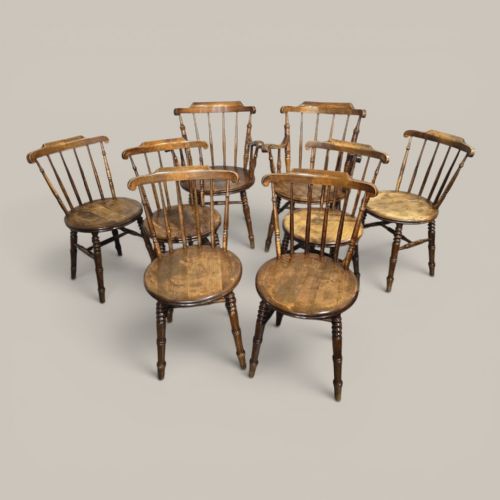
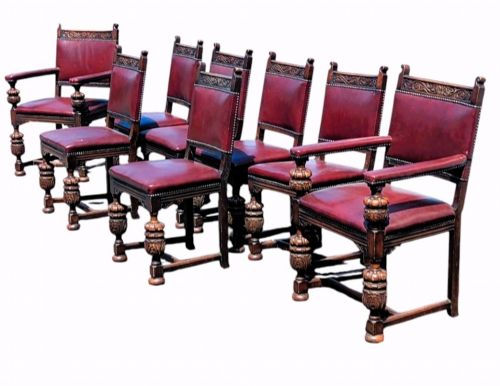
The options span formal Georgian designs and country vernacular ladder-backs to revival styles from the Edwardian era and the 1920s and 1930s. Plain rustic forms sit alongside heavily carved Jacobean revival pieces and clean-lined Arts and Crafts models.
Most sets encountered on this page date from the nineteenth and early twentieth centuries, drawing heavily on earlier seventeenth and eighteenth-century aesthetic traditions. Buyers frequently select these groups to anchor a dining room with consistent timber tones and sturdy forms.
How They Were Made
Solid oak serves as the primary structural material, often paired with secondary woods like elm and ash for internal framing or turned components. Artisans utilised traditional joinery methods, employing mortise and tenon joints secured with wooden pins to ensure long-term stability under daily use.
Seating surfaces vary according to the regional style and period, incorporating woven rush, split cane, or padded upholstery finished in leather and various fabrics. Barley twist turnings, spindle backs, and carved crest rails reflect the specific stylistic vocabulary applied by regional cabinetmakers and larger workshops.
Listings feature oak combined with brass, rush, leather, fabric, elm, and cane across various revival styles.
What Varies in Quality
The overall harmony of the group dictates much of its standing, distinguishing unified original sets from assembled harlequin groups gathered together at a later date. Consistency in timber grain, colour matching across all eight frames, and uniform wear patterns indicate a cohesive origin.
Depth of carving and the crispness of turned details reveal the skill invested by the original maker, whether produced in a provincial workshop or by a noted urban firm. The structural integrity of the joints and the quality of secondary materials such as sturdy rush or fine leather further define the upper tier of survivals.
John Taylor & Son·Lamb Of Manchester·Heals·William Birch
The Eight Oak Dining Chairs Glossary
- Ladder-back
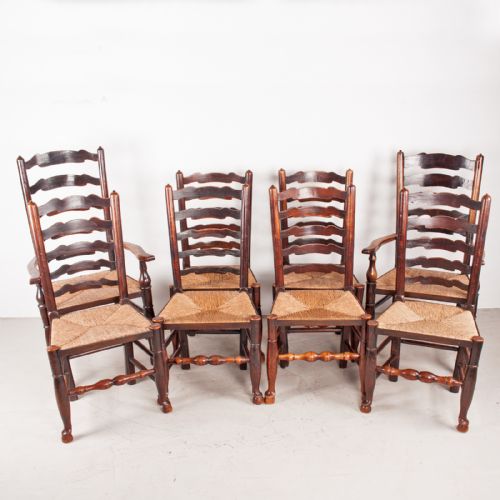
- A chair back featuring multiple horizontal arched slats resembling the rungs of a ladder between two upright posts. This traditional country form appears frequently in regional English and French regional seating.
- Rush seat
- A seating surface woven from dried marsh rushes twisted into cords and patterned tightly across the chair frame. It provides a resilient, traditional base found often on country and provincial chairs.
- Barley twist
- A turned decorative woodwork detail resembling a spiral rope or twisted column. This method was widely utilised during the seventeenth century and revived enthusiastically in later revival furniture.
- Harlequin set
- A collection of chairs that match closely in general style and period but originate from slightly different sources or batches. Such groups offer the count of eight required for dining without the strict uniformity of a single workshop origin.
- Spindleback
- A chair back constructed with a series of thin, vertical turned wooden rods supporting the top rail. This lighter construction style is common in Lancashire and other regional vernacular traditions.
Eight Oak Dining Chairs: Frequently Asked Questions
How do I care for antique oak chairs?
Maintain timber moisture by avoiding direct heat sources and applying appropriate natural waxes sparingly to nourish the grain.
Check frame joints periodically to ensure wooden pins and structural glue remain stable under regular daily use.
Can I mix these with a modern table?
Solid timber frames blend naturally with contemporary dining tables, adding textural contrast and historical warmth to modern interiors.
Matching the scale and height of the seats to your table clearance ensures comfortable dining for guests.
What is a harlequin set?
A harlequin set consists of chairs sharing similar stylistic traits and timber types while originating from slightly separate sources.
These collections provide the necessary number of seats for a dining room while maintaining a cohesive historical appearance.
How do I distinguish regional styles?
Regional characteristics appear in the turning of legs, the profile of ladder-back slats, and the choice of rush or wood seats.
Local cabinetmakers adapted national trends to suit local materials and preferences, creating distinct provincial traditions.