

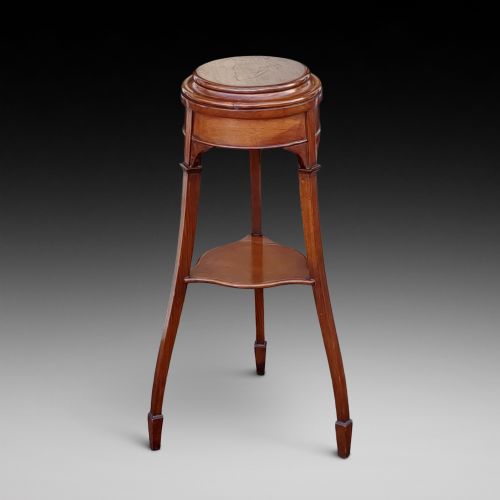
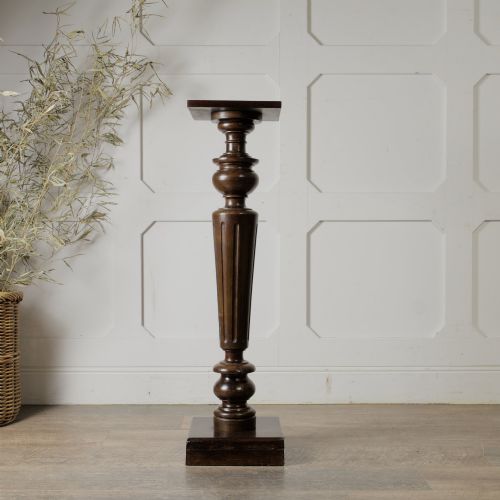


Edwardian Wooden Plinth
An edwardian wooden plinth elevates a bust or display object, bringing height and proportion to a room.
Edwardian Wooden Plinth
An edwardian wooden plinth is a display support designed to raise statues, busts, and decorative items to eye level within a room. When you search for this phrase, you encounter turned stands, columns, and pedestals dating from the early twentieth century alongside broader nineteenth-century examples.
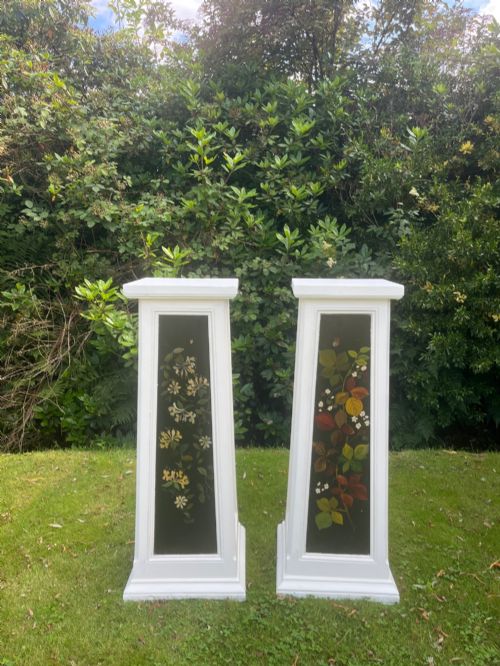
The selections on this page span diverse forms, ranging from solid mahogany turned columns to ebonised wooden plinths and painted bust stands. Walnut and various timber veneers also appear among the supporting structures listed.
How these pieces were made
Cabinet makers utilised dense hardwoods such as mahogany and oak, often turning them on lathes to create classical columnar profiles and spiral pillars. Selected pieces incorporate flame mahogany veneer to add visual depth to the outer surfaces.
Finishes include polished wood gleam and painted surfaces, sometimes paired with brass details or glass elements depending on the specific period style, from Edwardian to Aesthetic Movement.
Edwardian Wooden Plinth Retail Price Guide 2026
Typical asking prices for edwardian wooden plinth among the pieces listed under this phrase on Sellingantiques today, from the lower quarter to the upper quarter. They describe what is for sale here now, not the wider market.
The furniture forms on this page span the Victorian, Edwardian, and Art Nouveau periods, reflecting early twentieth-century revival styles.
What varies in quality
Quality rests in the selection of timber, the weight and stability of the base, and the precision of the turned woodwork. Heavier solid mahogany and finely ebonised finishes show superior substance compared to lighter utility stands.
The refinement of the proportions and the crispness of any applied mouldings or revival details distinguish standard functional supports from finer decorative pieces.
The Edwardian Wooden Plinth Glossary
- Plinth
- A heavy base or lower block that supports a pillar, statue, or bust. It provides stability and visual weight to the elevated object.
- Ebonised
- Wood treated with a dark stain or finish to imitate ebony. This technique was popular for creating dramatic contrast in late nineteenth and early twentieth-century furnishings.
- Flame mahogany veneer
- A thin slice of mahogany timber exhibiting a fiery, flame-like grain pattern. It is applied to a secondary wood foundation to create decorative surfaces.
- Pedestal
- An upright support or pillar acting as a base for a vase, sculpture, or lamp. These forms elevate items above floor level to draw the eye.
Edwardian Wooden Plinth: Frequently Asked Questions
What is an edwardian wooden plinth used for?
These sturdy stands primarily support heavy decorative items, such as bronze busts, ceramic vases, or sculptural bowls. Elevating these objects brings them into prominent view within domestic interiors.
They also function independently as architectural accents in hallways or reception rooms, creating focal points in empty corners.
How do I identify an Edwardian plinth?
Edwardian pieces typically date from the early twentieth century, showing simplified classical revival lines rather than the heavy ornamentation of mid-Victorian design. Look at the timber and construction methods for clues to this specific era.
Turned mahogany and ebonised finishes are characteristic of the period style represented in these listings.
Are these plinths made of solid wood?
The listings include both solid timber constructions and pieces formed with decorative veneers over secondary wood bases. Heavier columns often utilise solid mahogany or oak for structural stability.
Turned stands rely on substantial timber blocks to support weight safely without tipping.
Where should I place a pedestal in a room?
Pedestals suit corners, entrance halls, or flanking positions beside larger pieces of furniture where vertical height balances the room layout. Placing them away from heavy foot traffic protects the elevated display object.
Ensure the floor surface is level so the heavy base rests securely without wobble.