
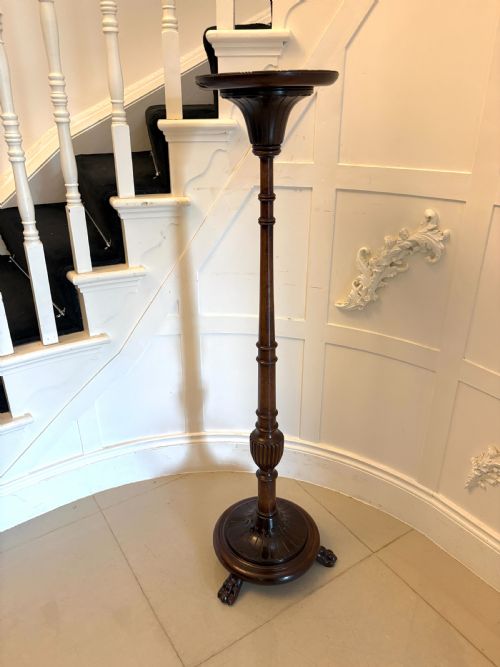


Dark Mahogany Display Column
A dark mahogany display column brings architectural weight and a rich timber grain to an interior, elevating sculpture and plants with quiet authority.
Dark Mahogany Display Column
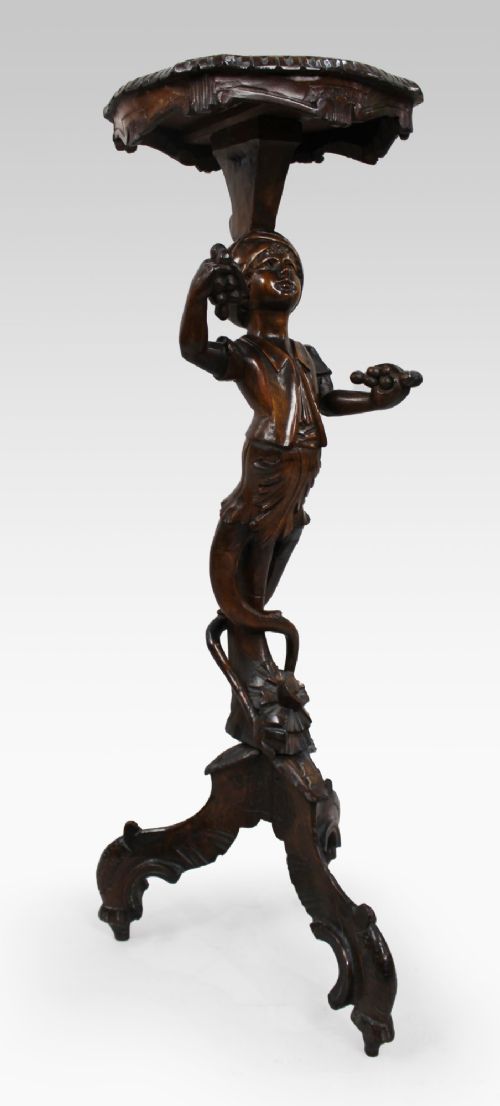
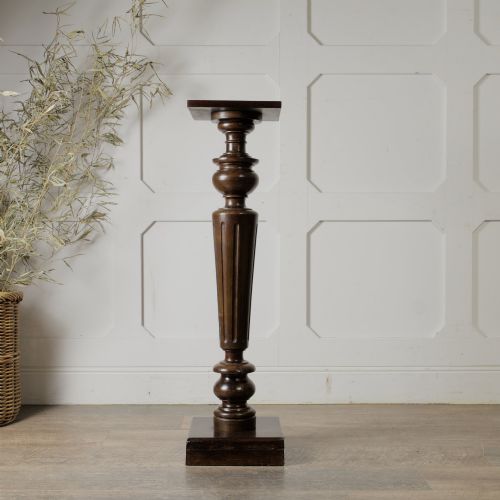
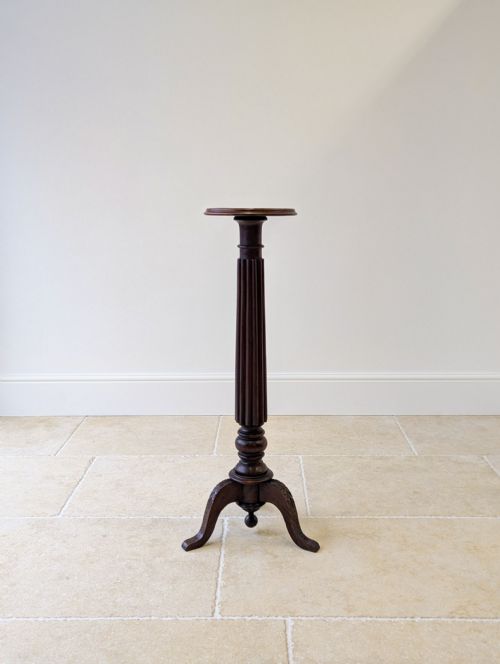
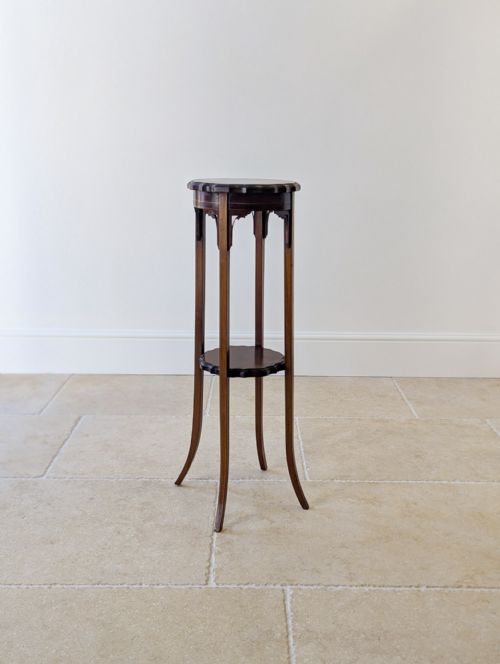
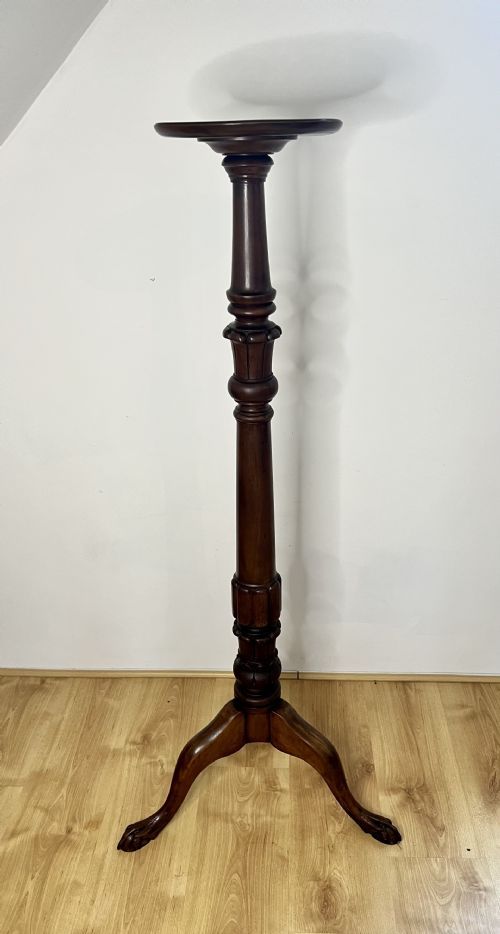
A dark mahogany display column appears across this selection primarily as a torchere, pedestal, or tall plant stand, reflecting the rigorous craftsmanship of nineteenth-century cabinet makers. Buyers searching for a dark mahogany display column encounter pieces spanning the Georgian, Regency, and Victorian eras, where vertical display furniture held a prominent place in formal rooms.
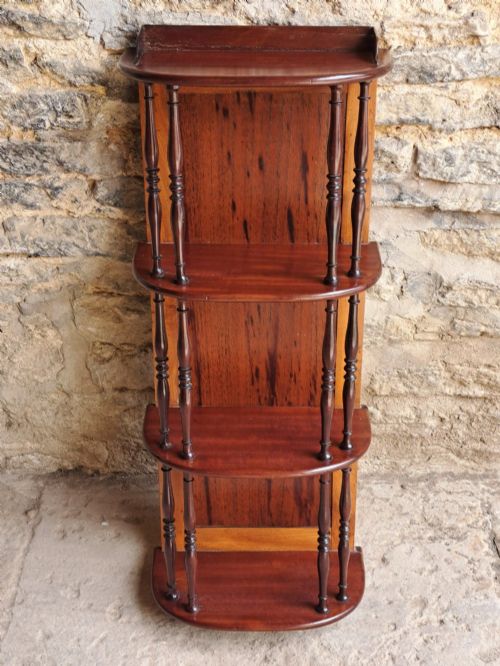
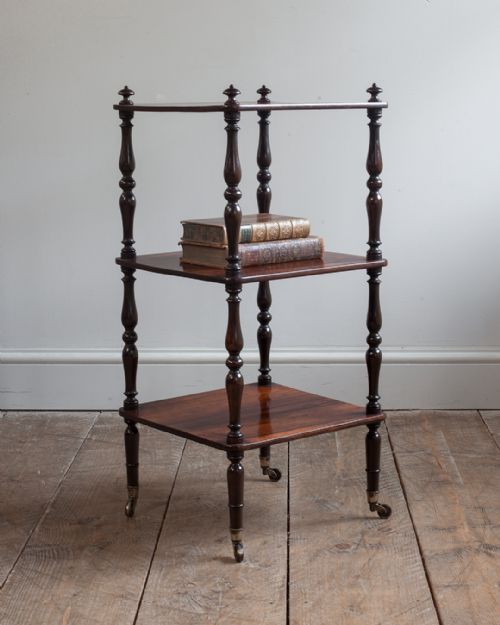
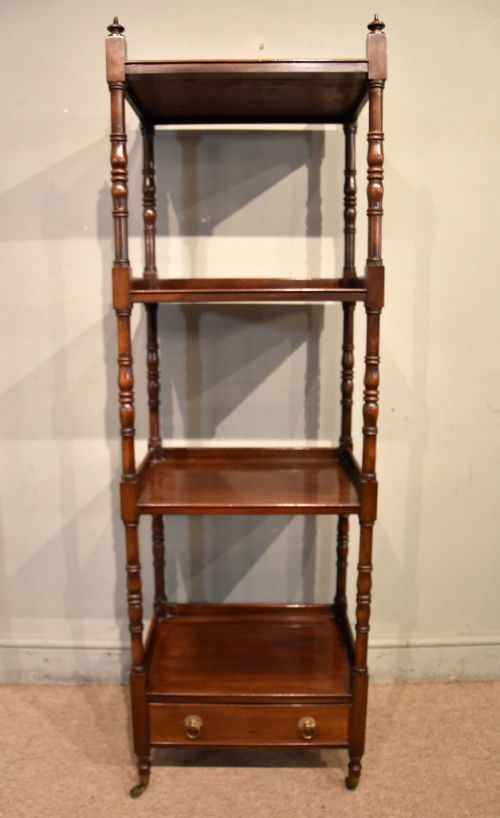
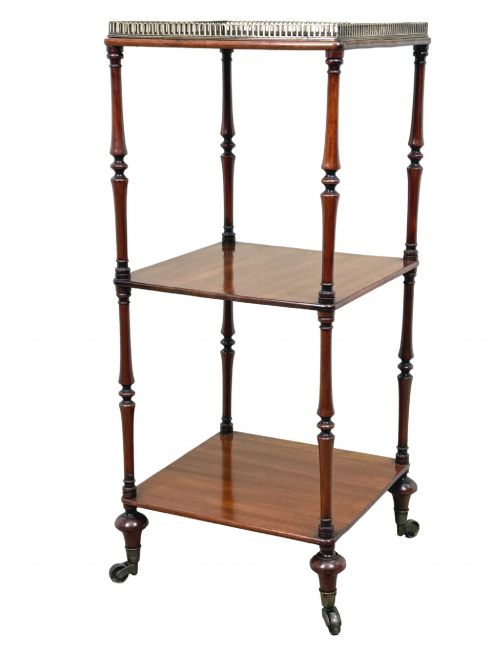
The objects take several distinct structural forms, including slender tapering shafts, turned plinths, and multi-tiered etageres designed to support decorative items. Solid mahogany and dark timber finishes dominate the inventory, frequently accompanied by brass mounts, marble inserts, or subtle satinwood inlay that accentuates the grain.
Origins stretch from English country houses to continental workshops, with styles ranging from austere Georgian utility to ornate French Empire and Edwardian revivals. These vertical stands serve the same purpose today as they did centuries ago: lifting an object of regard into the line of sight.
Materials and construction
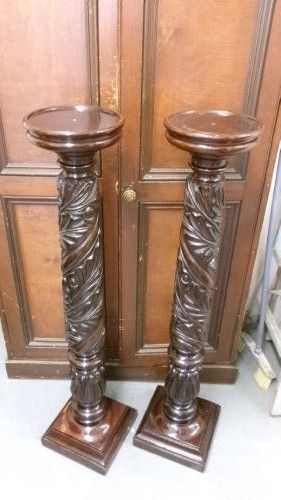
Makers utilised dense tropical hardwoods, predominantly solid mahogany and occasionally rosewood, selected for stability and deep natural colour. Timber sections were expertly turned on lathes or hand-carved with classical motifs such as fluting, acanthus leaves, and reeded columns.
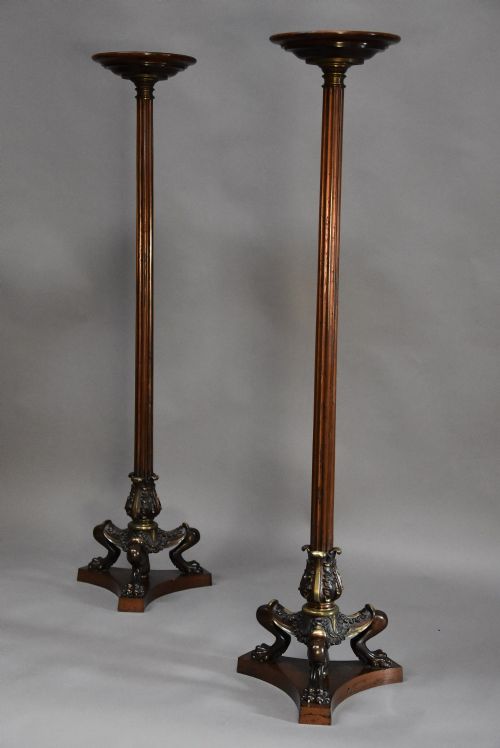
Secondary elements involve cast brass gallery rails, gilt metal mounts, and inset marble tops that added contrasting texture and weight to the timber framework. Joinery relied on precise pegging, mortise and tenon joints, and structural turning to ensure a slender column remained rigid under load.
Listings feature structural forms spanning the nineteenth century, uniting solid mahogany and rosewood with contrasting marble and brass elements.
Judging execution
The distinction between ordinary and exceptional pieces rests upon the crispness of the hand-carving and the choice of timber figure. Superior columns display deep, clean relief work on capitals and bases, whereas lesser examples rely on shallow stamping or blunt machine cutting.
Proportion and structural integrity dictate the upper tier of the range, ensuring the centre of gravity keeps heavy marble or bronze tops secure. The depth of the french polish finish, highlighting the natural grain without obscuring the timber beneath, marks the hand of a skilled workshop.
The Dark Mahogany Display Column Glossary
- Torchere
- A tall, slender stand designed specifically to support a lamp, vase, or decorative figure. These pieces evolved from seventeenth-century lighting stands into prominent display furniture.
- Whatnot
- An open shelving unit of three or more tiers used for displaying small ornaments and books. They became popular in late Georgian and Victorian parlours.
- Etagere
- A piece of furniture consisting of a set of open shelves for displaying ornaments. The term derives from the French word for a stage or shelf.
- Plinth
- The lower square block at the base of a column or pedestal. It provides visual grounding and physical stability to tall vertical furniture.
- Inlay
- A decorative technique where contrasting materials such as satinwood are inserted into recesses cut into the mahogany surface. This creates flat geometric or floral patterns.
Dark Mahogany Display Column: Frequently Asked Questions
What is the difference between a torchere and a pedestal?
A torchere is traditionally a lighter, more decorative stand originally meant to hold a light source, while a pedestal is built with a heavier, more solid column designed to bear the substantial weight of a bust or heavy sculpture.
Both serve vertical display purposes in traditional interiors, but pedestals generally offer a wider top surface and a more architectural silhouette.
How were these columns used in traditional homes?
Historically, these stands were placed in corners, entrance halls, or flanking fireplaces to elevate indoor plants, bronze figures, or porcelain vases.
By lifting decorative objects off the floor, they drew the eye upward and created focal points within large, high-ceilinged rooms.
How do I care for a mahogany stand?
Maintain the finish by dusting regularly with a soft, dry cloth and avoiding placement near direct heat sources or strong sunlight that can dry out the timber.
Apply a traditional beeswax polish sparingly when the wood appears dry, rubbing it gently to preserve the deep lustre of the dark mahogany.
How can I tell a Victorian column from a Georgian one?
Georgian columns typically exhibit restrained classical proportions with clean architectural lines and dense, heavy native mahogany timbers.
Victorian examples frequently introduce more elaborate carved detailing, turned rope twists, or mixed materials like inset marble tops and brass mounts.