

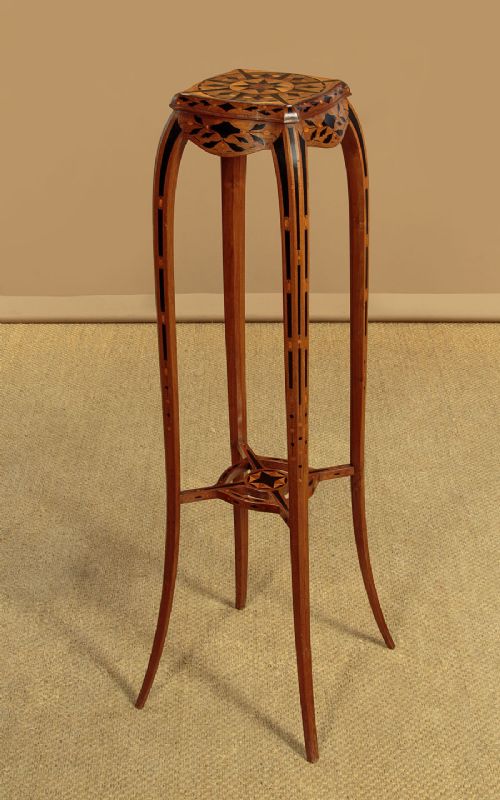
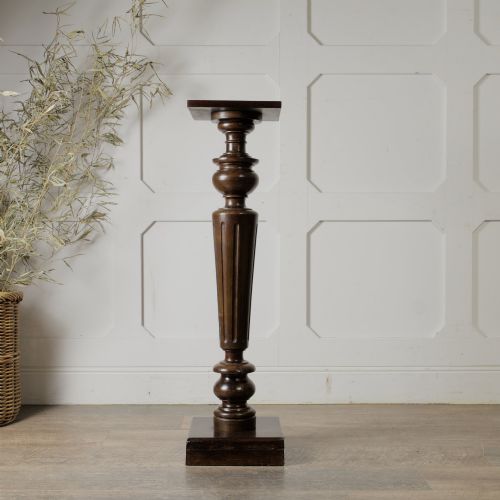
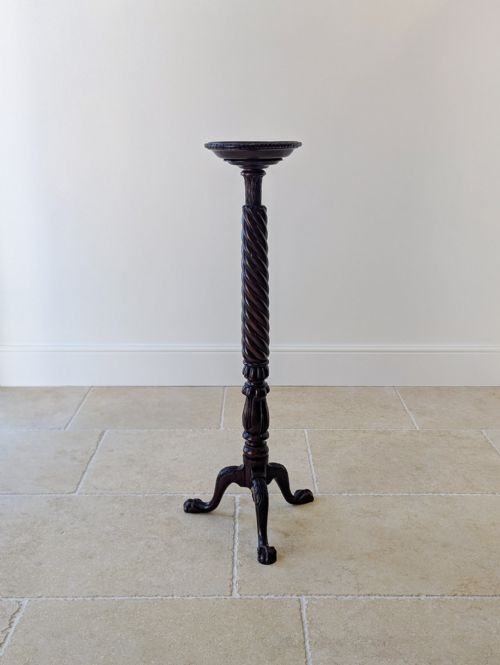
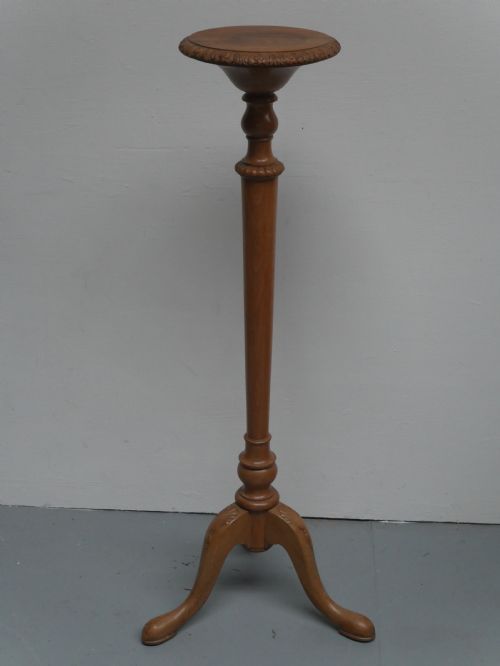


Turned Wood Torchere Stand
A turned wood torchere stand elevates a lamp or plant, bringing height and proportion to an empty corner.
Turned Wood Torchere Stand
A turned wood torchere stand takes the form of a tall, slender pillar designed to elevate plants, figures, or lighting. The selections here span the eighteenth century, the Victorian era, and the early twentieth century, encompassing Georgian, Regency, and Edwardian revivals.
Forms include dedicated pedestals, candle stands, plant stands, and tall side tables. Walnut, oak, and mahogany appear frequently alongside specimen wood and ebonised details.
Origin points range from British workshops to Continental makers, reflecting diverse regional interpretations of classical columnar design.
How they were made
Craftsmen shaped dense timbers such as mahogany, walnut, and oak on lathes to create the characteristic slender columns and baluster shafts. Pinewood and hardwood also serve as foundational materials, sometimes finished with ebonised accents or intricate carved decoration.
Joinery relies on solid timber construction, with turned components fitted into stable bases to support weight at height without tipping.
Turned Wood Torchere Stand Retail Price Guide 2026
Typical asking prices for turned wood torchere stand among the pieces listed under this phrase on Sellingantiques today, from the lower quarter to the upper quarter. They describe what is for sale here now, not the wider market.
What varies in quality
The choice of primary timber dictates much of the visual weight, with rich mahogany and figured walnut sitting at the upper end of traditional preference. Fine turning exhibits crisp profiles and balanced proportions from the heavy base up to the capital plate.
Structural stability depends on the integrity of the original joints and the weight distribution of the base, ensuring the tall shaft remains upright and secure under load.
The Turned Wood Torchere Stand Glossary
- Torchere
- A tall stand originally intended to hold a torch or candle, now commonly used for plants or lamps. The form emphasises verticality and slender support.
- Baluster
- An architectural column or pillar of vase-like shape, frequently utilised in the turned shafts of these stands. It provides structural strength alongside decorative contouring.
- Plinth
- The lowest part or base of a column or pedestal. A heavy plinth ensures the tall superstructure stays balanced.
- Ebonised
- Wood finished to resemble ebony through staining or painting. This technique creates dark, high-contrast accents on mahogany or other light timbers.
Turned Wood Torchere Stand: Frequently Asked Questions
What is a torchere stand used for?
These tall stands support table lamps, heavy plants, or decorative urns. They lift objects off the floor to fill vertical space in dark or awkward corners.
Historically, similar stands held candles or oil lamps to illuminate rooms before electric lighting became widespread.
How do I date a turned wood torchere?
Dating relies on timber selection, turning style, and structural joinery conventions. Eighteenth-century examples often feature dense mahogany and simpler, heavier proportions, while Victorian and revival pieces incorporate more ornate carving.
Revival pieces from the late nineteenth and early twentieth centuries frequently imitate earlier Georgian or Chippendale styles.
Are these stands stable enough for lamps?
Most antique stands feature weighted or broad bases designed to counteract the height of the shaft. Solid wood construction provides the necessary mass to prevent casual tipping.
Placing the stand on an even floor and centring heavier items ensures secure daily use.
What is the difference between a pedestal and a torchere?
While both terms describe tall display furniture, torcheres traditionally emphasise slender, column-like turned shafts intended for single accent items. Pedestals can sometimes feature broader box-like shafts designed to carry heavier portrait busts or sculptures.
In practice, makers and sellers often use both terms interchangeably for turned timber display stands.