


Edwardian Wooden Desk
An edwardian wooden desk brings sturdy practicality and refined proportions to a room, offering organised storage alongside a dedicated writing surface.
Edwardian Wooden Desk
An edwardian wooden desk spans functional roll-top models, writing tables, and partners desks constructed during the early twentieth century. Buyers seeking this phrase encounter sturdy office furniture alongside domestic writing furniture designed for home studies.
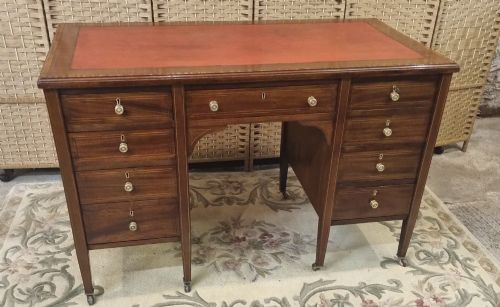
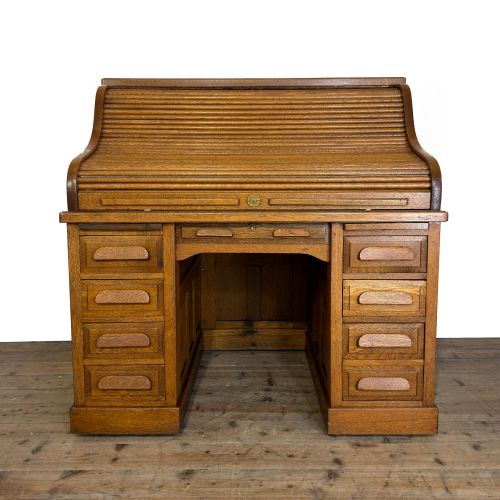
The material palette draws heavily on oak, mahogany, and walnut, frequently incorporating tambour fronts and leather writing surfaces. Pieces range from simple two-drawer writing tables to elaborate pedestal formats with fitted pigeon holes.
While Edwardian examples dominate, related items from the Victorian period and the early twentieth century appear frequently alongside seating and desk accessories. These pieces reflect the expanding administrative needs and domestic study spaces of the era.
Materials and Construction
Cabinet makers utilised solid hardwoods like oak and mahogany, often applying walnut veneers or satinwood stringing to create decorative contrast on drawer fronts and writing surfaces. Brass handles, hinges, and gallery rails provide functional metallic detail.
Roll-top variants rely on flexible tambour construction, assembling narrow wooden slats onto a fabric backing to slide smoothly within concealed tracks. Leather inserts, frequently coloured red or dark tones, are set directly into the timber writing surfaces.
Edwardian Wooden Desk Retail Price Guide 2026
Typical asking prices for edwardian wooden desk among the pieces listed under this phrase on Sellingantiques today, from the lower quarter to the upper quarter. They describe what is for sale here now, not the wider market.
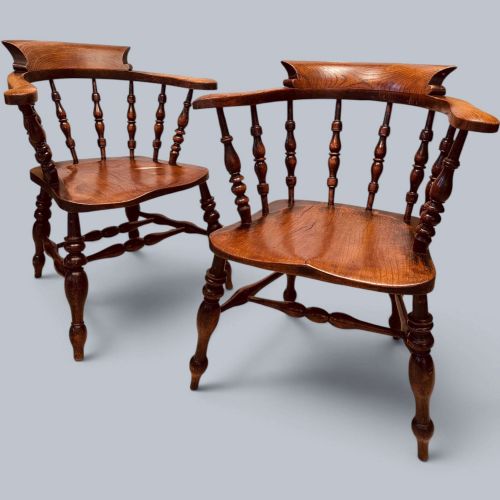
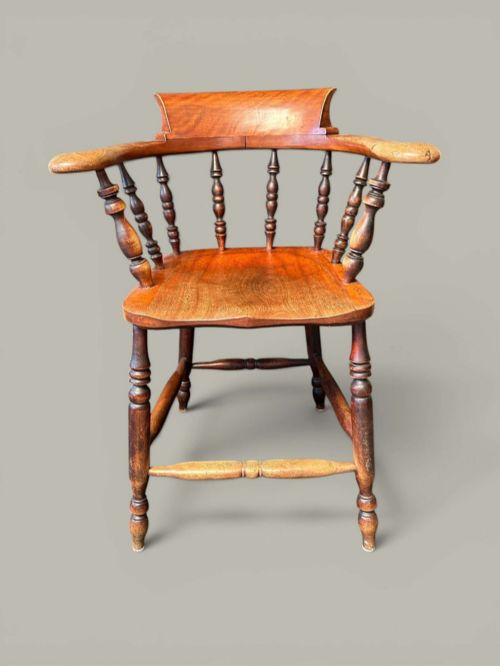
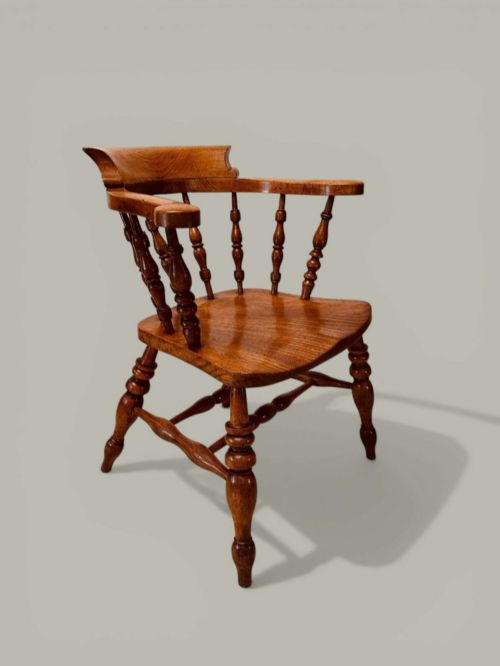
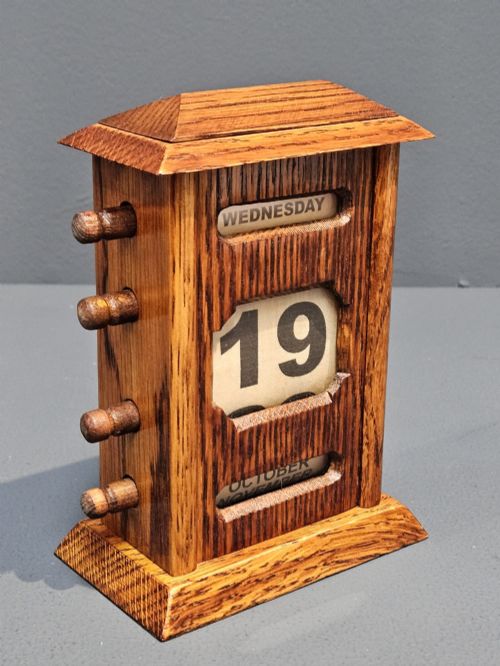
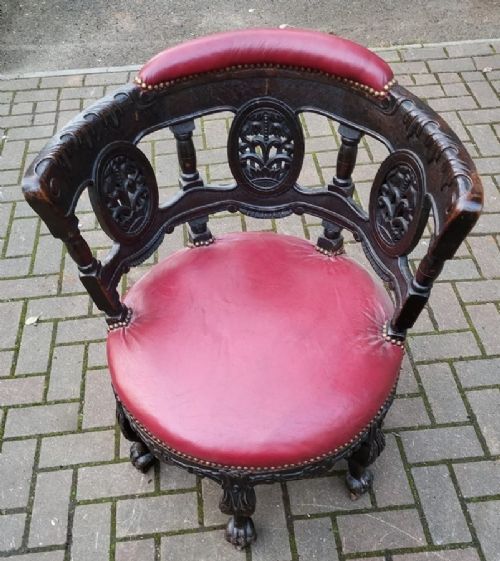
Listings feature robust oak and mahogany desks alongside revolving armchairs, perpetual calendars, and brass-mounted accessories spanning the Edwardian and Victorian eras.
Craftsmanship and Proportion
Quality rests in the integrity of the timber selection, the precision of the joinery, and the smoothness of mechanical elements such as drawers and tambour shutters. Superior examples maintain original hardware and well-fitted interior compartments without modern alterations.
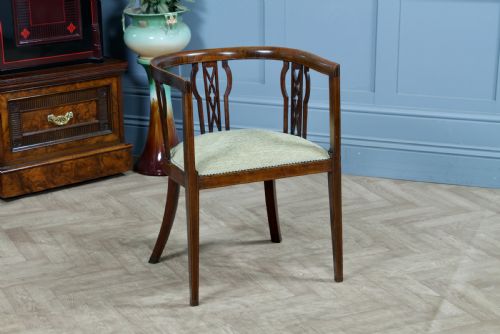
Finer desks display thoughtful decorative details like inlaid banding and carved pillars, whereas utilitarian pieces prioritise plain timber surfaces. The condition of the original leather writing surface and the stability of revolving desk chairs also mark the distinction between everyday utility and finer craftsmanship.
Bath Cabinet Makers·Howard and Sons
The Edwardian Wooden Desk Glossary
- Tambour front
- A flexible screen made of narrow wooden strips glued to canvas, allowing a desk top to roll open and closed. This mechanism conceals pigeon holes and small drawers.
- Partners desk
- A large double-sided pedestal desk designed with drawers and cupboards facing outward on both sides. Two people could sit opposite each other to work.
- Pedestal desk
- A heavy writing table supported by two vertical banks of drawers resting on the floor. The top section typically incorporates a central drawer flanked by smaller side drawers.
- Satinwood
- A lustrous hardwood from Sri Lanka and India displaying a golden yellow sheen. Cabinet makers utilised it for delicate inlay work and contrasting borders.
Edwardian Wooden Desk: Frequently Asked Questions
How do I care for leather desk surfaces?
Leather writing surfaces benefit from light dusting with a dry cloth and occasional treatment with specialist leather balms to prevent cracking. Avoid using household cleaning sprays or excessive water on the hide.
Preserving the original leather maintains the historical character of the writing table during daily domestic use.
Where were these desks used?
These desks served in professional offices, libraries, and private home studies for correspondence and administrative work. Larger formats accommodated banking or legal paperwork, while smaller writing tables suited domestic correspondence.
They remain practical for modern home offices requiring traditional workspace solutions.
What is the difference between an office desk and a writing table?
Office desks typically include heavy pedestal drawers, roll-top enclosures, or fitted pigeon holes designed for heavy daily administration. Writing tables offer a simpler, lighter construction with one or two drawers beneath a clean flat top.
Writing tables were generally placed in drawing rooms or bedrooms rather than commercial offices.