
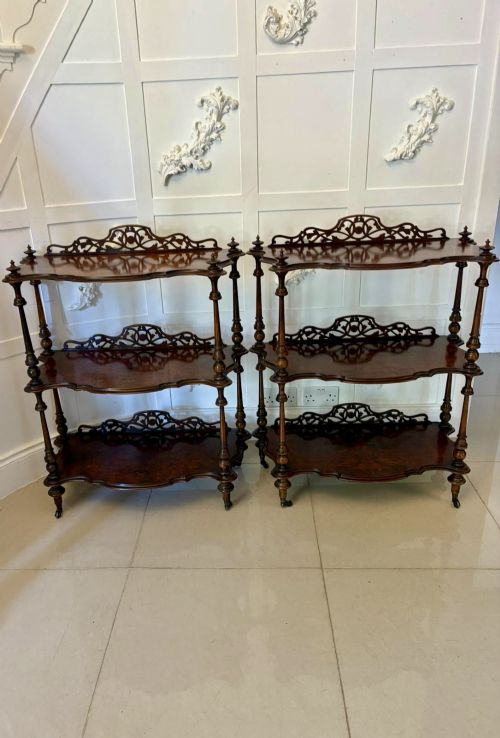
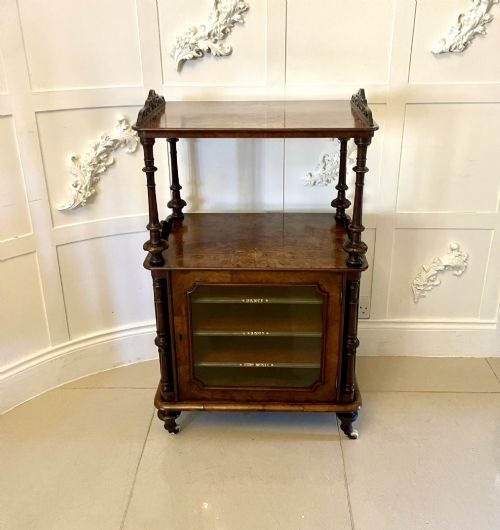


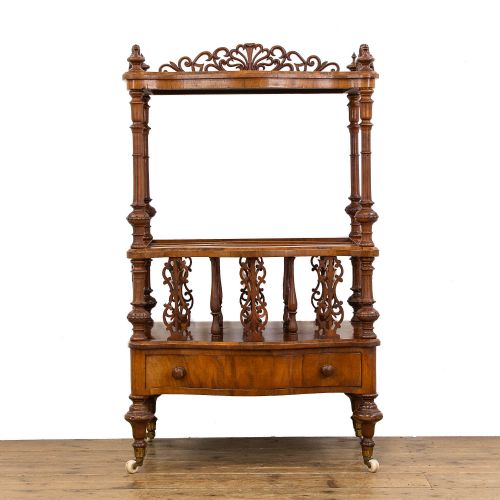


Edwardian Walnut Whatnot
These pieces of edwardian walnut whatnot are tiered open display furniture that bring practical surface area and warm timber tones to any room.
Edwardian Walnut Whatnot
When you search for an edwardian walnut whatnot, you are looking at multi-tiered display stands and shelving units designed to hold books, ornaments or sheet music. The pieces available combine walnut timber with various forms of tiers, shelving and occasionally integrated compartments such as canterburys or drawers.
The most common examples you will meet on this page span the Victorian and Edwardian eras, utilising rich burr walnut veneers and decorative inlay. These items range from simple three-tier open shelves to corner models and sophisticated pieces featuring marquetry and brass mounts.
Judging quality in walnut whatnots
Structural crispness and the condition of the polish define the lasting appeal of each tier. Pieces that retain their original brass casters, stable joints and unblemished wood surfaces sit firmly at the top of the range.
Some shelves twist upward like wooden spirals, proving that even a bookcase can enjoy a good stretch.
The Edwardian Walnut Whatnot Glossary
- Whatnot
- An open set of tiered shelves designed for displaying ornaments, books or small decorative objects. It gained popularity during the nineteenth century as a versatile room accessory.
- Canterbury
- A low stand featuring vertical partitions originally designed to hold sheet music or folios. Many walnut examples combine this function with whatnot shelving above.
- Burr walnut
- A specialised timber cut from the abnormal growth of a walnut tree, yielding highly decorative and swirling grain patterns. Cabinet makers prized it for veneering prominent surfaces.
- Marquetry
- The art of applying pieces of veneer to a structure to form decorative patterns and pictures. Floral and geometric motifs are typical on these pieces.
- Etagere
- A piece of furniture consisting of a set of open shelves for displaying small objects. The term is often used interchangeably with whatnot.
Edwardian Walnut Whatnot: Frequently Asked Questions
What was a whatnot used for?
These pieces served as multi-purpose display units in nineteenth-century drawing rooms for ornaments, ceramics and small books. They allowed households to exhibit collections without cluttering main tables.
Over time, variations appeared with incorporated stationery sections, music racks or lower drawers to combine display space with practical storage.
How do I date a walnut whatnot?
Dating relies on observing the timber choice, construction methods and stylistic markers such as inlay techniques or turning styles. Victorian examples often display rich burr walnut and heavy barley twist supports, while Edwardian pieces may lean towards lighter inlay and refined proportions.
Comparing the shelf edges, backboards and fixing methods helps confirm the manufacturing period.
Where should I place a whatnot at home?
Corner models fit neatly into unused angles of a room, while freestanding three or four-tier versions suit living spaces or hallways as display surfaces. Their open architecture means they maintain a light visual footprint despite their height.
Keep them away from direct sunlight and strong heat sources to protect the walnut veneer and polish.
How do corner whatnots differ from standard ones?
Corner whatnots feature triangular or wedge-shaped shelves designed to slot directly into the right-angle intersection of two walls. This makes them particularly efficient for smaller rooms or awkward spaces.
Standard rectangular or oval versions stand flat against a single wall and offer all-round visibility from multiple angles in a room.