


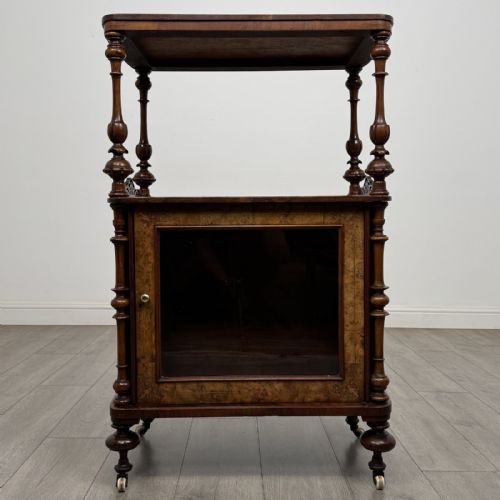
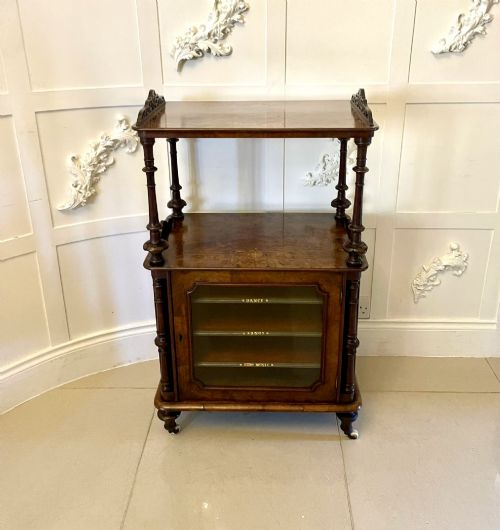
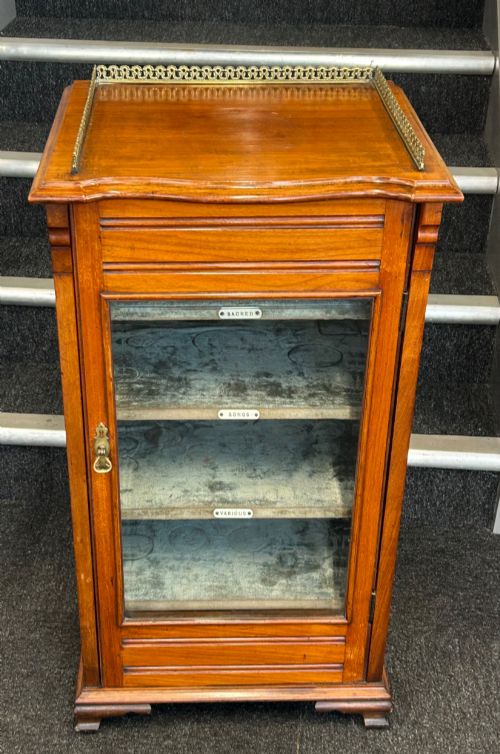
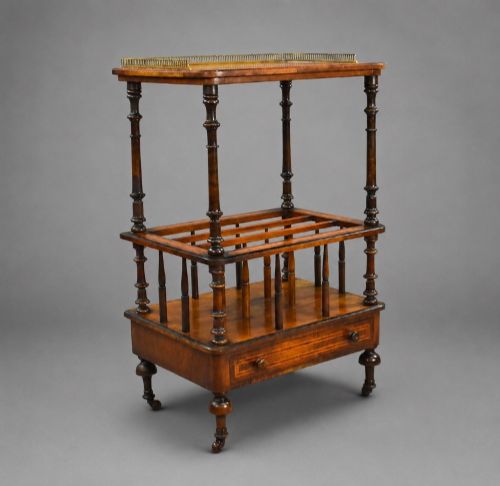
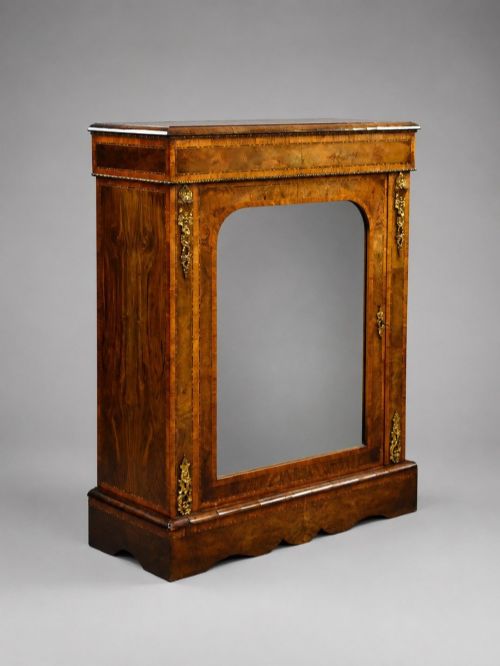
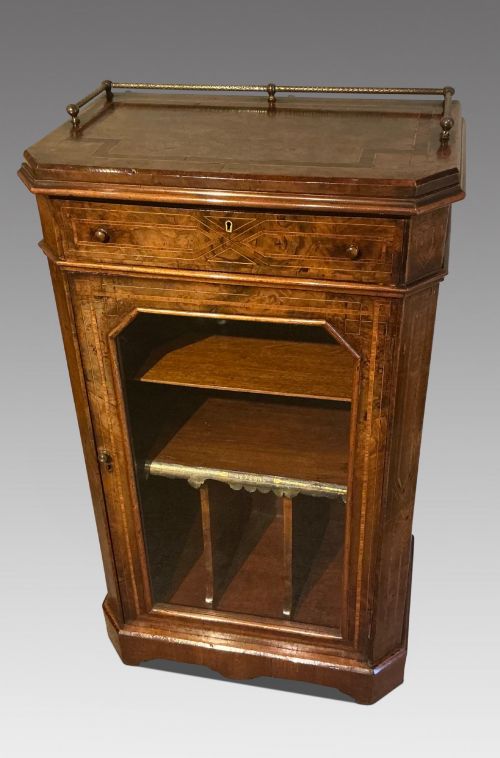


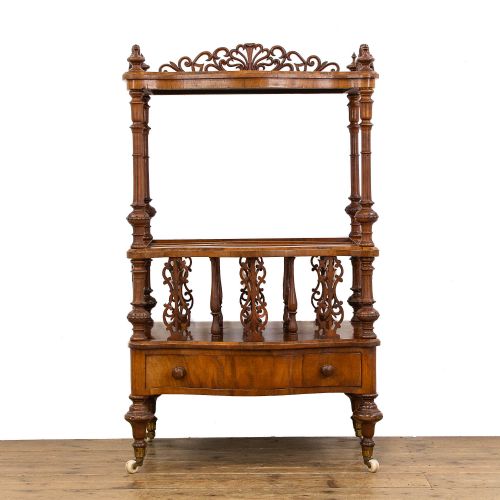


Edwardian Walnut Music Cabinet
An Edwardian walnut music cabinet is a refined piece of period furniture designed to house sheet music, bringing elegant timber grain into the room.
Edwardian Walnut Music Cabinet
When you search for an edwardian walnut music cabinet, you find compact vertical storage units designed for the parlour. The pieces listed here span the Victorian and Edwardian periods, including earlier 19th-century variants alongside specific Edwardian examples.
Forms range from dedicated sheet music cabinets and slim cabinets to canterburys, whatnots, side cabinets, pier cabinets, and magazine racks. Burr walnut and standard walnut dominate the selection, often combined with glazed doors or open shelving.
You are most likely to meet pieces featuring boxwood inlay, marquetry, or ebony detailing, occasionally incorporating ceramic components or brass hardware. The selection reflects domestic musical entertainments of the late nineteenth and early twentieth centuries.
What separates the finest examples
Quality rests in the choice of timber veneer and the precision of the marquetry or boxwood inlay. Superior pieces exhibit deeply figured burr walnut with meticulously matched grain across the entire front elevation.
The finesse of the internal dividers, the quality of the glass, and the restraint of the decorative brasswork distinguish finer workshops from standard production items. Proportion and the crispness of surviving inlay define the upper tier of the range.
Edwardian Walnut Music Cabinet Retail Price Guide 2026
Typical asking prices for edwardian walnut music cabinet among the pieces listed under this phrase on Sellingantiques today, from the lower quarter to the upper quarter. They describe what is for sale here now, not the wider market.
Listings combine Edwardian and Victorian eras, uniting burr walnut with mahogany, glass, ceramic, and brass details across various cabinet forms.
The Edwardian Walnut Music Cabinet Glossary
- Burr walnut
- A prized timber harvested from walnut tree growths, producing swirling, highly decorative grain patterns. It forms the primary visual appeal on cabinet doors and tops.
- Canterbury
- A low stand featuring vertical partitions, originally designed to hold sheet music or books. Many incorporate a small drawer beneath the main tier.
- Marquetry inlay
- Decorative wood veneers meticulously cut and fitted into a contrasting background to form pictorial or geometric designs. It adorns many panels across this selection.
- Pier cabinet
- A tall, narrow cabinet designed to fit wall spaces between windows. These frequently incorporate glass doors and velvet-lined interior shelving.
- Whatnot
- An open set of freestanding shelves supported by slender pillars, utilised for displaying ornaments. Several examples combine this form with music storage.
Edwardian Walnut Music Cabinet: Frequently Asked Questions
What fits inside an edwardian walnut music cabinet?
These cabinets were originally built to store unbound sheet music, folios, and small musical scores within dedicated internal slots or drawers.
Today, owners frequently utilise the slim compartments for contemporary paperwork, art prints, or as general desktop organisation.
How do I distinguish a pier cabinet from a music cabinet?
Pier cabinets focus primarily on glazed display with fixed or adjustable shelves for ornaments and china. Music cabinets prioritise vertical storage compartments or drawers specifically sized for flat paper sheets.
Some hybrid pieces combine both functions, featuring a glazed upper display section alongside lower music storage.
Where should I place an edwardian walnut music cabinet?
The compact footprint makes these cabinets versatile additions to studies, living rooms, or hallways where floor space is limited. Their finished backs and detailed marquetry often allow them to sit flush against walls or near seating areas.
Avoid positioning them in direct sunlight or beside intense heat sources to protect the walnut veneer and inlay.
How do I care for walnut veneer furniture?
Dust the surfaces regularly with a soft, dry cloth and feed the timber occasionally with appropriate wax to maintain the grain's depth. Avoid liquid polishes and silicone sprays, which can damage historic polish.
Maintaining stable room humidity prevents the burr walnut veneer from lifting or cracking over time.