


Edwardian Towel Airer
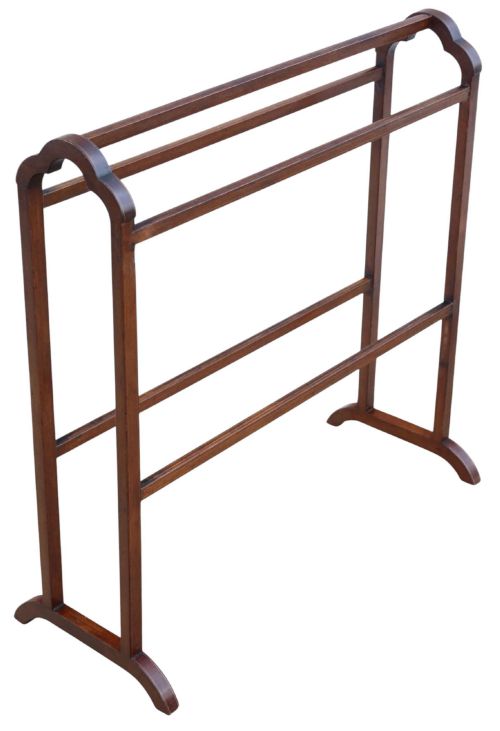
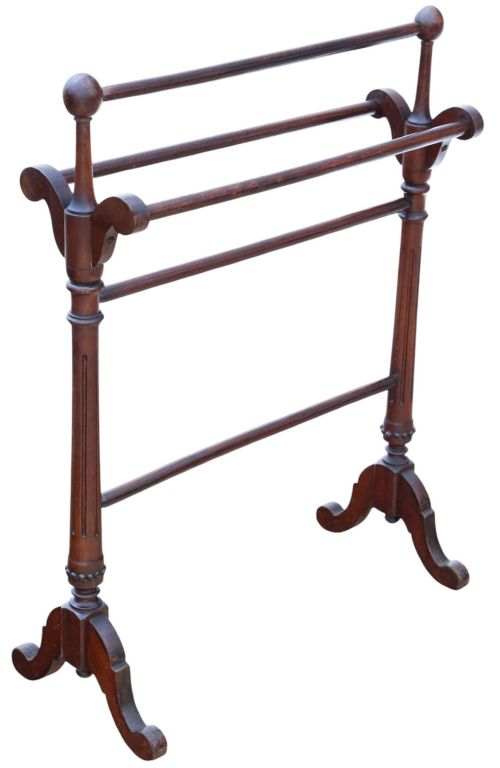
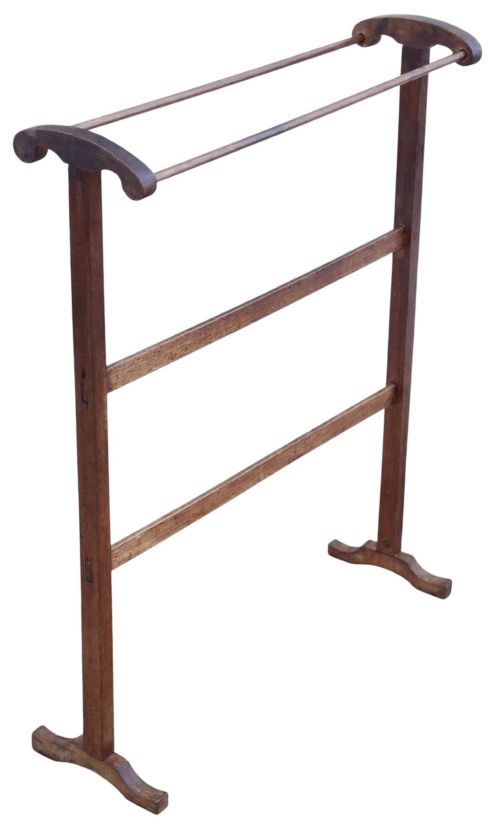
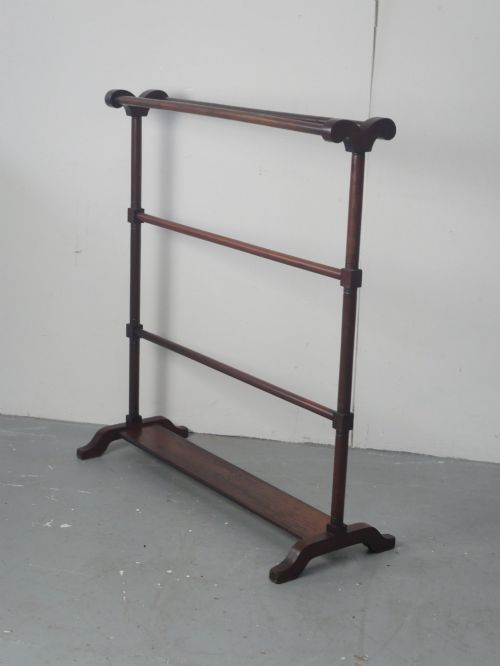
An edwardian towel airer brings practical utility and warm timber tones to a room, offering sturdy rails for linens in everyday use.
Edwardian Towel Airer
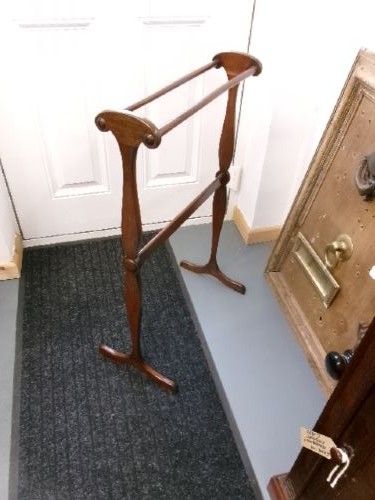
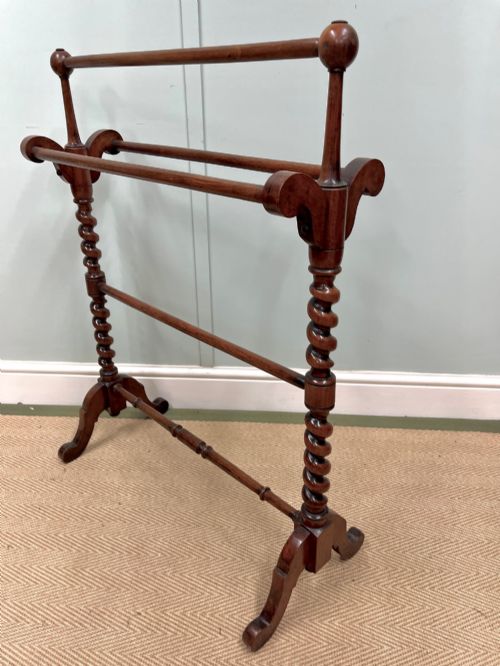
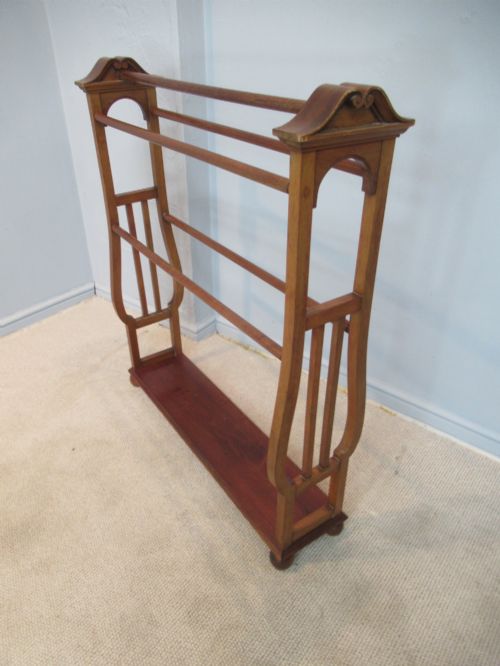
When you search for an edwardian towel airer, you encounter freestanding timber frames designed to hold and dry household linens. These pieces span standard floor models to larger multi-rail versions suited to period interiors.
You are most likely to meet mahogany examples from the Edwardian period, often featuring multiple rails or subtle inlaid details. Oak, pine, walnut and ebonised wood also appear across Victorian, Arts and Crafts and Regency styles.
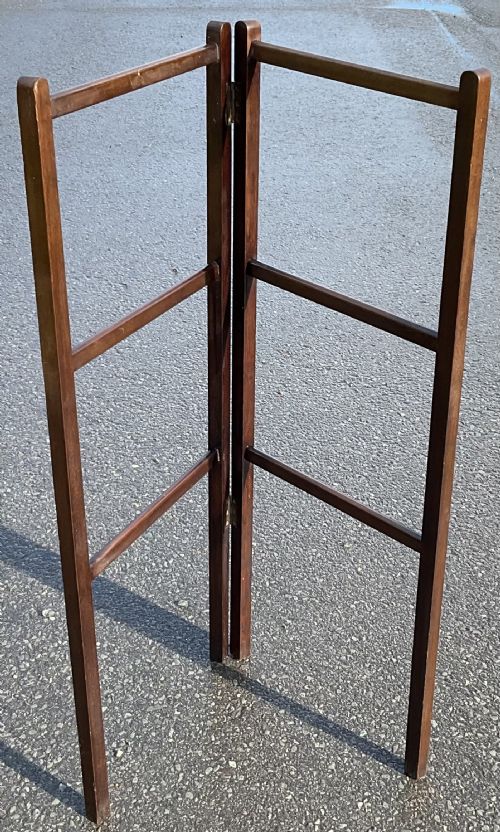
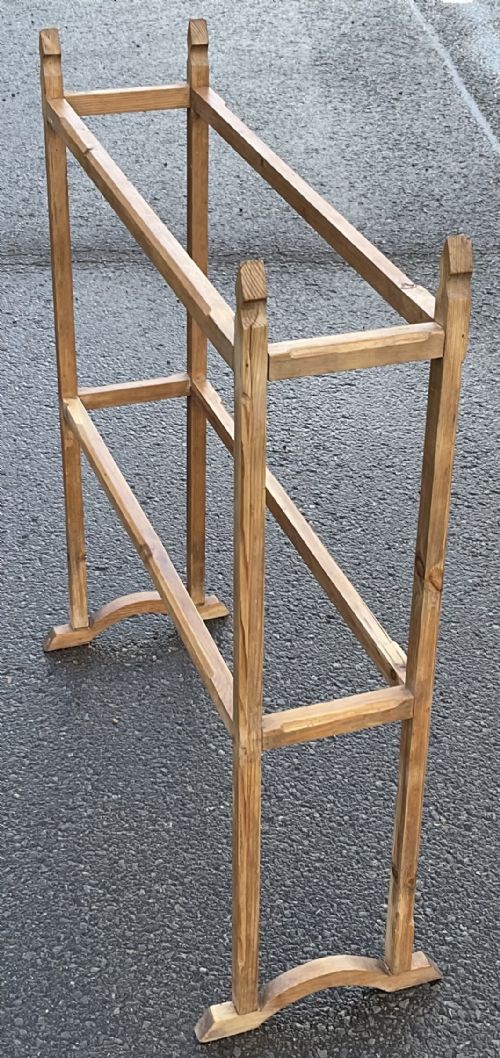
The primary forms include standing rail stands and folding configurations built for bedroom or bathroom placement. These functional wooden items reflect the domestic routines of their era through honest craftsmanship.
Materials and construction
Cabinet makers constructed these pieces primarily from solid hardwoods such as mahogany and oak, alongside softer pine for utilitarian items. Selected timbers provided the necessary strength to support damp linens without warping under daily use.
Joining techniques relied on traditional mortise and tenon joints to ensure stability in freestanding frames. Detail work sometimes incorporated satinwood inlay or brass fittings to elevate the appearance of the piece.
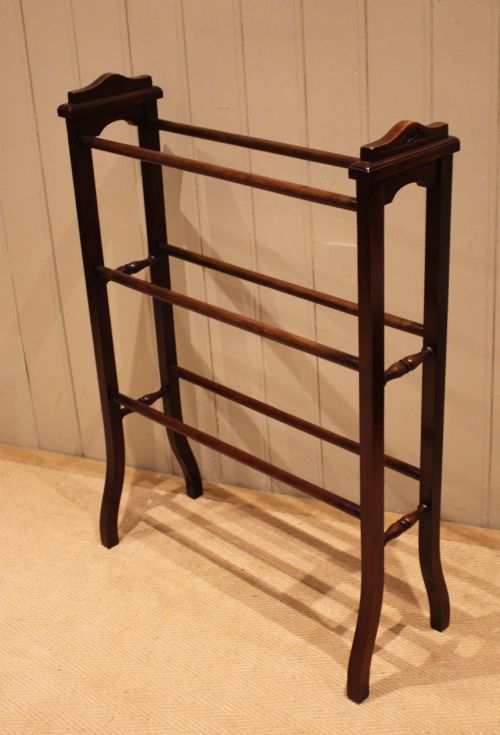
Five distinct rails give this ebonised stand plenty of room for damp smalls.
Quality and construction details
The distinction between standard examples and finer pieces lies in the selection of timber and the crispness of the joinery. Better versions utilise dense mahogany or figured oak rather than plain softwood.
Refined pieces display thoughtful embellishments such as satinwood inlay or multi-bar configurations rather than simple turned uprights. Structural rigidity without excessive bulk marks superior workmanship in these domestic items.
The Edwardian Towel Airer Glossary
- Edwardian
- Pertaining to the period from nineteen hundred to nineteen ten, characterised by lighter furniture forms and refined decorative details. Pieces from this era often favour slender proportions.
- Mahogany
- A durable tropical hardwood valued for its reddish-brown colour and fine grain. It remains the most common timber found in these listings.
- Inlay
- A decorative technique where contrasting wood, such as satinwood, is set flush into the primary surface. This adds subtle visual interest to the timber frame.
- Ebonised
- Wood treated with a chemical finish or dark stain to imitate ebony. This dark surface creates a sharp aesthetic contrast in period interiors.
- Arts and Crafts
- A design movement emphasising hand craftsmanship and simple, honest construction. Items from this style highlight natural wood grains over ornate carving.
Edwardian Towel Airer: Frequently Asked Questions
What is an edwardian towel airer used for?
These freestanding wooden frames were originally placed in bedrooms or dressing rooms to dry and air household linens. They provided accessible horizontal rails for daily use.
Today, they serve a similar practical function in bathrooms or bedrooms while adding period character to the space.
How do I clean a wooden towel rail?
Dust the timber regularly with a dry cloth to prevent the buildup of dirt within the joints. Avoid harsh chemical cleaners that can strip the polished finish.
Apply a traditional beeswax occasionally to nourish the hardwood and maintain its natural lustre.
Can I use an antique rail in a modern bathroom?
These pieces function well in contemporary spaces for hanging guest towels or displaying blankets. Ensure the room has adequate ventilation to protect the antique timber from excessive moisture.
Positioning the frame away from direct water sources preserves the historical polish and joints.
How do I date an edwardian towel rail?
Examine the timber species, joinery methods and decorative motifs such as satinwood inlay. Edwardian examples typically feature lighter proportions compared to heavier Victorian pieces.
Consulting the listed period of manufacture helps confirm whether a piece originates from the early twentieth century or earlier.