
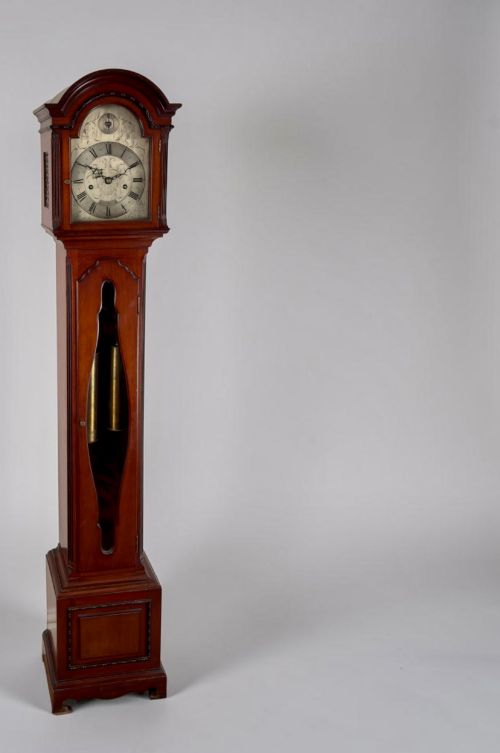
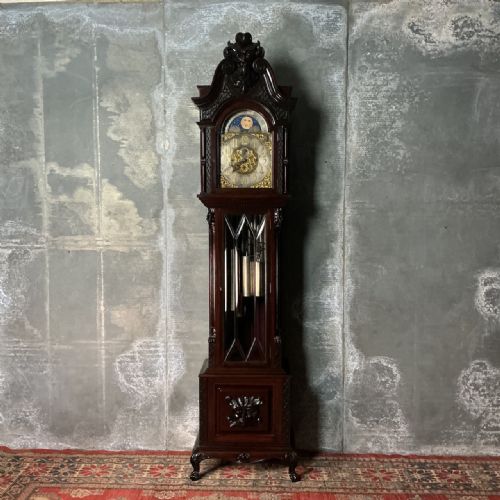
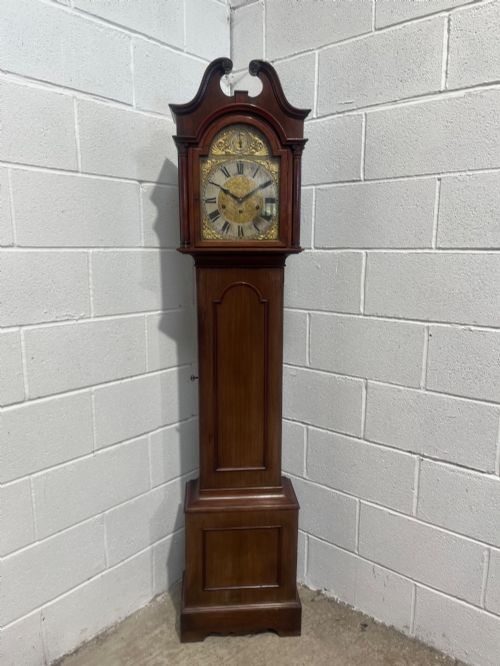
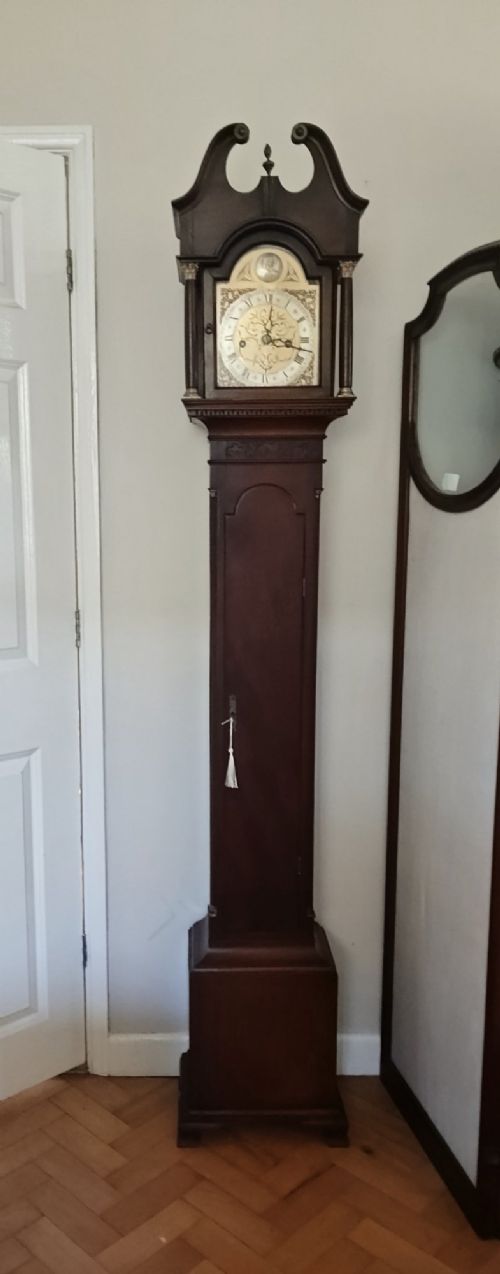



Edwardian Tallcase Clock
An edwardian tallcase clock is a stately floor-standing timekeeper bringing rich timber and complex chime movements to a hallway or drawing room.
Edwardian Tallcase Clock
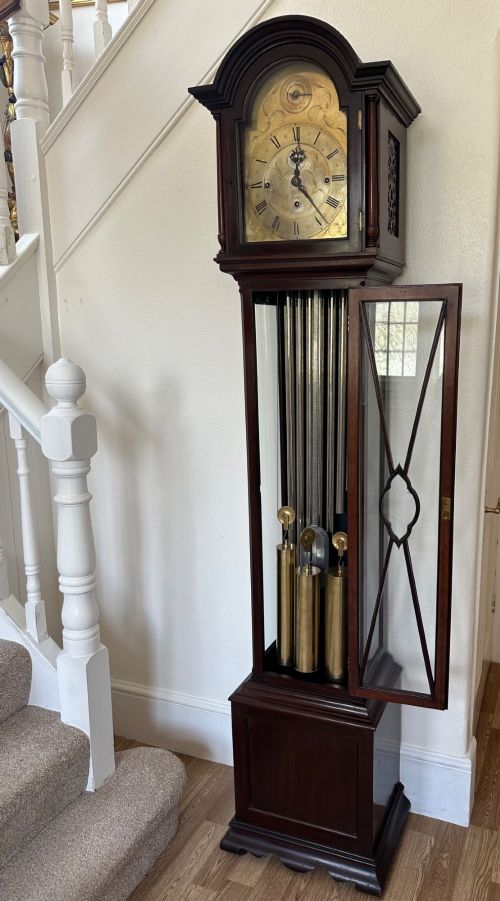
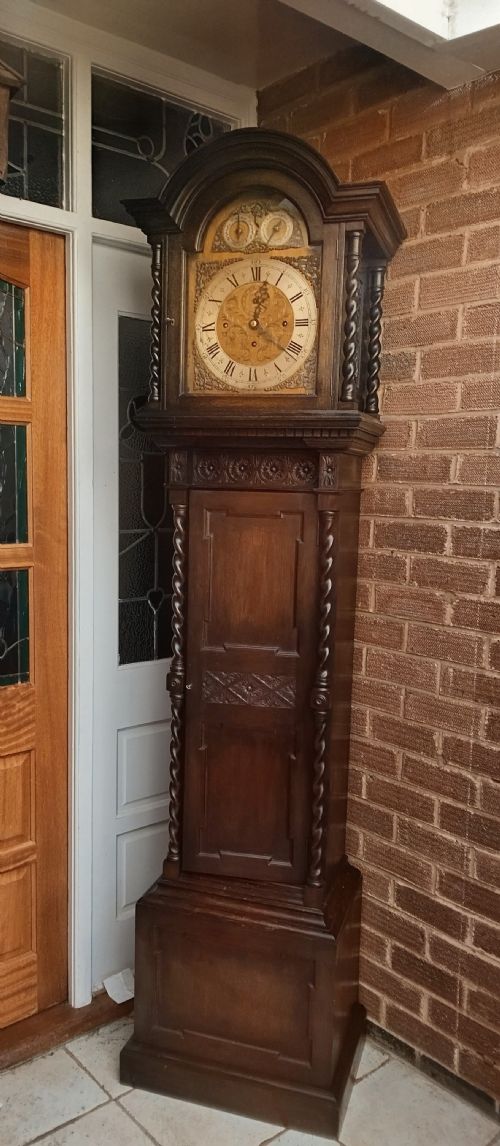
When you search for an edwardian tallcase clock, you encounter upright wooden cases housing weight-driven or spring-driven movements that stand directly on the floor. These grand floor-standing timekeepers appear in substantial proportions alongside more compact versions often referred to as grandmother clocks.
The selection ranges from architectural oak and mahogany floor-standing models to smaller inlaid examples produced around the start of the twentieth century. Alongside pieces strictly from the Edwardian period, you will find items spanning the late nineteenth century and the early decades of the twentieth.
Maker signatures and retail names frequently appear on the brass dials, connecting these tall timepieces to established London and provincial firms. The forms encompass both simple striking mechanisms and intricate musical movements utilising tubular bells.
Materials and construction
Cabinetmakers built these tall cases primarily using mahogany and oak, frequently enriching the surfaces with satinwood inlay and delicate carved details. Glass panels protect the dial and allow a view of the swinging pendulum within the trunk door.
The internal mechanics rely on brass, steel, and glass components assembled to drive timekeeping, striking trains, and musical chimes. Complex movements incorporate multiple tubular bells to deliver quarter-chiming melodies.
Edwardian Tallcase Clock Retail Price Guide 2026
Typical asking prices for edwardian tallcase clock among the pieces listed under this phrase on Sellingantiques today, from the lower quarter to the upper quarter. They describe what is for sale here now, not the wider market.
Some models are small enough to be called grandmother clocks, yet still contain massive chime systems.
Markers of quality
The standard of the cabinetwork largely distinguishes finer examples, seen in the crispness of the carved mahogany or oak and the precision of the satinwood inlay. Proportions that feel balanced and elegant elevate a floor-standing timekeeper above standard production.
The complexity and execution of the internal movement also define the upper tier, particularly in models featuring musical tubular bell systems by notable makers or retailers. A comprehensive chime mechanism combined with a well-engraved brass dial indicates superior workshop output.
Gillett & Johnston of Croydon·Edward Shepley of Manchester·Mappin & Webb London·Harrods·Camerer Cuss & Co·Dent of London·Maple & Co of London
The Edwardian Tallcase Clock Glossary
- Tallcase clock
- A floor-standing timekeeper enclosed in a tall wooden case, frequently known as a grandfather or grandmother clock.
- Grandmother clock
- A smaller, more compact version of the traditional tallcase clock, suited to lower ceilings and modest rooms.
- Tubular bell movement
- A chiming mechanism utilising suspended metal tubes struck by hammers to produce musical notes on the quarter hour.
- Satinwood inlay
- Decorative woodwork where contrasting light timber is inserted into the primary mahogany or oak surface to form geometric or floral patterns.
- Three train movement
- A clock mechanism with three separate gear trains for timekeeping, striking the hour, and playing musical chimes.
Edwardian Tallcase Clock: Frequently Asked Questions
What is the difference between grandfather and grandmother clocks?
Grandfather clocks are the standard full-sized floor-standing timekeepers, while grandmother clocks are scaled down in height and overall proportions for smaller spaces.
Both types utilise similar weight-driven or spring-driven movements housed within wooden cases of mahogany or oak.
How do musical tallcase clocks work?
Musical tallcase clocks use an additional gear train to trigger hammers that strike a set of metal tubes or bells on the quarter hour.
These movements can often be set to play specific tunes or switched to silent depending on the design of the dial.
Where should I place a tallcase clock?
These timepieces require a stable, level floor and enough wall clearance to secure the tall wooden case safely without leaning.
Hallways, landings, and reception rooms provide the traditional setting where the height and acoustic chimes can be fully appreciated.
How do I identify an Edwardian tallcase clock?
Edwardian tallcase clocks generally date from the early twentieth century and frequently incorporate Edwardian or Georgian revival design elements.
Examine the cabinet timber, inlay patterns, and any retailer signatures on the brass dial to establish the period of manufacture.