



Edwardian Table Box
An edwardian table box is a compact vessel for keepsakes or vanity items, prized for its tactile blend of silver, glass, and wood.
Edwardian Table Box
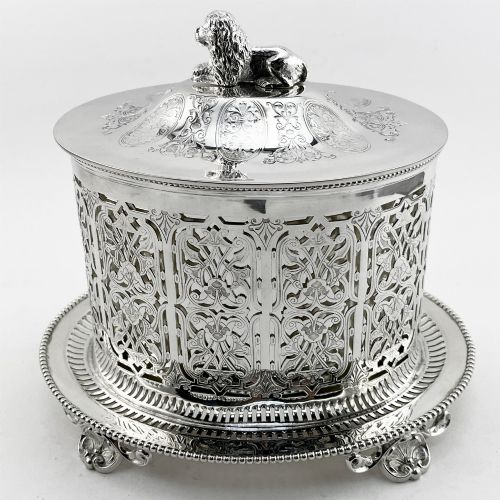
When you search for an edwardian table box, you encounter pieces designed to sit on dressing tables, sideboards, or desks to hold trinkets, jewellery, or cigarettes. These boxes bridge the late Victorian period and the early twentieth century, spanning dates from the late nineteenth century through to the nineteen-twenties.
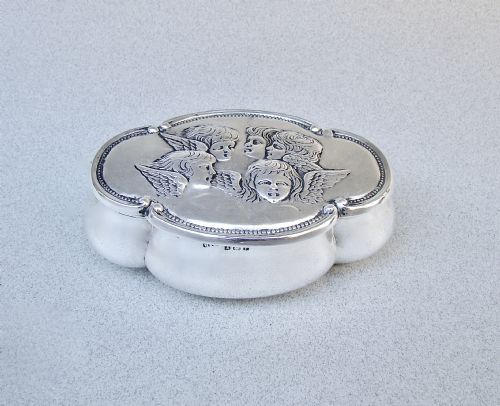
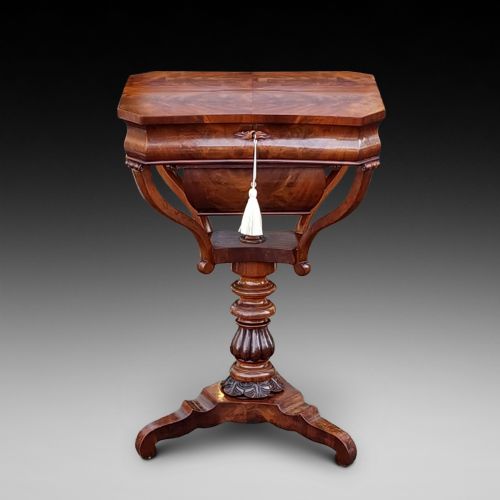
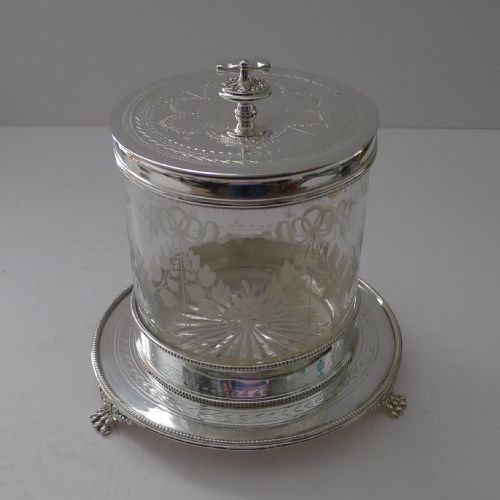
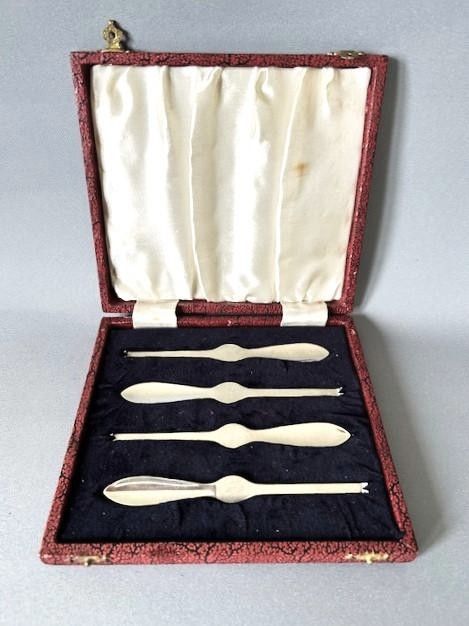
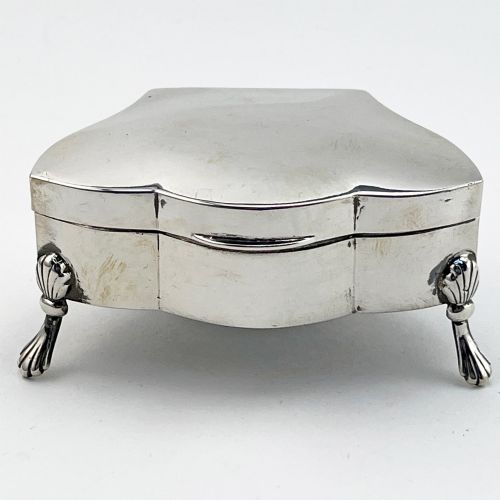
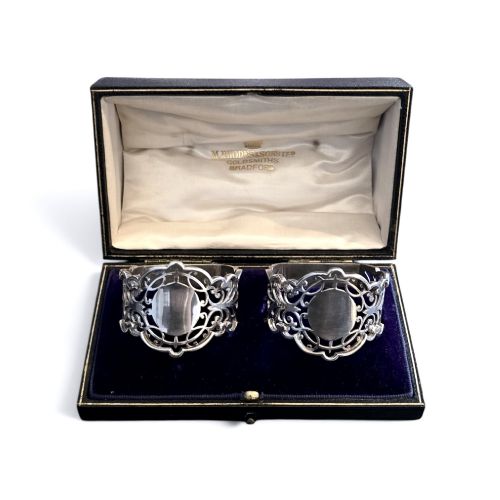
The pieces appearing on this page most frequently take the form of trinket boxes, jewellery containers, or small lidded receptacles fashioned from sterling silver, glass, and various cabinet woods. They reflect the domestic habits of households from nineteen-hundred to nineteen-thirty, combining utility with decorative refinement.
Makers and workshops of the era produced these items in rectangular, serpentine, and heart shapes, often lined with velvet to protect precious contents. The stylistic vocabulary draws heavily on Edwardian elegance, alongside occasional revivals of Rococo motifs and Art Nouveau sensibilities.
Materials and Craftsmanship
The construction relies on sterling silver mounts, solid silver bodies, or wooden carcases of mahogany, burr walnut, and kingwood. Silversmiths hammered, pierced, and cast the metal components, frequently incorporating hallmarking to denote the assay office and year.
Glass elements, such as cut-glass vanity jars and satin glass bodies, required skilled blowing and intaglio cutting before being fitted with hinged silver lids. Interiors lined with velvet provided a soft bed for jewellery, secured by functional brass hinges and catches.
Edwardian Table Box Retail Price Guide 2026
Typical asking prices for edwardian table box among the pieces listed under this phrase on Sellingantiques today, from the lower quarter to the upper quarter. They describe what is for sale here now, not the wider market.
Distinctions in Quality
Quality rests upon the gauge of the silver and the precision of the joinery in the wooden frames. Heavier metal gauge ensures durability and a reassuring weight in the hand, whereas thinner plating or hollow constructions lack the same substance.
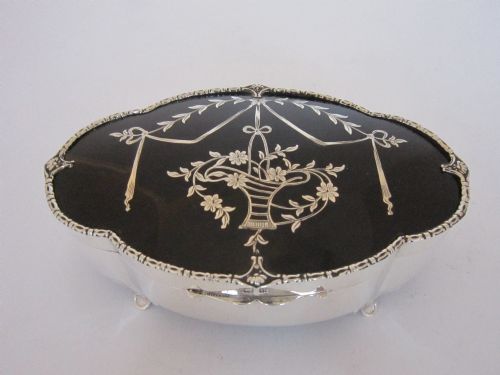
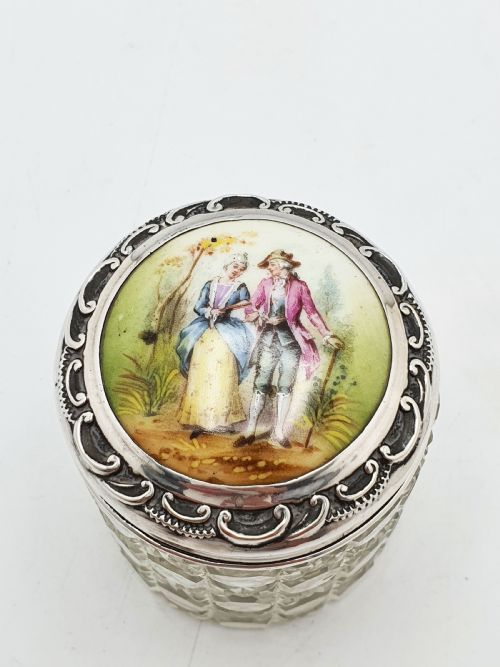
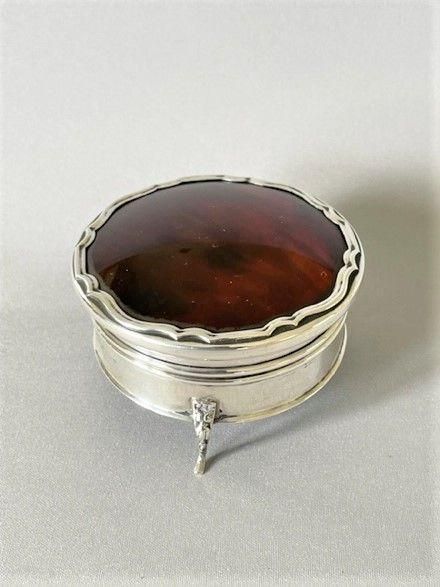
The refinement of decorative details - such as hand-painted porcelain plaques, guilloche enamel work, or tortoiseshell insets - separates standard production items from exceptional workshop output. Crisp hallmarks and intact velvet linings further elevate a piece's standing.
Mappin & Webb·Martin Hall & Co·Guild of Handicrafts·Ollivant & Botsford·Henry Clifford Davis·A. Bromet & Co
The Edwardian Table Box Glossary
- Guilloche enamel
- Enamel decorated with intricate engine-turned geometric patterns beneath a translucent coloured layer. This technique was widely utilised on Edwardian vanity jars and trinket boxes.
- Sterling silver
- An alloy containing ninety-two point five percent silver by mass, with the remainder being other metals. It serves as the primary metal standard for British table boxes of this era.
- Tortoiseshell
- The mottled brown shell of certain sea turtles, used historically as an overlay on boxes and vanity items. It is frequently paired with inlaid piqué silver wire.
- Hallmark
- A series of official marks stamped on items made of precious metals in the United Kingdom. These marks indicate the maker, standard of purity, assay office, and year of testing.
- Bijouterie table
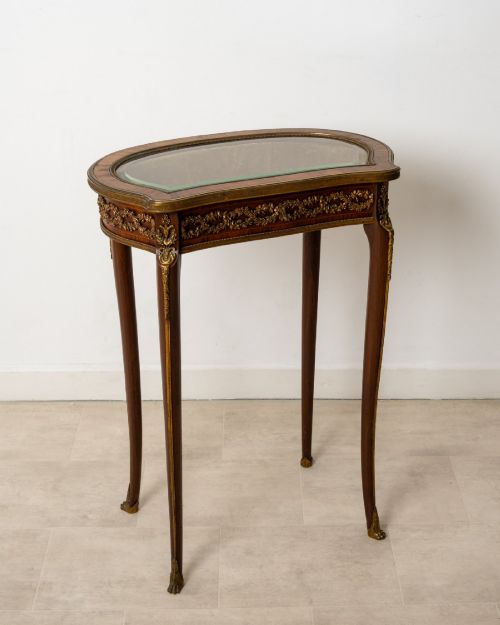
- A glass-topped display table designed specifically for showcasing small valuables and curiosities. They share the domestic sphere with the smaller table boxes of the period.
Edwardian Table Box: Frequently Asked Questions
What were table boxes used for?
Households utilised these containers to store personal valuables, including rings, brooches, cuff links, and loose coins. Placed upon dressing tables or sideboards, they kept daily accessories organised and out of sight.
They also served as decorative objects in their own right, displaying the owner's taste through polished silver surfaces, tortoiseshell insets, and hand-painted porcelain plaques.
How do I date an Edwardian piece?
The most reliable method is examining the hallmarks stamped into the silver mounts or lids, which record the specific assay office and year letter. Stylistic clues, such as the presence of Art Nouveau curves or Edwardian neoclassical symmetry, also point to the correct decade.
Comparison with related items from the same era helps narrow down the window of manufacture between eighteen-eighty and nineteen-thirty.
Are these boxes made of solid silver?
Many examples feature solid sterling silver lids or mounts combined with glass, wood, or fabric bodies. Items described as solid silver or sterling silver consist entirely of the precious metal throughout their primary structure.
Listings also record silver-plated alternatives, where a base metal layer supports a thin coating of silver.
How should I clean a silver and glass box?
Silver components require gentle treatment with a non-abrasive polishing cloth designed for precious metals, avoiding contact with any enamel, tortoiseshell, or velvet linings. Glass sections can be wiped down with a damp cloth and dried immediately.
Harsh chemical dips must be avoided, as they damage delicate interior fabrics and ruin inlaid organic materials.