
Edwardian T Bar Chain
An edwardian t bar chain is a wearable piece of history, originally designed to secure a gentleman's timepiece but now prized for its distinctive links and vestigial bar.
Edwardian T Bar Chain
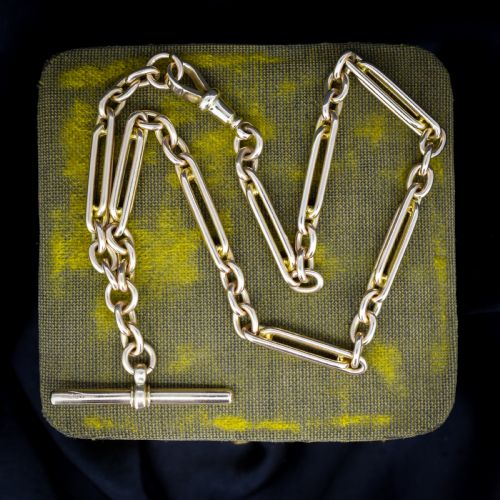
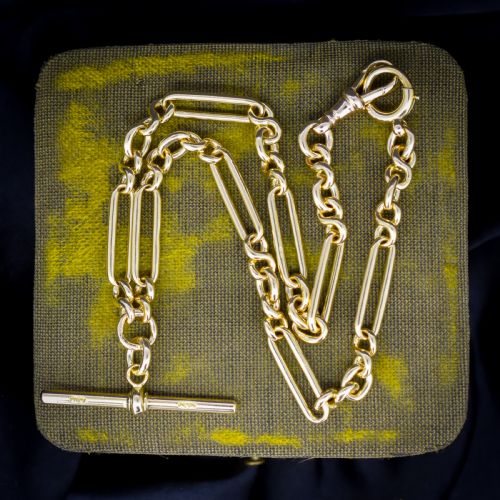
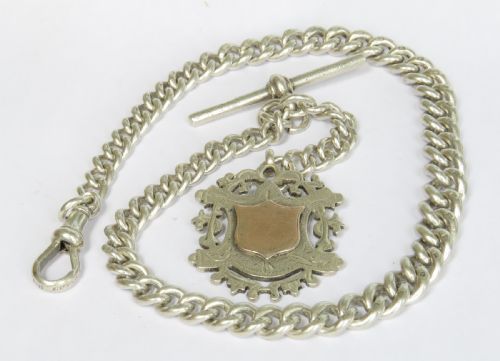
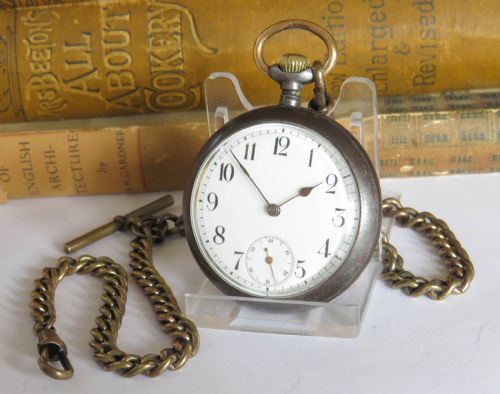
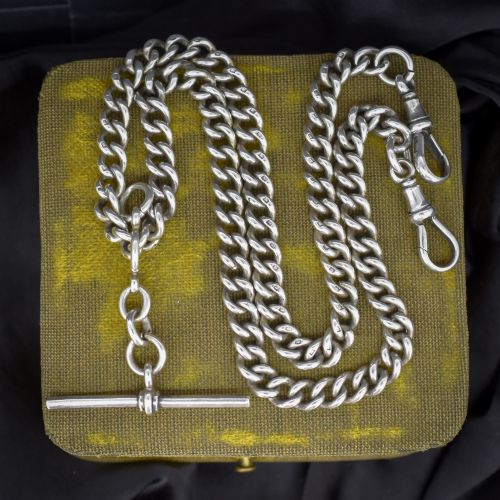
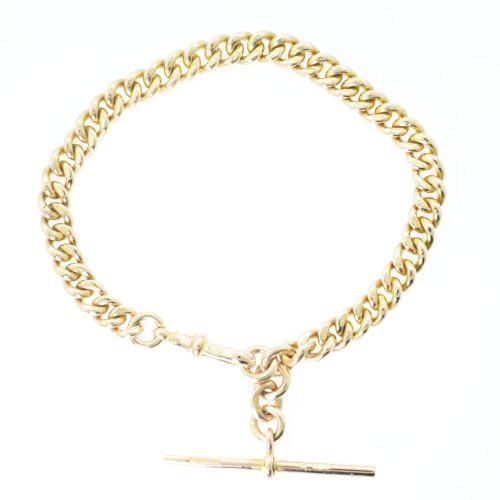
When you search for an edwardian t bar chain, you enter a category of historical jewellery rooted in the functional watch chains of the late nineteenth and early twentieth centuries. These pieces typically take the form of substantial metal links fitted with a crossbar at one end and a swivelling dog clip at the other, designed to thread through a waistcoat buttonhole.
The versions most commonly met on this page range from solid sterling silver to various carats of gold, including rose, yellow, and 9ct variants. Alongside traditional watch chains, the selection encompasses related forms such as bracelets, necklaces, and iterations paired with fobs or seals.
Originating predominantly from the Edwardian era, Victorian period, and the early twentieth century, these items reflect the solid craftsmanship of their respective decades. The inventory captures both uniform designs and graduated links that showcase period metalwork at its most functional and decorative.
Materials and construction
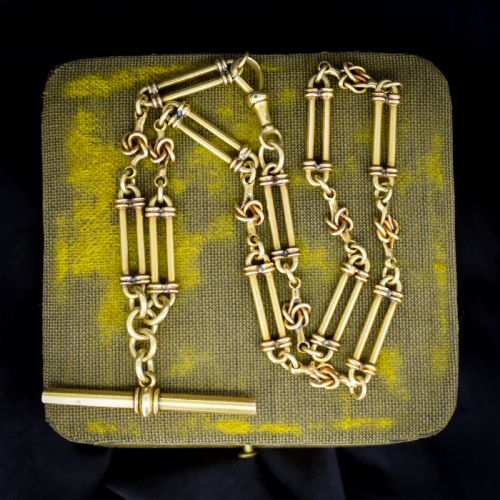
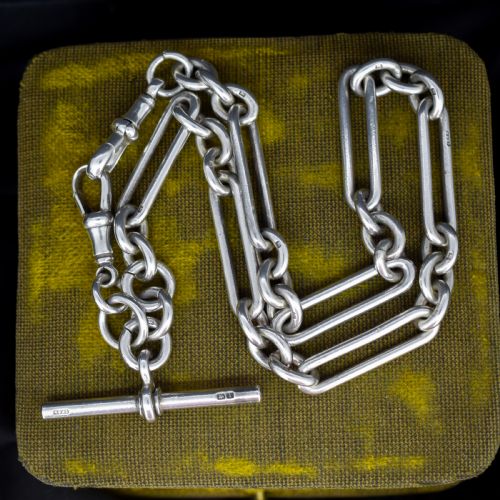
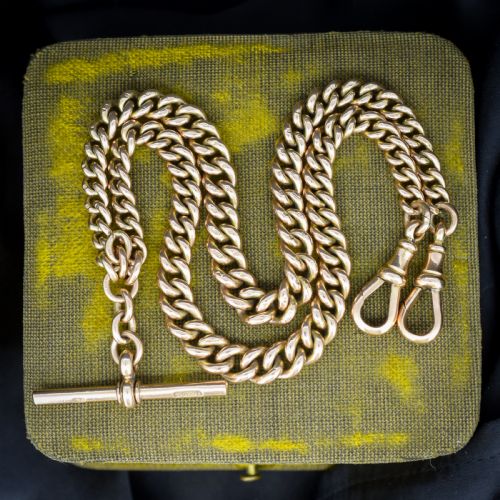
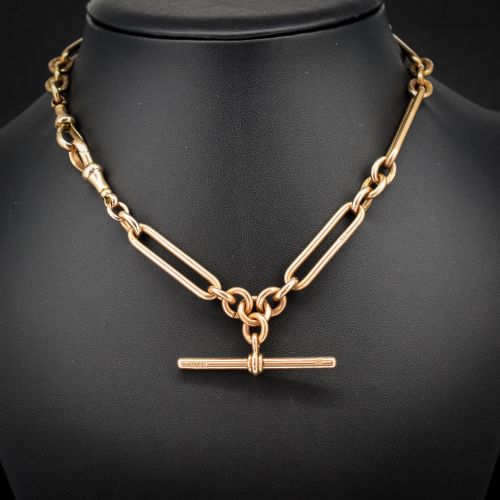
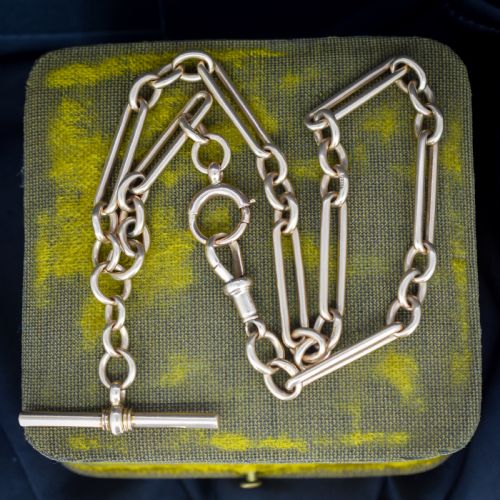
The construction of these pieces relies heavily on sterling silver and multiple tones of gold, ranging from standard 9ct to higher carats like 15ct and 18ct. Artisans shaped these precious metals into distinct link formations, including classic curb, fancy trombone, love knot, and figaro patterns.
Techniques involved forming tubular bars, solid links, and intricate wirework, often assembled by hand to ensure durability during daily wear. Components such as dog clips, bolt rings, and barrel clasps were integrated securely into the chains, frequently accompanied by stamped hallmarks denoting the assay office and year of creation.
Evaluating quality and distinction
The distinction between tiers of quality rests upon the weight of the metal, the integrity of the links, and the complexity of the pattern. Heavier items featuring solid construction and graduated links represent a higher standard of manufacture than lighter, uniform strands.
Furthermore, the presence of crisp, legible hallmarks, original components like matching dog clips and T-bars, and supplementary elements such as inscribed fobs elevate the desirability and historical completeness of the piece.
The Edwardian T Bar Chain Glossary
- T-bar
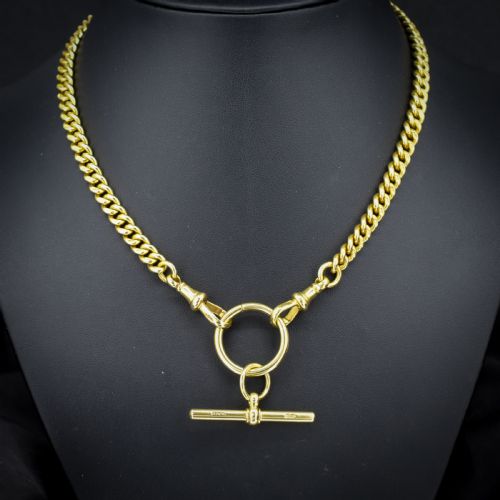
- A short metal crossbar attached to a watch chain, historically used to anchor the chain through a waistcoat buttonhole. It hangs as a decorative drop when the chain is worn as a necklace or bracelet.
- Dog clip
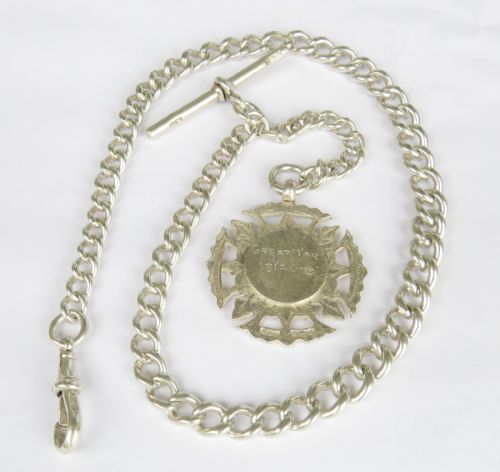
- A spring-loaded swivel clasp attached to the end of a chain, designed to secure a pocket watch, fob, or another link securely. This mechanism allows the attached item to rotate freely without twisting the metal strands.
- Albert chain
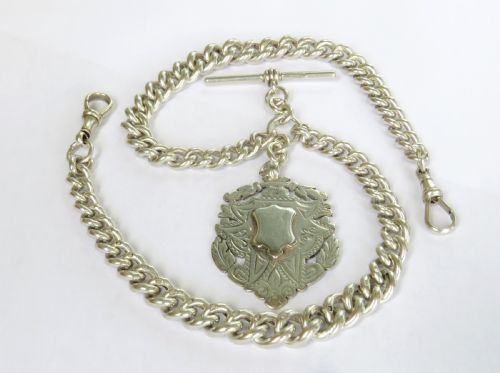
- A specific style of watch chain named after Prince Albert, featuring a central T-bar and provision for one or more pocket watches or pendant fobs. Double alberts feature two main strands dropping from the central bar.
- Trombone link
- A repeating link pattern composed of elongated rectangular bars interspersed with smaller circular or oval connectors. This geometric style is characteristic of late nineteenth and early twentieth-century watch chains.
- Fob
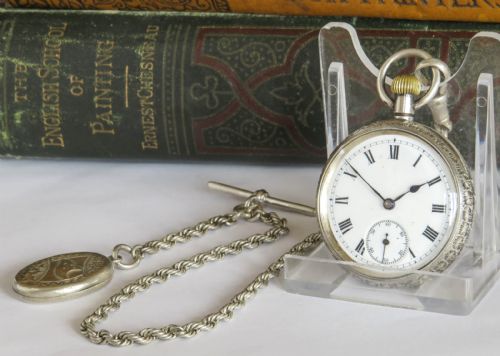
- A small ornament, seal, or medallion attached to a watch chain by a short length of chain or ring. Fobs often featured hardstone intaglios or engraved crests used for stamping wax seals.
Edwardian T Bar Chain: Frequently Asked Questions
What is an Edwardian T bar chain?
An Edwardian T bar chain is a historical piece of jewellery originally fashioned to secure a pocket watch inside a waistcoat pocket. The defining crossbar was slipped through a buttonhole, while the attached chain held the timekeeper.
Today, these versatile chains are frequently worn as necklaces or wrapped as bracelets. Their enduring appeal lies in the tactile weight of the metalwork and the distinctive geometry of the links.
How do I wear a watch chain as a necklace?
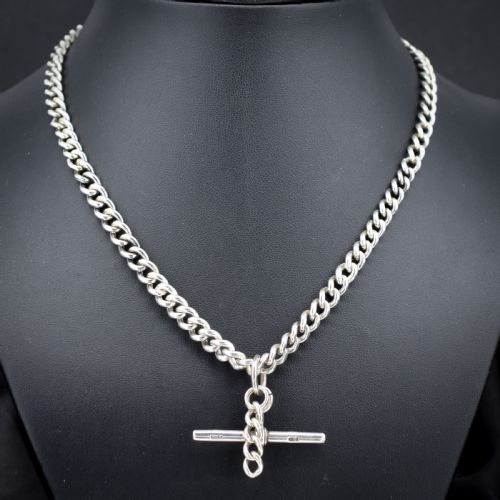
Wearing a watch chain as a necklace typically involves fastening the dog clip directly to one of the links or to a jump ring at the opposite end. The T-bar is left to dangle as a decorative central pendant.
Depending on the length of the specific piece, it can sit close to the collarbone or hang lower as a statement chain. The weight of the original links ensures the piece drapes naturally against the skin or clothing.
How can I date an antique watch chain?
Dating an antique watch chain relies primarily on the assay hallmarks stamped onto the links, T-bar, or dog clips. These tiny marks often include symbols for the city of assay, the metal purity, and a specific date letter.
Stylistic elements also provide clues, as certain link patterns like the trombone or love knot gained popularity during specific decades. Comparing the clasp types and overall manufacturing style helps confirm the era of origin.