
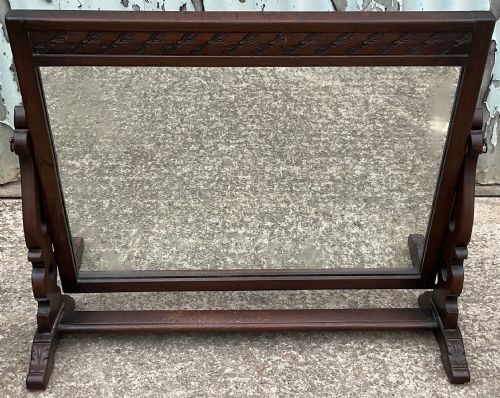


Edwardian Swivel Dressing Glass
These Edwardian swivel dressing glass pieces are table and floor mirrors that tilt to catch the light, offering practical elegance for any room.
Edwardian Swivel Dressing Glass
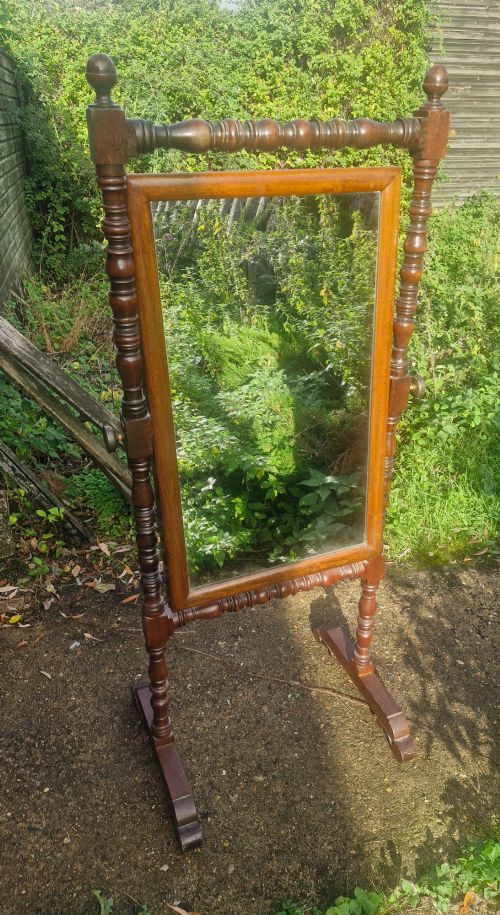
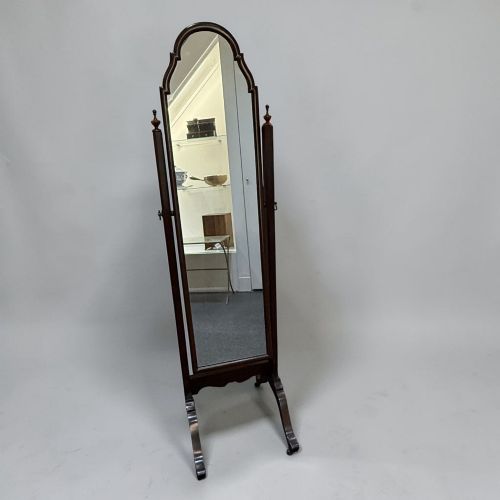
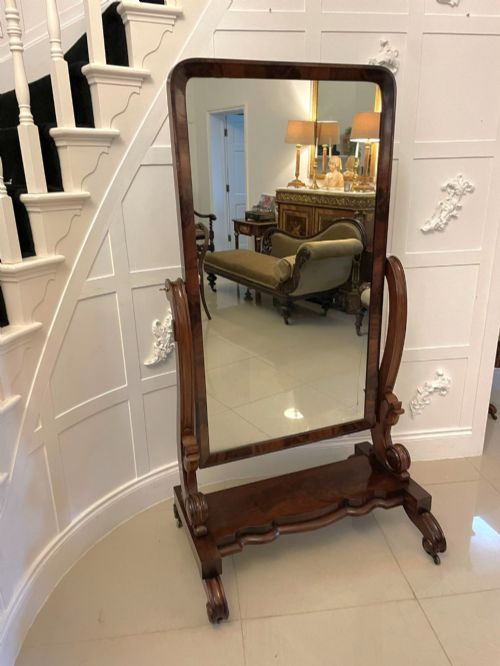
An Edwardian swivel dressing glass is a mirror mounted on pivots that allow it to tilt back and forth within a frame. You will frequently encounter mahogany versions from the Edwardian period alongside examples spanning Georgian, Victorian, and Regency eras.
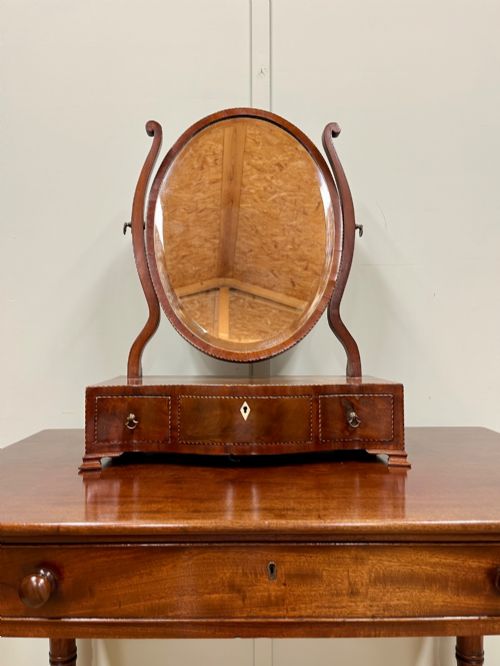
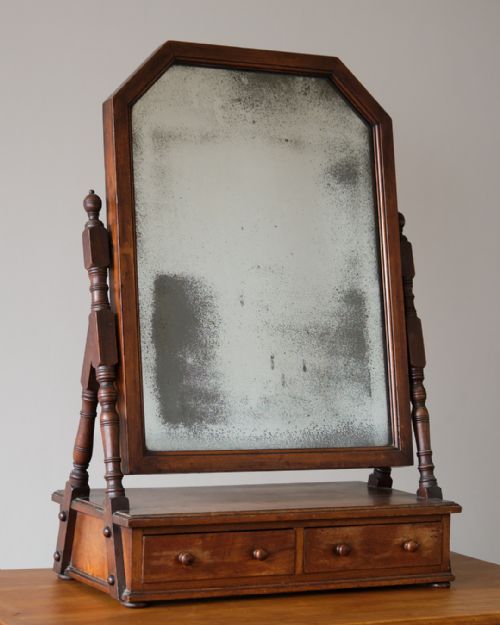
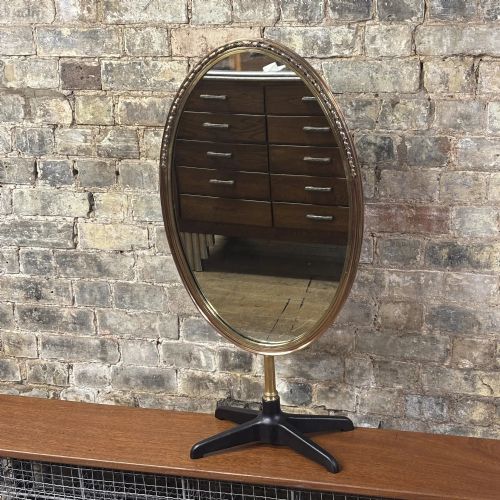
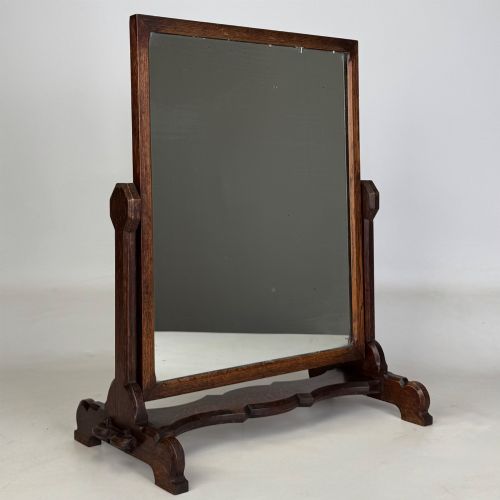
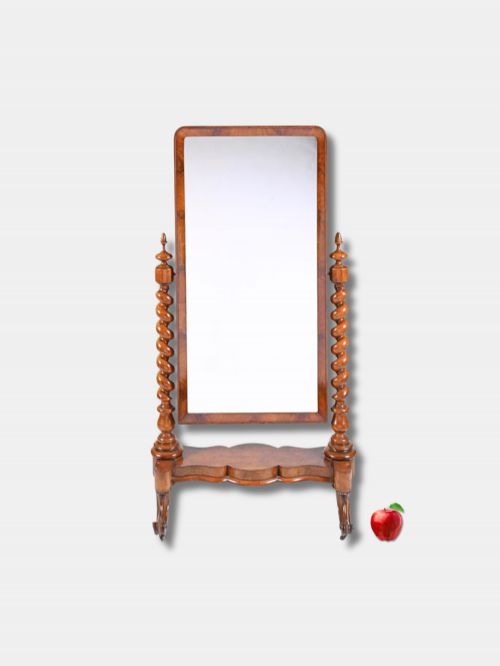
The selection ranges from small toilet mirrors designed to sit upon a dressing table to large floor-standing cheval mirrors. Formats include oval and rectangular glass plates set within plain or inlaid wooden frames.
Makers such as Heal & Sons produced refined examples that reflect the domestic habits of the early twentieth century. These objects served a functional role in bedrooms and dressing rooms before becoming decorative focal points in modern interiors.
What varies in quality
Quality rests upon the selection of timbers, such as figured mahogany or satinwood, and the crispness of any marquetry inlay. Superior examples display balanced proportions and robust pivoting mechanisms that hold the glass steady at any angle.
Finishing details like hand-turned supports, dovetail joints in base drawers, and original brass hardware distinguish finer workshop production from standard utility pieces.
Listings feature woods such as mahogany, oak, and satinwood, alongside brass hardware and mirror glass across Edwardian and Victorian periods.
Heal & Sons
The Edwardian Swivel Dressing Glass Glossary
- Swivel glass
- A mirror hung on horizontal pivots allowing it to tilt. This mechanism lets the user adjust the angle of reflection easily.
- Cheval mirror
- A full-length floor mirror mounted in a freestanding frame. It typically stands on four legs or a substantial trestle base.
- Toilet mirror
- A smaller dressing mirror designed to sit on top of a table or chest. These often feature small drawers built into the base.
- Marquetry
- Decorative patterns formed by inserting pieces of contrasting wood into a veneered surface. This technique was favoured on finer Edwardian and Victorian pieces.
- Barley twist
- A spiral turning carved into wooden furniture supports. It appears frequently on Victorian and Edwardian framing elements.
Edwardian Swivel Dressing Glass: Frequently Asked Questions
How do I choose the right size?
Consider whether you need a compact toilet mirror for a tabletop or a tall cheval mirror for full-length viewing.
Measure your surface or floor space carefully to ensure the frame proportions complement your existing furniture.
Can the mirror angle be adjusted?
Yes, these pieces use side pivots that allow the glass frame to tilt freely.
Most original brass hardware holds the mirror firmly at your chosen angle once adjusted.
Where should I place a dressing glass?
They suit bedrooms and dressing rooms well, placed on sturdy tables or directly on the floor.
Position them near natural light sources to brighten the room and maximise their reflective function.
How do I care for the wood and glass?
Dust the mahogany or oak frames regularly with a soft cloth and avoid using harsh chemical sprays.
Clean the mirror glass gently with a mild glass cleaner applied to the cloth rather than directly onto the surface.