

Edwardian Style Vitrine
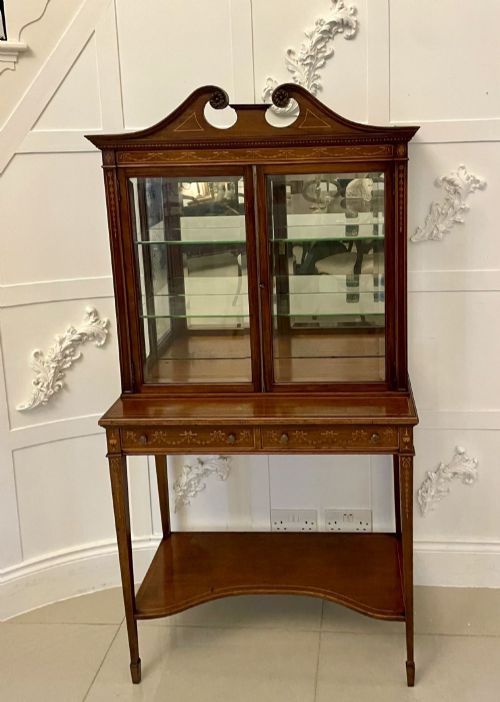
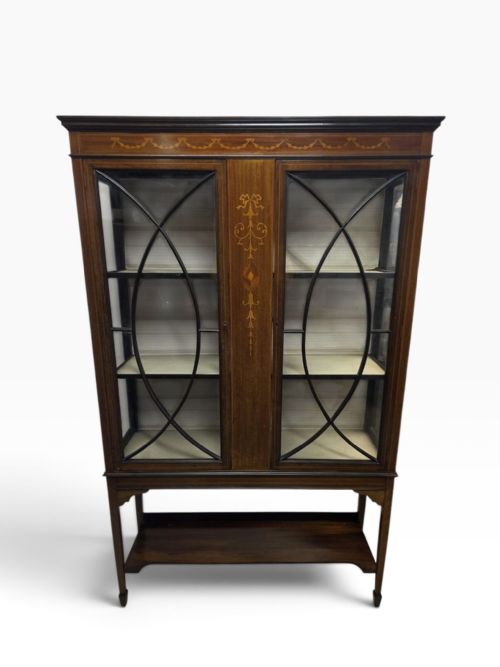
An Edwardian style vitrine organises precious objects behind glass, bringing polished timber and light into a room.
Edwardian Style Vitrine
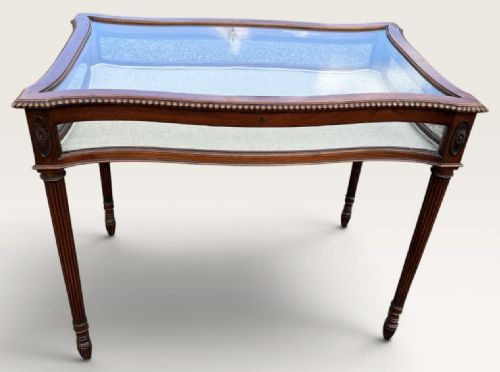
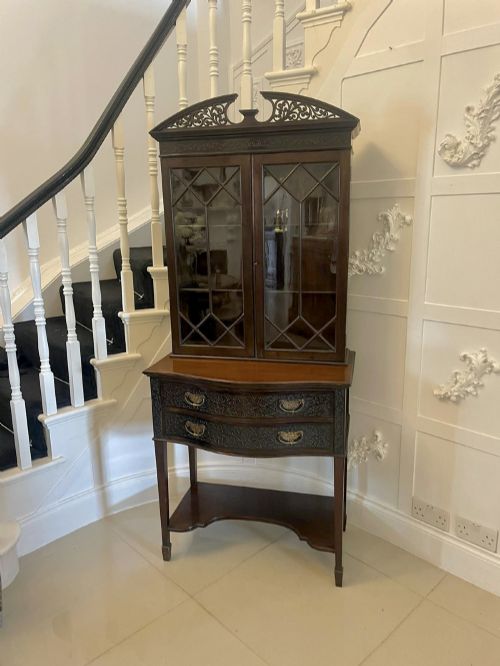
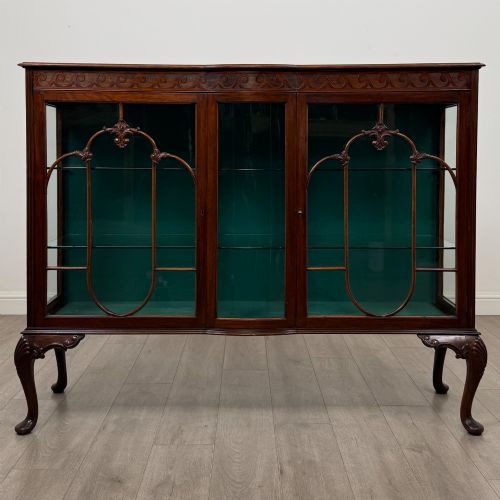
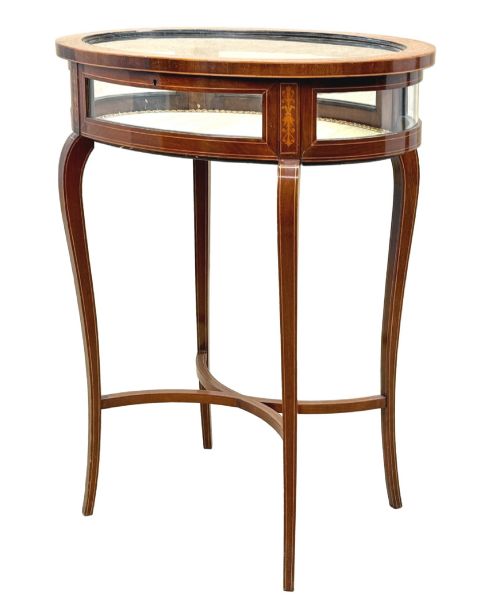
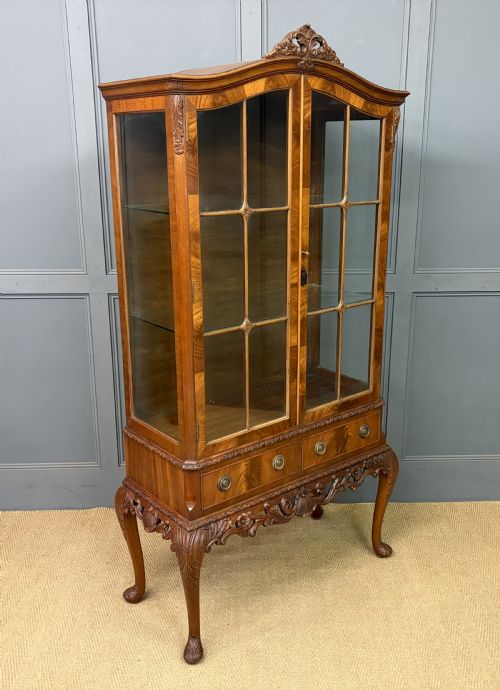
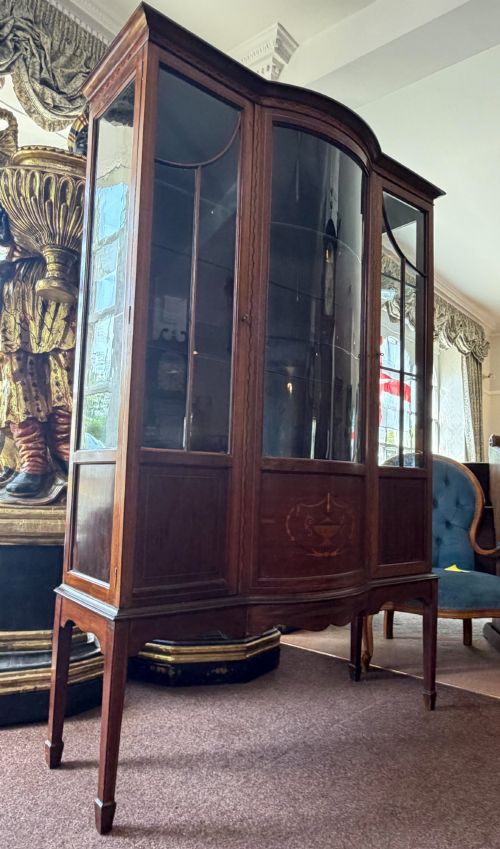
When searching for an edwardian style vitrine, buyers encounter glazed display cabinets, bijouterie tables, and corner cabinets designed to showcase collectibles and small treasures. The selection spans the Edwardian period alongside Victorian, late Victorian, and early twentieth-century examples.
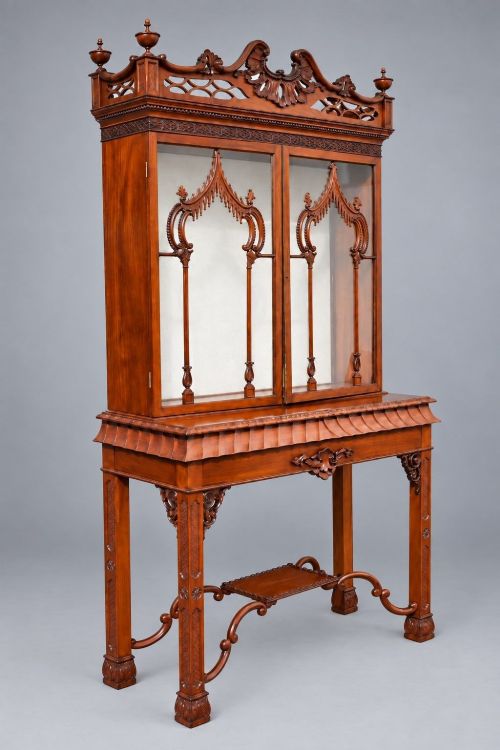
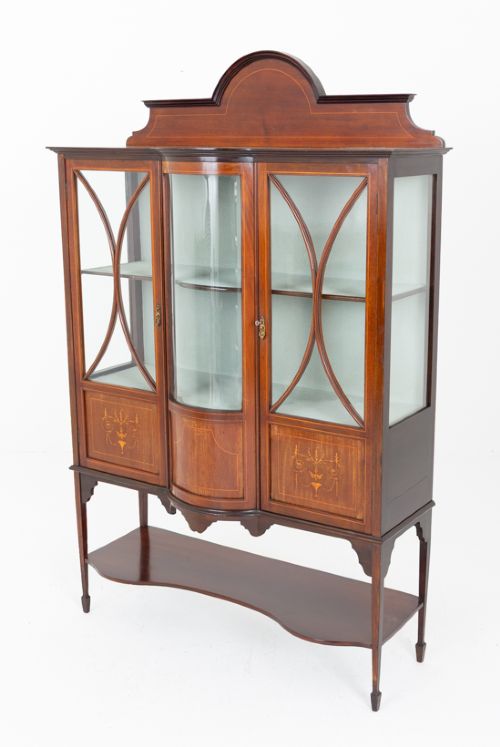
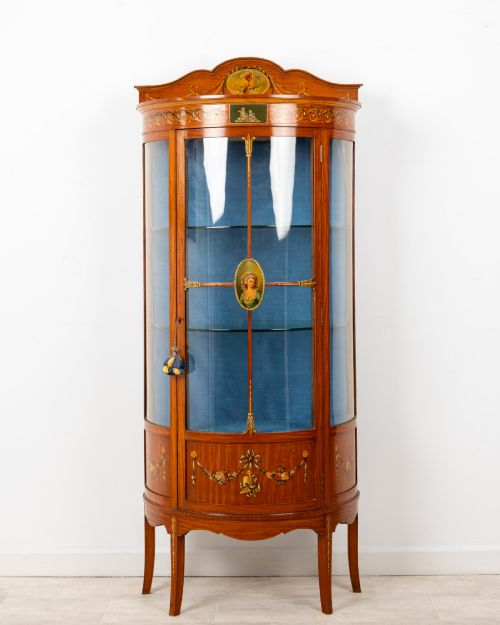
Makers and workshops constructed these display pieces in various forms, from serpentine tables and bow-front cabinets to larger breakfront bookcases on stands. Mahogany and satinwood predominate, often enriched with detailed inlay work or delicate painted decoration.
Revival styles heavily influence these pieces, with Sheraton Revival, Chippendale Revival, and Queen Anne designs appearing frequently alongside Louis XVI and Adam influences. The primary function remains the exhibition of porcelain, silver, and curiosities behind protective glass panes.
How they were made
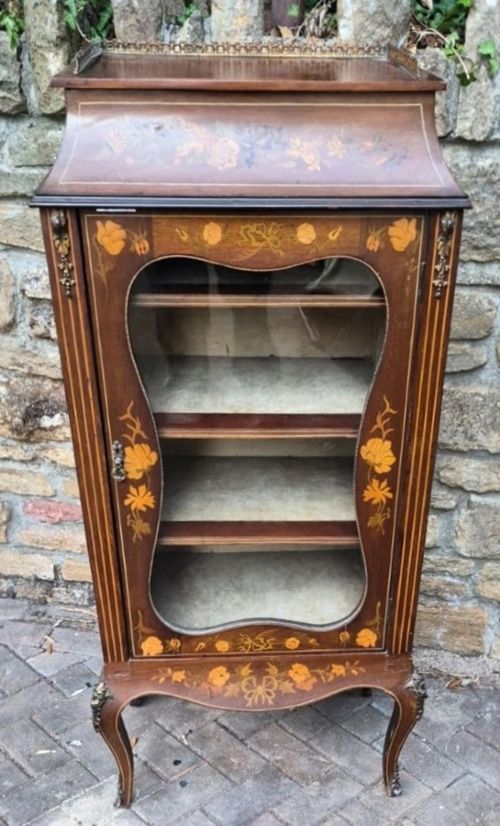
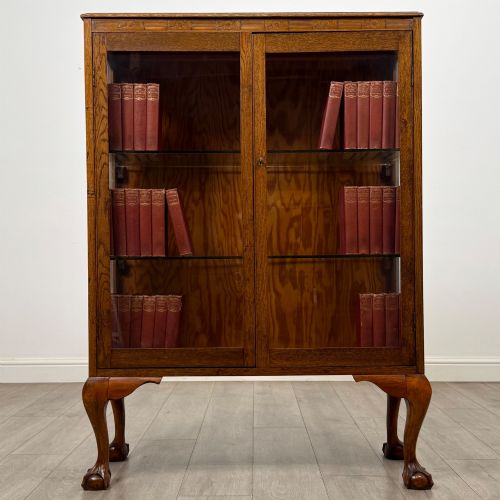
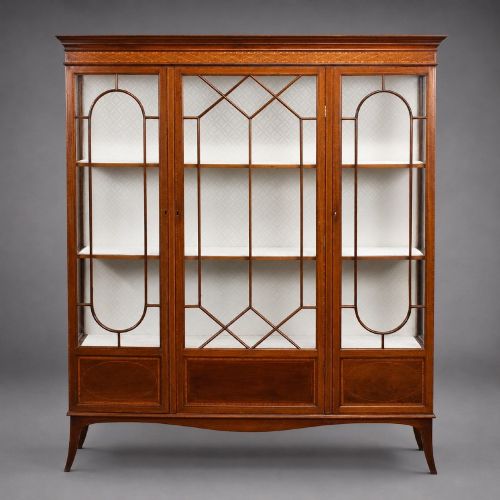
Cabinet makers built the primary carcass and frames using timbers such as mahogany, walnut, and oak, frequently applying satinwood veneers for contrast. Satinwood inlay and marquetry added floral or geometric motifs across the front panels and doors.
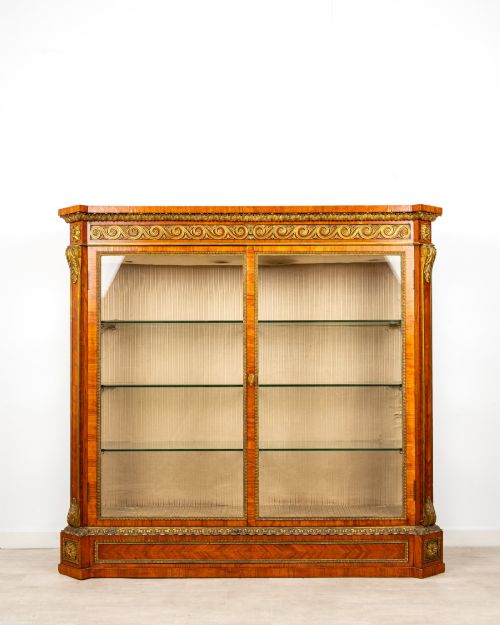
Glass panels were fitted into glazed doors and side panels to maximise visibility, supported by brass hinges, locks, and occasional gilt-bronze mounts. Interior surfaces were often lined with fabric or velvet to cushion displayed objects.
Interiors sometimes incorporated fabric or velvet linings to complement the polished exterior wood and reflect light through the glazed compartments.
Design styles span Edwardian, Sheraton Revival, Chippendale Revival, Queen Anne Revival, and Louis XVI Revival.
What varies in quality
The standard of timber selection and complexity of the marquetry define the upper tier of these display cabinets. Finely figured mahogany and intricate satinwood inlay require skilled craftsmanship that elevates standard production pieces.
Structural refinement shows in the proportion of the glazing bars, the neatness of the mitred joints, and the integration of brass or gilt-bronze mounts. Pieces bearing recorded signatures or stamps from established cabinet makers demonstrate documented provenance.
H. J. Hatfield & Sons·Maple & Co.·Jewell of Holborn·Edwards & Roberts·Waring & Gillow
The Edwardian Style Vitrine Glossary
- Vitrine
- A glass-fronted cabinet or table designed for displaying fine objects and porcelain. These pieces protect delicate items while offering all-round visibility.
- Bijouterie table
- A glass-topped display table used for holding jewellery, medals, and small decorative items. They often feature hinged lids lined with velvet or fabric.
- Marquetry
- The art of applying decorative pieces of veneer to a structure to form intricate patterns. Cabinet makers utilise contrasting woods like satinwood and mahogany for visual depth.
- Sheraton Revival
- A late nineteenth and early twentieth-century style replicating the neoclassical furniture designs of Thomas Sheraton. It relies on tapered legs, satinwood veneers, and subtle painted details.
- Breakfront
- A cabinet design where the central section projects forward from the flanking sides. This architectural arrangement creates shadow and variation across the piece.
Edwardian Style Vitrine: Frequently Asked Questions
What is a vitrine?
A vitrine is a glazed display cabinet or table designed to protect and exhibit delicate porcelain, silver, and small curiosities.
The glass panels on the top and sides allow light to enter, illuminating the collection from multiple angles.
How do I spot satinwood inlay?
Satinwood inlay appears as pale, golden-yellow decorative wood set flush into darker primary timbers like mahogany or walnut.
Craftsmen cut floral motifs, banding, or stringing lines into the surface to create contrast and elegance.
Where should I place a corner cabinet?
A floor-standing corner cabinet fits neatly into unused room angles, turning dead space into a display area.
These cabinets work well in dining rooms or drawing rooms where floor space requires careful management.
What is a bijouterie table?
A bijouterie table is a shallow display case mounted on legs with a glazed top for viewing jewellery and small treasures.
The hinged lid allows easy access to the velvet-lined interior while keeping contents secure.
How do revival styles differ?
Revival styles draw inspiration from earlier periods like the eighteenth century, reinterpreting classic proportions using Edwardian manufacturing methods.
Sheraton Revival focuses on delicate inlay and painted satinwood, whereas Chippendale Revival uses heavier carved mahogany.