

Edwardian Style Nightstands
Edwardian style nightstands encompass bedside cabinets, tables and small chests in mahogany, satinwood and oak that bring compact storage and period elegance to a bedroom.
Edwardian Style Nightstands
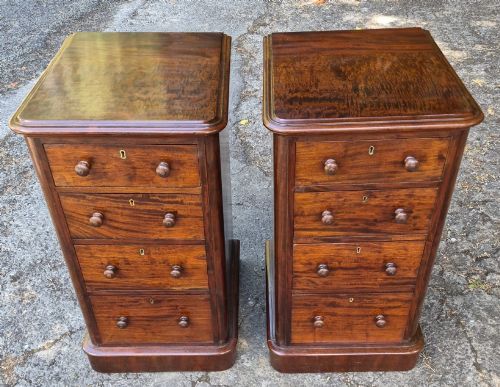
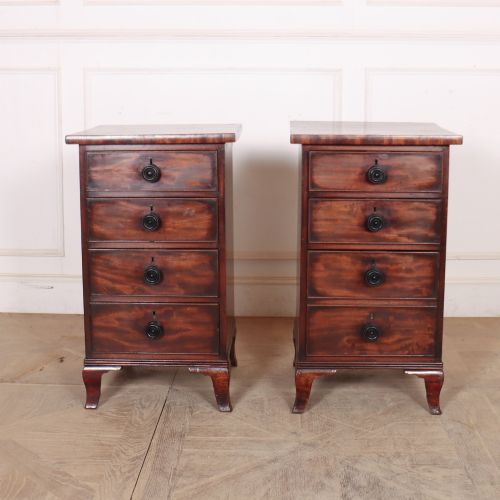
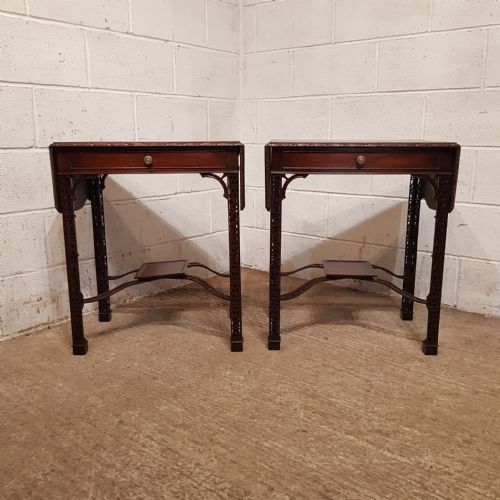
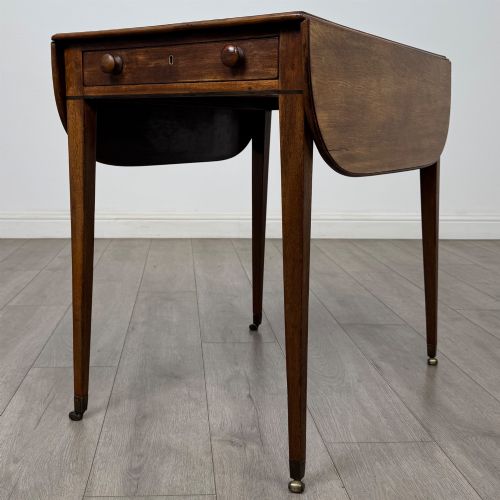
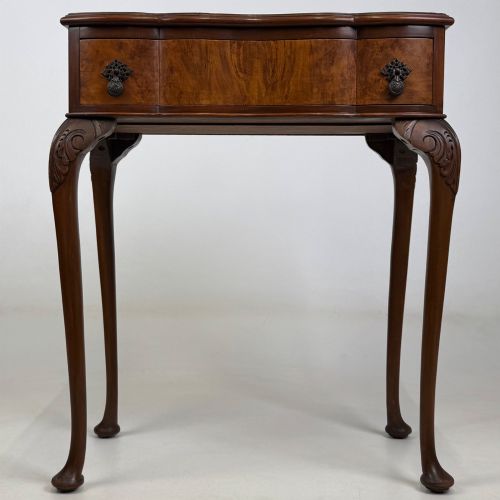
When you search for edwardian style nightstands, you encounter a selection of bedside cabinets, side tables, small chests of drawers and occasional tables spanning the Edwardian period, the late nineteenth century and the early twentieth century. These pieces serve the practical need for bedside storage while displaying the refined forms characteristic of the era.
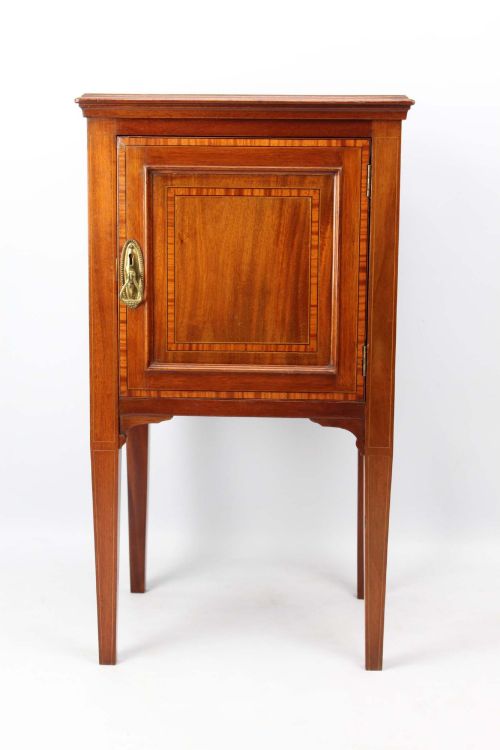
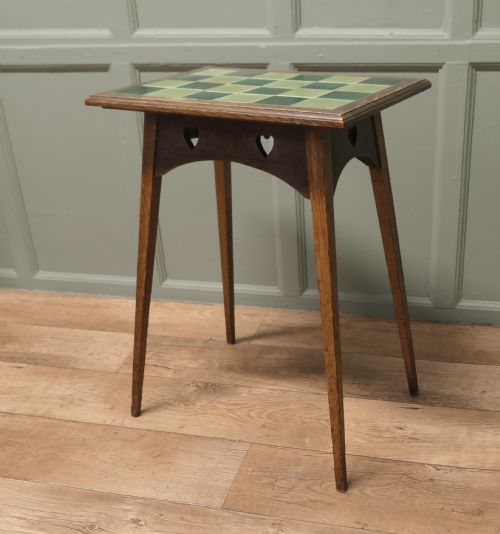
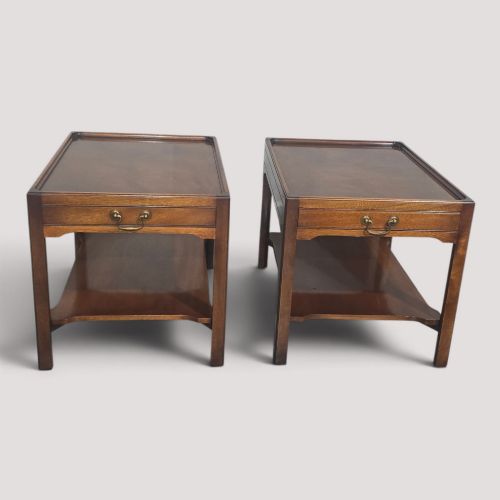
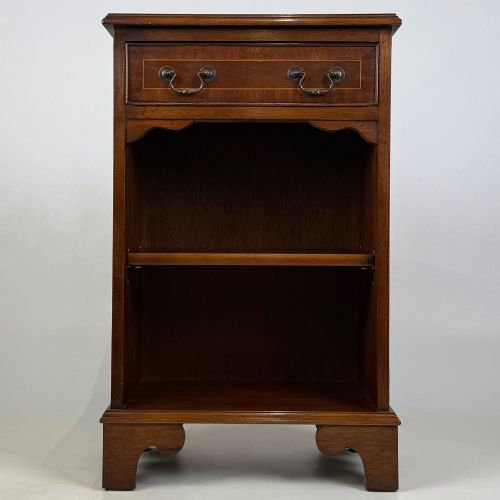
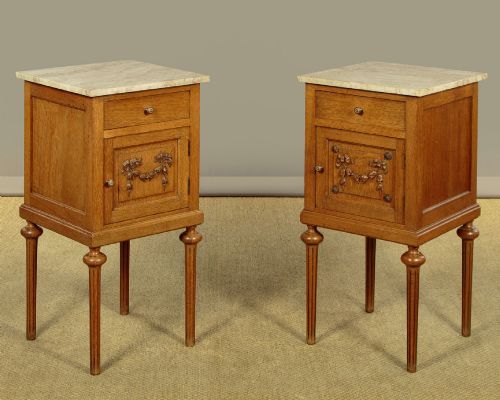
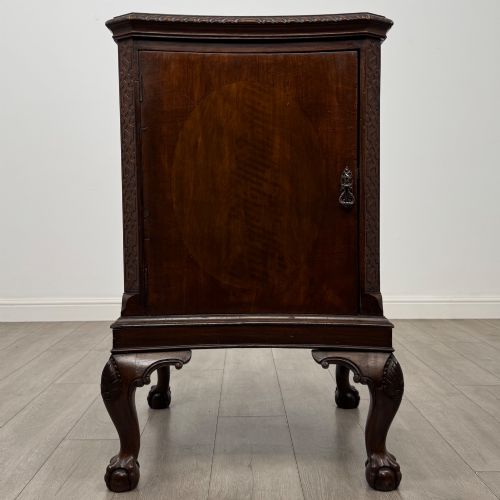
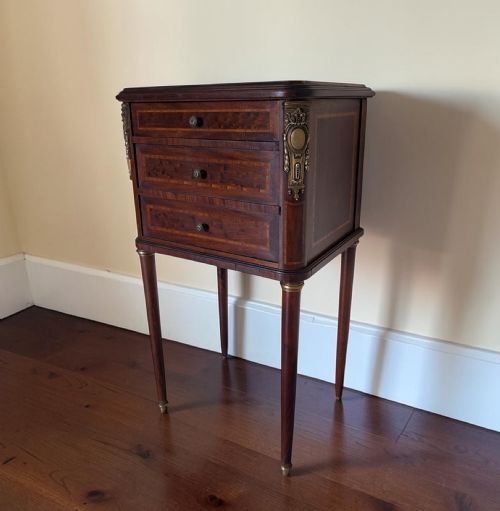
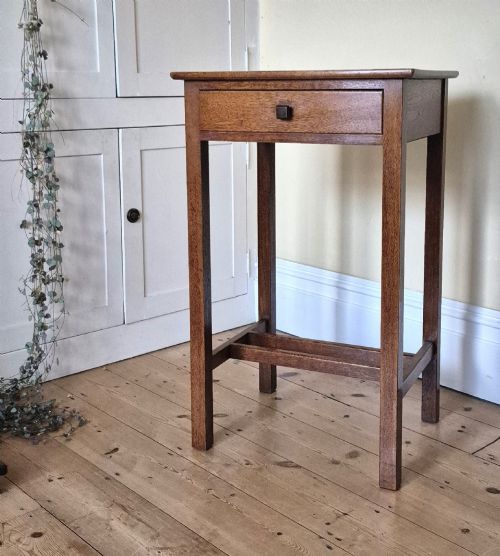
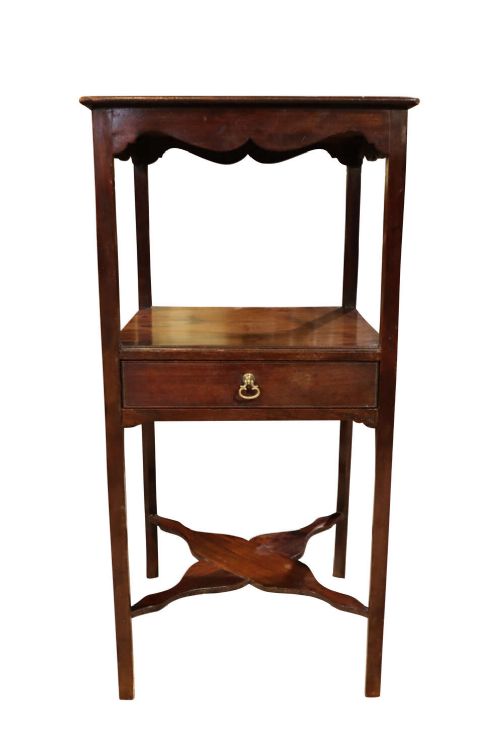
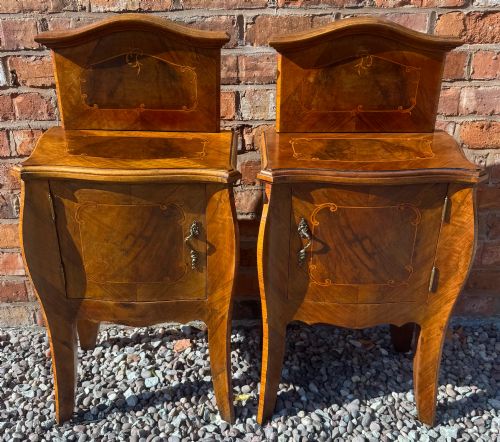
The objects appearing on this page take various forms, from enclosed bedside cabinets with single doors to open lamp tables and small drawer chests. Materials range from solid mahogany and figured walnut to satinwood and oak, often detailed with marquetry or brass fittings.
Makers and designers of the time drew upon earlier aesthetics, resulting in pieces shaped by Sheraton Revival, Chippendale Revival and Georgian styles. This variety ensures that a nightstand can integrate into both period interiors and more eclectic modern rooms.
How they were made
Cabinet makers of this era relied on dense hardwoods such as mahogany, walnut and oak, frequently selecting figured veneers and satinwood for visible surfaces. These timbers were chosen for their stability and capacity to accept fine polish and inlay work.
Construction techniques combined traditional joinery with decorative embellishments like crossbanding, stringing and brass hardware. Marble tops also appear on certain oak and mahogany bedside tables, providing a durable and hygienic surface for daily use.
Listings feature mahogany, oak, satinwood and walnut, alongside marble-topped variants dating from the Victorian era to the nineteen-twenties.
What varies in quality
Quality in these pieces rests primarily on the selection of timber and the precision of the cabinet work. Superior examples feature well-figured mahogany, burr walnut or satinwood with crisp inlay and tight, enduring joinery.
The refinement of secondary details, such as original brass handles, smoothly operating drawer sides and well-fitted cupboard doors, distinguishes higher-grade productions from simpler utilitarian items.
Hubert Simpson of Kendal
The Edwardian Style Nightstands Glossary
- Bedside cabinet
- A small enclosed cupboard designed to stand beside a bed, usually featuring a single door and sometimes an internal shelf.
- Satinwood
- A pale, lustrous hardwood often used for veneers and decorative inlay on fine cabinets and tables.
- Sheraton Revival
- A late nineteenth and early twentieth century design movement that reinterpreted the classical, balanced forms of the eighteenth-century designer Thomas Sheraton.
- Inlay
- A technique where pieces of contrasting timber, shell or metal are fitted into a recessed surface to form a decorative pattern.
- Occasional table
- A small, versatile table intended for light use around a room, frequently found serving as a nightstand.
Edwardian Style Nightstands: Frequently Asked Questions
What defines an edwardian style nightstand?
These pieces are small bedside cabinets, tables or chests produced around the early twentieth century or styled in the manner of that period. They typically utilise mahogany, satinwood or walnut.
They reflect earlier design influences such as Sheraton Revival and Chippendale Revival, prioritising compact proportions and refined wood grain.
Were these pieces always used beside beds?
Many objects listed as nightstands or bedside cabinets were originally produced as small cupboards, washstands or occasional tables. Over time, buyers adapted their compact dimensions to suit modern bedside storage requirements.
This versatility means a small chest of drawers or a drop-leaf side table functions just as effectively in a contemporary bedroom.
How do I care for mahogany and walnut nightstands?
Polished hardwood surfaces benefit from regular dusting with a soft, dry cloth and occasional treatment with appropriate furniture wax. Keeping them away from direct sunlight and radiators preserves the depth of the timber.
Marble tops require simple wiping with a damp cloth to prevent staining from water glasses or lamp bases.
How can I tell an original period piece apart?
Examining the construction methods, drawer linings and timber ageing helps determine the age of a nightstand. Period pieces often show hand-cut joinery and timber movement consistent with decades of use.
Revival pieces built later in the twentieth century frequently adopt the older styles while employing slightly different internal construction techniques.