

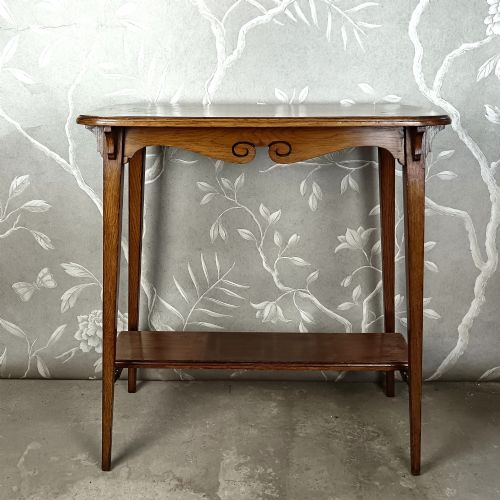


Edwardian Style Display Table
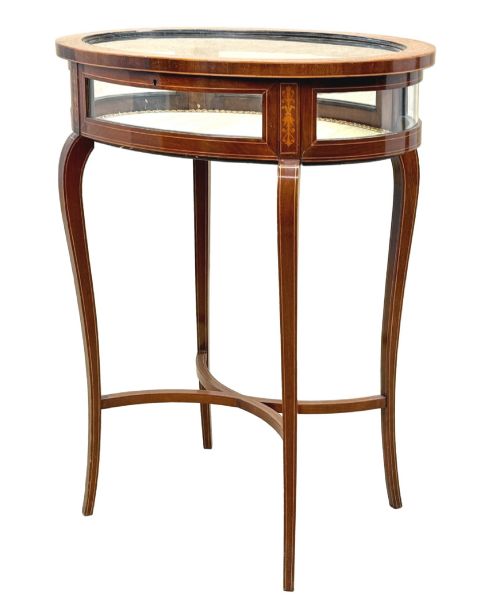
These pieces for an edwardian style display table offer glass-topped surfaces to present small treasures while serving as decorative furniture in a room.

Edwardian Style Display Table
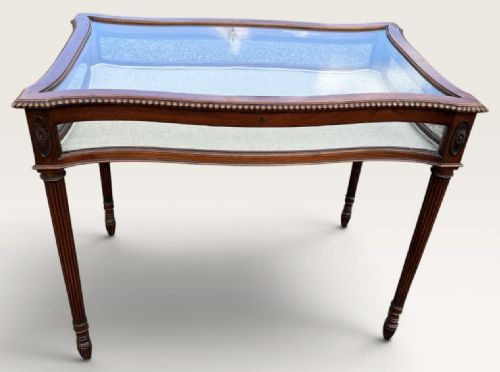
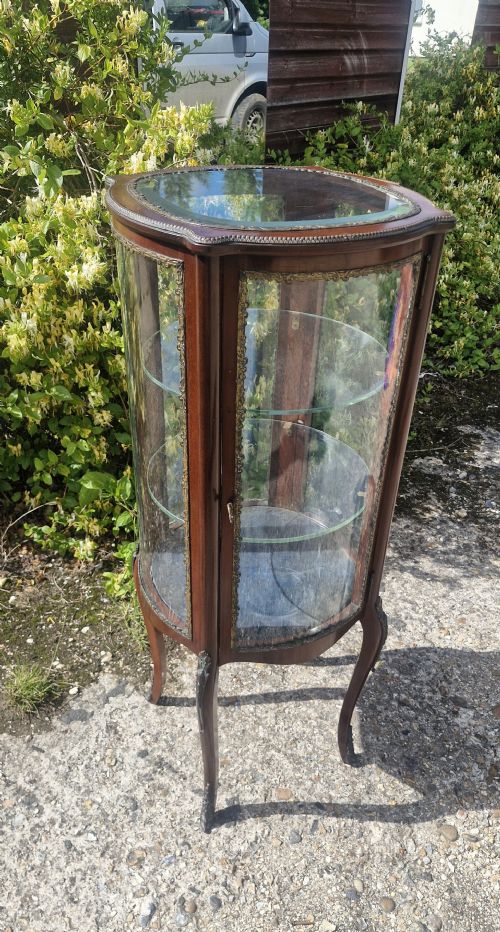
When you search for an edwardian style display table, you find pieces designed to showcase objects like trinkets, medals, and small silver items beneath glass tops while fulfilling the function of traditional occasional tables. The versions you meet most frequently on this page date from the Edwardian era and around nineteen hundred, taking forms such as bijouterie tables, display cabinets, and occasional tables.
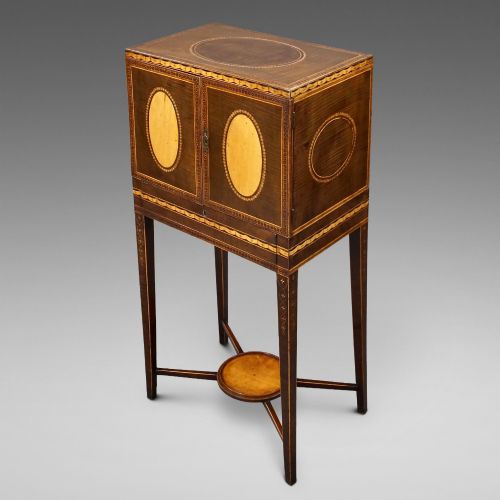
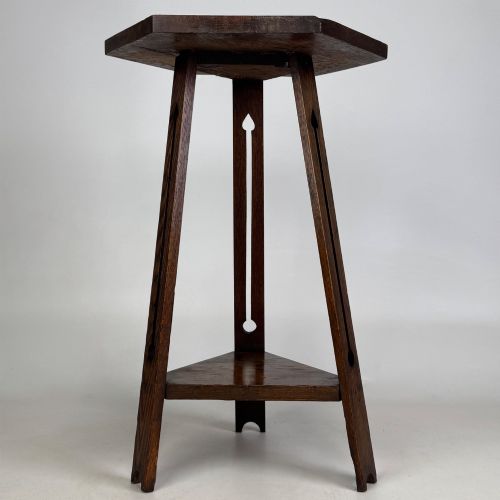
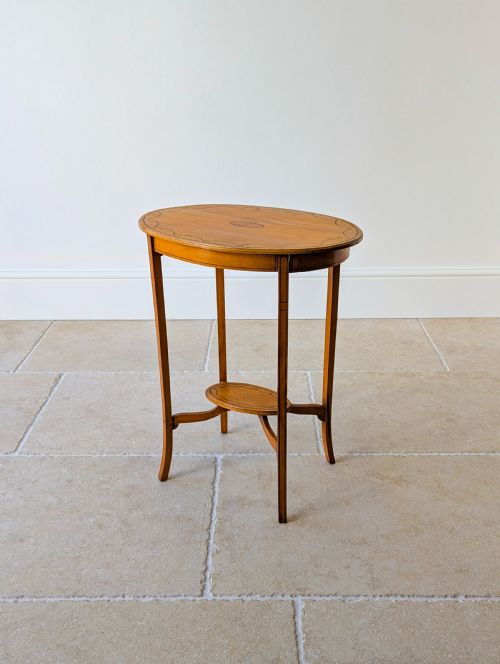
The construction of these items often incorporates mahogany, satinwood, and glass, reflecting the revival of Sheraton styles alongside Arts and Crafts influences during the early twentieth century. Makers of the period produced oval, serpentine, and rectangular tables that combined display compartments with standard furniture forms.
What varies in quality
The standard of timber selection and the precision of the marquetry inlay distinguish finer examples from simpler production pieces. Delicate hand-carved details and balanced proportions indicate greater workshop skill than plain, machine-cut framing.
The quality of the glass, the integrity of the fabric linings, and the smoothness of the hinge mechanisms demonstrate the original tier of manufacture and the care taken in assembly.
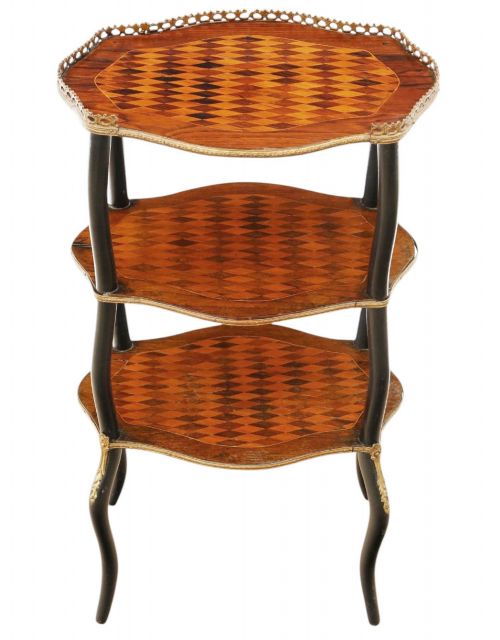
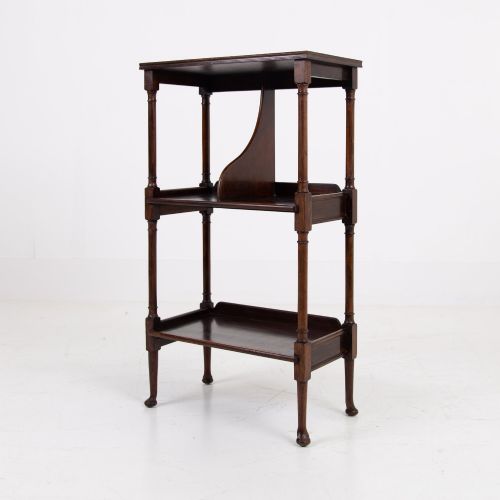
The furniture forms range from bijouterie tables and etageres to plant stands and occasional display cabinets.
Shoolbred of London
The Edwardian Style Display Table Glossary
- Bijouterie table
- A table featuring a glazed compartment beneath the top surface designed for displaying small valuable items and trinkets. These tables became popular during the nineteenth and early twentieth centuries.
- Marquetry
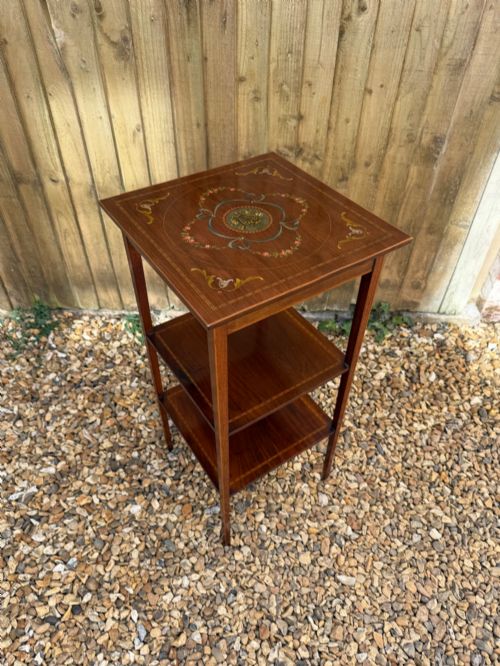
- Decorative woodwork where pieces of contrasting veneer are fitted into a design to ornament the surface of a table top or cabinet. Craftsmen used various woods to create floral or geometric patterns.
- Satinwood
- A durable hardwood with a lustrous, golden-yellow sheen frequently utilised for fine cabinetmaking and decorative stringing during the Edwardian period. It provides a bright contrast against darker timbers such as mahogany.
- Étagere
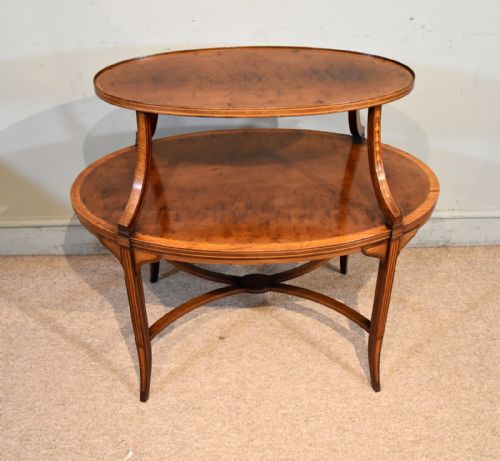
- A set of open display shelves or tiered occasional tables used for ornaments and small objects. They combine vertical display space with a compact footprint.
- Sheraton Revival
- A late nineteenth and early twentieth century design movement that copied the lighter, neoclassical furniture forms of the eighteenth-century designer Thomas Sheraton. Pieces in this style typically feature inlaid satinwood and tapered legs.
Edwardian Style Display Table: Frequently Asked Questions
What is a bijouterie table?
A bijouterie table is a specialised piece of furniture featuring a glass-topped compartment specifically designed for exhibiting small collections, jewellery, and trinkets.
These tables allow owners to view delicate items while keeping them protected from dust and handling.
How do I date these tables?
Dating relies on examining the timber species, construction methods, hardware, and stylistic revival influences present in the piece. Edwardian examples often combine mahogany and satinwood with light inlaid detailing.
Comparing the legs and edge profiles to documented furniture from the late nineteenth and early twentieth centuries helps narrow down the period.
Where should I place one?
These tables suit drawing rooms, hallways, and studies where they can function as occasional surfaces while displaying small objects.
Placing them away from direct sunlight protects both the timber finish and the fabric lining inside the display compartment.
What items go inside?
Owners traditionally exhibit small silver pieces, medals, pocket watches, coins, and delicate ornaments beneath the glass top.
The lined interior cushions these objects and keeps them arranged securely within the glazed compartment.