


Edwardian Steamer Trunk
An edwardian steamer trunk offers practical storage with robust historical travel character.
Edwardian Steamer Trunk
When searching for an edwardian steamer trunk, buyers encounter utilitarian luggage designed for ocean liner journeys and long-distance travel. The pieces originate predominantly from the late nineteenth and early twentieth centuries, spanning periods from the Victorian era through to the nineteen twenties.
The versions met most frequently on this page include sturdy trunks and chests constructed for shipping and cabin use. Examples range from compact hat boxes and portmanteau cases to large fitted storage chests originating from English, French, and American makers.
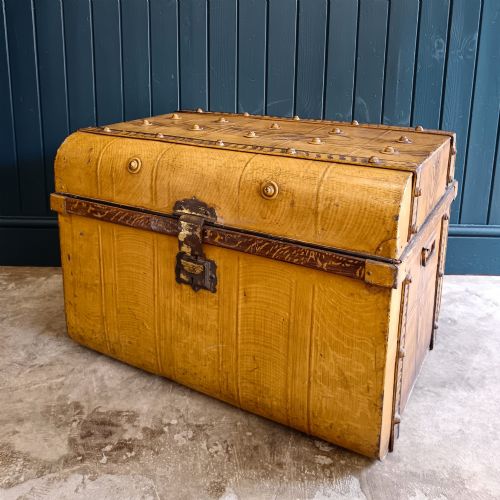
Construction forms vary between flat-topped steamer luggage intended to slide beneath cabin berths and dome-top travel trunks built to shed water on deck. Many retain travel labels, reinforced edges, and internal compartments that reflect their original transit purpose.
Materials and Construction Techniques
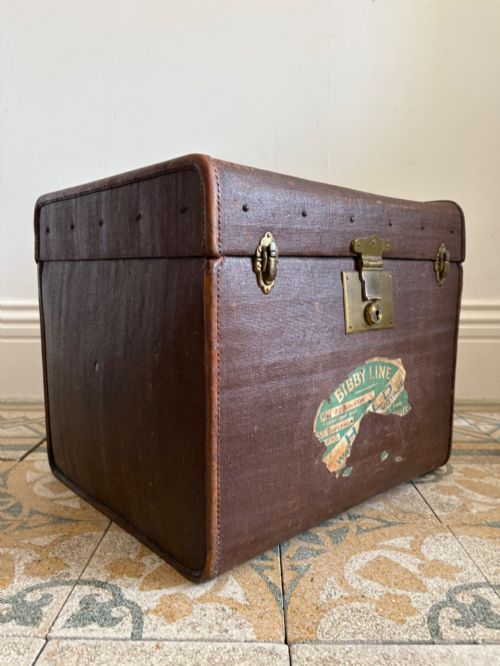
Makers built these pieces using timber frames of pine, oak, cedar, or plain wood clad in protective layers of canvas, leather, vellum, or painted metal. Exterior surfaces often received water-resistant coatings or protective paper linings to withstand rough baggage handling.
Structural rigidity relied upon iron, brass, or steel bands, corner brackets, and heavy-duty latches secured with numerous rivets. Internal fittings incorporated wooden trays, compartments, and textile linings designed to keep garments secure during transit.
Listings feature pieces spanning from the nineteenth century through to nineteen twenty, incorporating wood, leather, canvas, brass, and aluminium materials.
Factors Separating Quality Grades
Quality differences stem from the grade of materials utilised in the original construction and the survival of maker signatures or retail stamps. Premium examples feature branded brass hardware, fine leather or vellum coverings, and intricate internal fitted compartments rather than basic pine and painted metal.
The degree of original preservation and the retention of authentic travel labels, fitted trays, and working locks elevate an individual piece. Fully restored trunks or those bearing marks from distinguished makers stand apart from standard utility baggage.
Army and Navy·Drawco·Aux Etats Unis·Louis Vuitton·Goyard·Peter Robinson Oxford Street
The Edwardian Steamer Trunk Glossary
- Portmanteau
- A large travelling case or suitcase, typically made of leather and opening into two equal compartments.
- Vellum
- Fine parchment prepared from calfskin, utilised here as a durable exterior covering on luxury luggage.
- Dome top
- A rounded upper lid design intended to prevent luggage from being stacked underneath heavier cargo and to shed moisture.
- Campaign trunk
- Portable furniture and storage designed for military officers or travellers on active service, featuring reinforced carrying handles.
- Malle
- The French term for trunk or chest, frequently found stamped on high-end continental luggage pieces.
Edwardian Steamer Trunk: Frequently Asked Questions
What is an edwardian steamer trunk?
An edwardian steamer trunk is a sturdy travel chest produced during the early twentieth century to hold luggage in ocean liner cabins.
These pieces combine wooden frames with protective coverings like canvas, leather, or metal, reinforced by brass or iron hardware.
How were they used for travel?
Travellers used these trunks to pack clothing and personal possessions for long sea voyages and continental journeys.
Their lower profile allowed them to slide underneath cabin berths, while reinforced corners and heavy latches protected contents during transit.
How do I use one at home?
These trunks serve well as coffee tables, end tables, or blanket chests in living spaces and bedrooms.
Their hinged lids open to reveal practical hidden storage for household items, linens, or books.
How can I tell the period?
Dating relies on materials, construction methods, maker stamps, and surviving railway or steamship travel labels.
Earlier nineteenth-century examples often feature heavy timber and dome tops, while Edwardian pieces frequently utilise canvas-covered wood and brass hardware.