
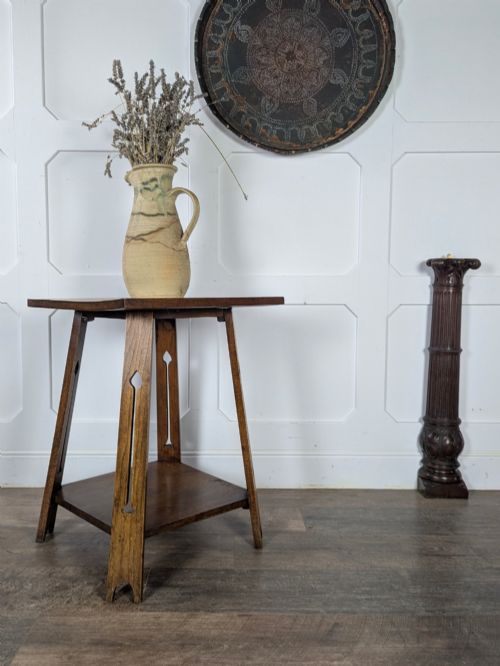
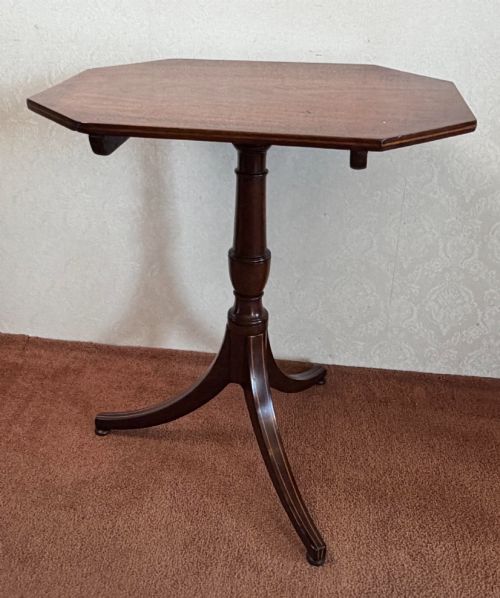
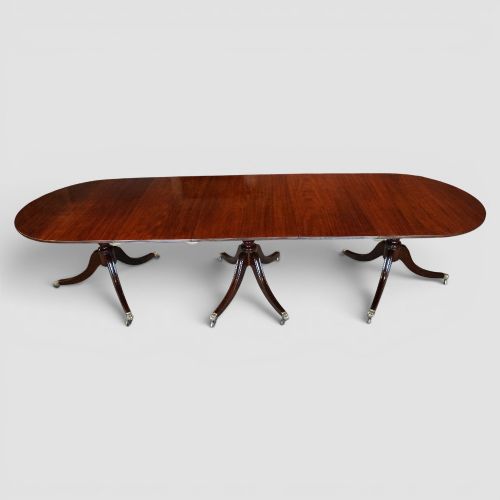
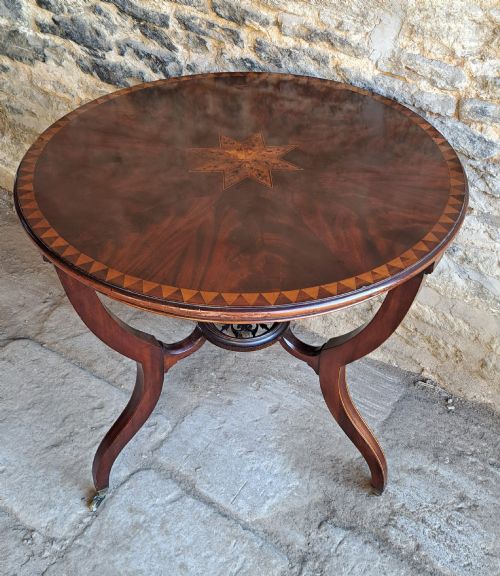
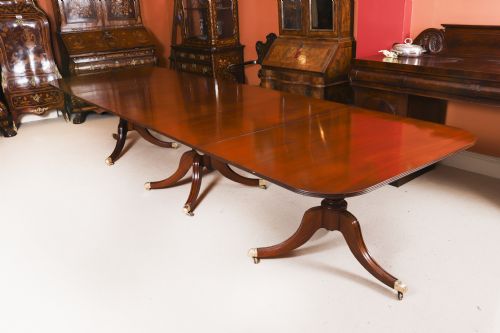


Edwardian Splayed Leg Table
These edwardian splayed leg table pieces offer light, versatile proportions that anchor a room without crowding the floor.
Edwardian Splayed Leg Table
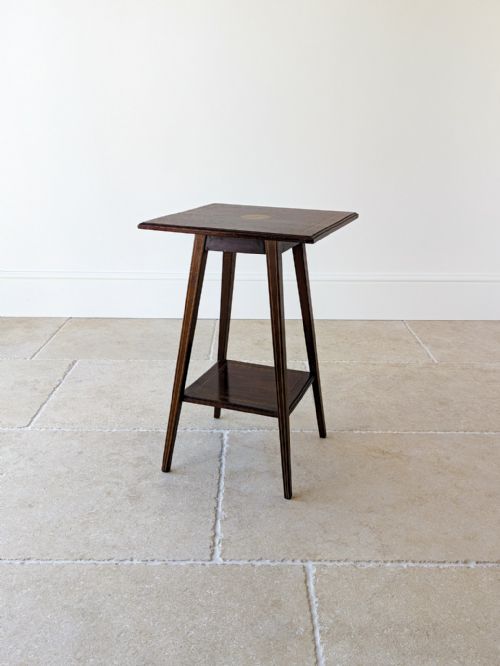
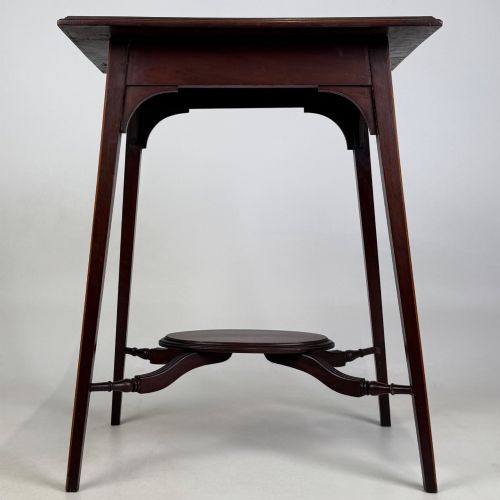
When you search for an edwardian splayed leg table, you encounter compact occasional furniture designed for everyday utility in period homes. The evidence shows these pieces appearing primarily as side tables and writing tables, often supported on outwards-slanting legs that give them a distinctive stance.
Makers of the period drew heavily on earlier designs, producing items in Edwardian, Sheraton Revival, and Arts and Crafts styles. Mahogany and solid oak dominate the forms, frequently enriched with boxwood and satinwood inlay.
Occasional tables and side tables are the versions most likely to meet you on this page. They combine domestic practicality with the refined cabinetwork typical of the early twentieth century.
Distinctions in Quality and Make
Quality separates simple utility pieces from finer cabinetwork through the precision of the inlay and the selection of figured timber. Better examples display crisp boxwood and satinwood lines that integrate smoothly into the surrounding wood without gaps.
The integrity of the frame construction and the stability of the splayed legs dictate the durability of the table. Superior pieces maintain tight joints and balanced proportions that prevent wobbling during daily use.
Finer items also benefit from thoughtful secondary timbers and careful attention to edge moulding and surface finishing. These choices reflect the skill of the workshop rather than mass production.
Listings span periods from the nineteenth century through the Edwardian era into the 1920s, featuring mahogany, solid oak, brass, and leather.
Whytock & Reid
The Edwardian Splayed Leg Table Glossary
- Splayed leg
- A support that slants outwards from the vertical centre of the piece. This stance provides stability while lending a lighter visual appearance to smaller occasional tables.
- Occasional table
- A small, portable piece of furniture intended for general use in a reception room. These tables serve multiple functions from holding lamps to displaying decorative objects.
- Sheraton Revival
- A late nineteenth and early twentieth century design movement that reinterprets eighteenth century neoclassical furniture. It relies on light proportions, straight tapered supports, and contrasting string inlay.
- Inlay
- A technique where contrasting materials are inserted into recessed cavities on the wood surface. Boxwood and satinwood are common choices for creating linear borders and floral motifs on mahogany.
- Veneer
- A thin layer of superior timber applied over a secondary wood base. This method allows makers to display striking grain patterns while maintaining structural stability.
Edwardian Splayed Leg Table: Frequently Asked Questions
What rooms suit an edwardian splayed leg table?
These compact tables fit easily beside armchairs in living rooms or function as writing surfaces in smaller studies. Their light proportions prevent them from dominating limited floor space.
They also serve as bedside stands or hallway surfaces for holding small daily items. The splayed leg design ensures they remain stable on various floor coverings.
How do I identify an Edwardian piece?
Edwardian furniture often combines lighter timbers with revival styles influenced by eighteenth century cabinetmakers. Look for combination woods like mahogany veneer over pine or oak.
Inlay work on these pieces tends to use boxwood and satinwood to form delicate border lines. Construction methods show machine assistance alongside traditional hand joinery.
Are splayed legs sturdy for daily use?
The outward angle of splayed legs distributes weight effectively across the floor footprint. Makers joined these supports securely to the underframe to handle normal placement of lamps and books.
While they feel lighter than heavy Victorian pedestal bases, they offer reliable stability for general household tasks. Proper placement on level flooring ensures secure daily use.
How should I care for mahogany surfaces?
Keep wooden tables away from direct heat sources and strong sunlight to prevent the timber from drying out or fading. Dust the surface regularly with a soft, dry cloth.
Apply traditional wax polish occasionally to nourish the grain and maintain the natural lustre of the finish. Avoid using silicone sprays that can build up residue over time.