




Edwardian Silver Vanity Dish
An edwardian silver vanity dish brings dressing table elegance to life through sterling silver, glass, and tortoiseshell.
Edwardian Silver Vanity Dish
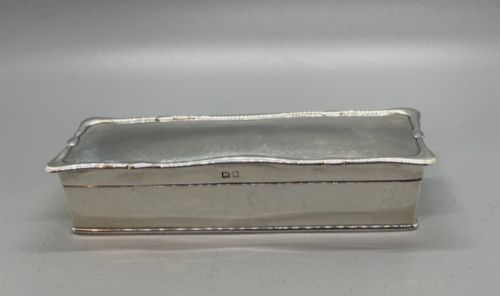
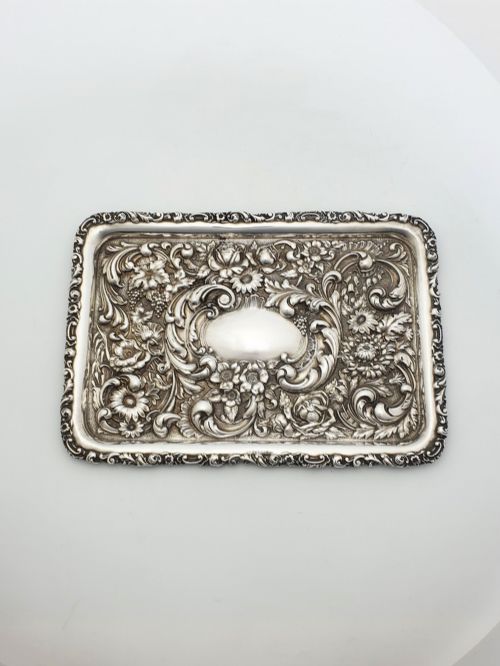
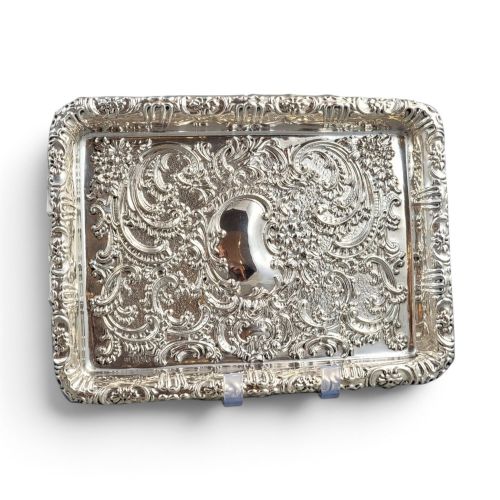
An edwardian silver vanity dish covers dressing table items such as trinket boxes, ring holders, pill boxes, and trays intended for personal ornaments and dressing table accessories. Buyers encounter pieces spanning the Edwardian period, Victorian era, and George V reigns, alongside styles ranging from Art Nouveau to Rococo Revival.
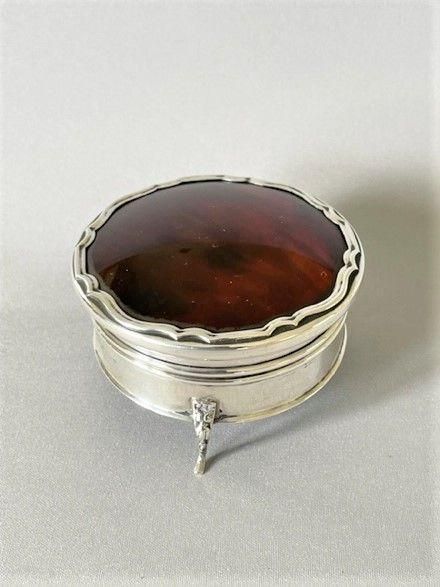
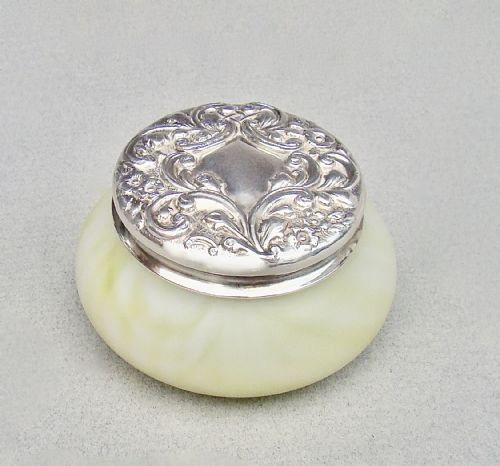
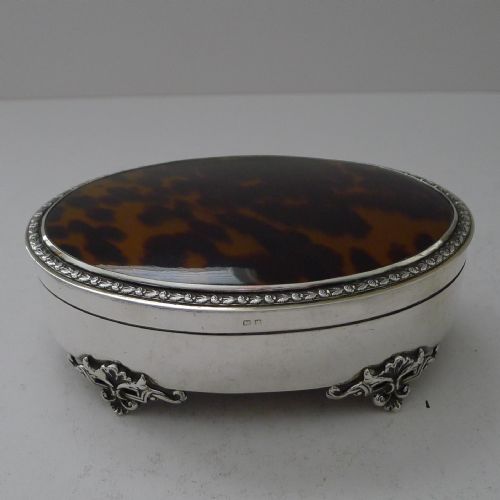
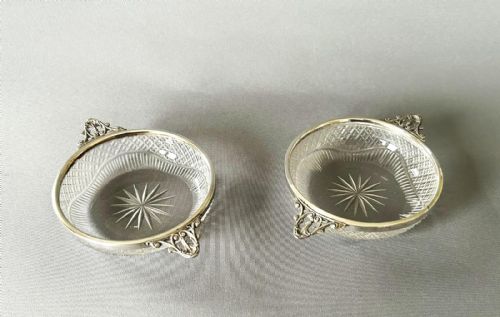
The selection centres on solid sterling silver vessels, often paired with cut glass, satin glass, or crystal bases. Many examples incorporate hinged or removable lids embellished with enamel, tortoiseshell, or figural repoussé work.
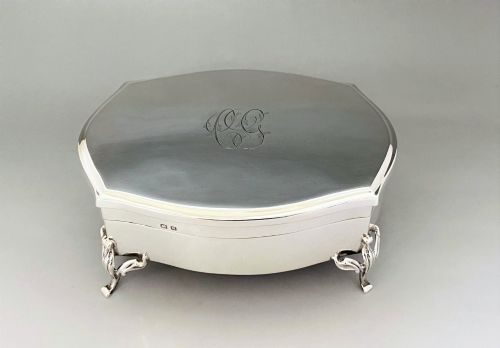
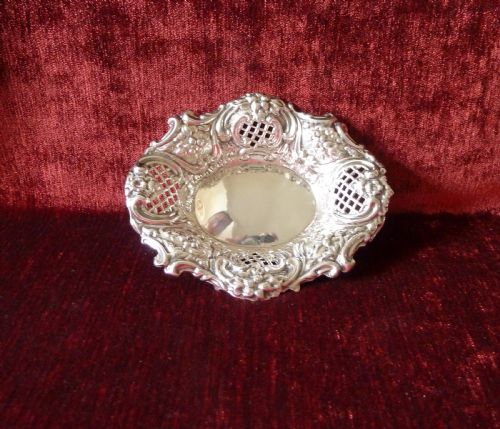
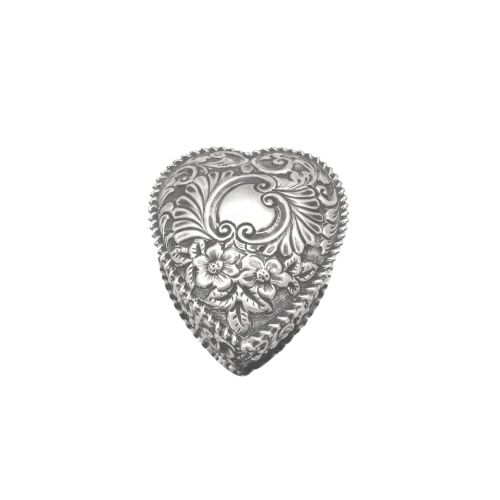
Form varies from simple heart-shaped dishes and card trays to large fitted jewellery boxes and potpourri containers. Most pieces originate from early twentieth-century English workshops, marked by assay office hallmarks from Birmingham and London.
Materials and construction
Silversmiths utilised sterling silver and solid silver for frames, mounts, and repoussé lids, shaping the metal through pressing, casting, and hand-chasing. These silver elements frequently accompany cut glass, crystal, or satin glass bodies.
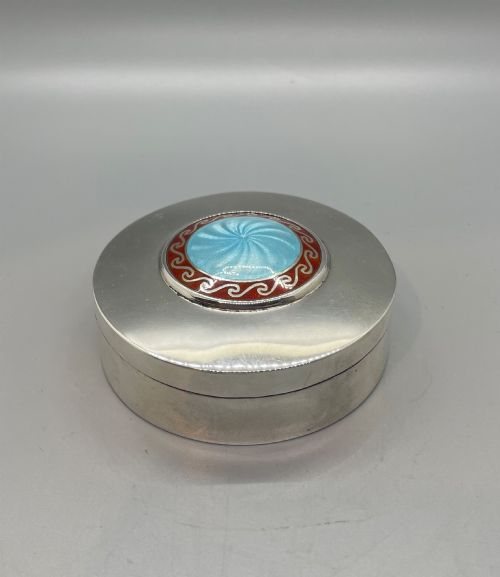
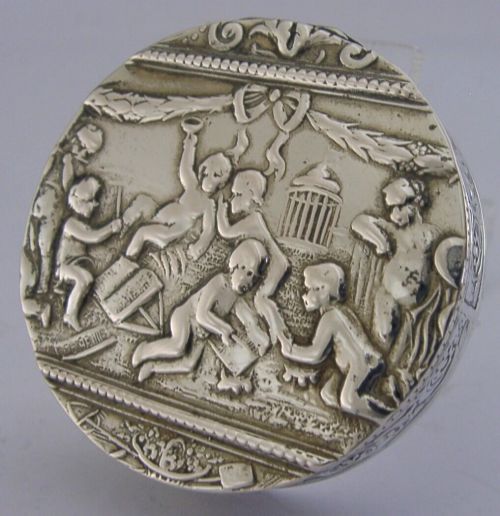
Decorative surfaces display vitreous enamel, guilloche enamel, and inset tortoiseshell secured within silver bezels. Artisans finished pieces with detailed figural reliefs, including cherub scenes and Reynold's angels, alongside floral motifs.
Cherubs peer from silver box lids across multiple decades, supervising dressing tables with eternal vigilance.
Assessing quality
Quality rests upon the crispness of the repoussé work, the depth of the hand-chased relief, and the weight of the sterling silver mounts. Superior items display sharp detailing on figural scenes and secure, well-fitted hinges.
The condition and clarity of integrated materials elevate a piece, whether through unblemished cut glass, intact vitreous or guilloche enamel without chips, or polished tortoiseshell with rich amber figuring. Maker marks and clear assay hallmarks add provenance and distinction.
A. Bromet & Co·Robert Pringle & Sons·William Comyns Silversmith
The Edwardian Silver Vanity Dish Glossary
- Repoussé
- Metalworking technique where the design is hammered into relief from the reverse side. This creates raised ornamental patterns on silver trays and box lids.
- Guilloche
- Decorative engine-turned engraving applied beneath translucent enamel. It produces intricate geometric patterns on silver box tops.
- Repose
- Incorrect term often confused with repoussé. The correct technique involves hammering silver from behind to form raised motifs.
- Tricot
- Textile term sometimes mistaken in antique contexts. It has no application to silver vanity wares.
- Hallmark
- Official stamp guaranteeing the metal standard and origin. British silver carries assay office marks indicating town, date letter, and maker.
Edwardian Silver Vanity Dish: Frequently Asked Questions
What were vanity dishes used for?
These pieces served on dressing tables to hold rings, pins, trinkets, and small cosmetics. They kept daily accessories organised and protected within a decorated silver and glass container.
Larger boxes accommodated fitted jewellery collections while smaller trays held loose pins and rings during dressing routines.
How do I date an edwardian piece?
Dating relies upon the stamped assay office hallmarks found on the silver mounts. Letters correspond to specific years, while town marks identify where the item was tested.
Stylistic cues such as Art Nouveau curves or specific monarchical periods help narrow the decade of manufacture alongside the maker's mark.
Can tortoiseshell boxes be cleaned?
Tortoiseshell requires gentle dusting with a soft, dry cloth rather than liquid immersion. Moisture can loosen the organic material from its silver backing.
Silver mounts tolerate standard silver polish, provided care is taken to avoid contact with the tortoiseshell or enamel panels.
Are glass and silver boxes fragile?
The cut glass and crystal bases possess weight and thickness, but care is needed around hinged lids and enamel panels. Normal domestic handling poses no risk to sturdy sterling silver frames.
Storage away from direct sunlight protects coloured enamel and tortoiseshell from fading over time.