


Edwardian Silver Pedestal Dish
An edwardian silver pedestal dish brings formal elegance to a table, combining raised height with bright metalwork for display or service.
Edwardian Silver Pedestal Dish
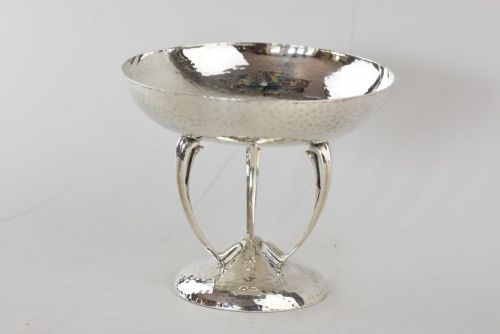
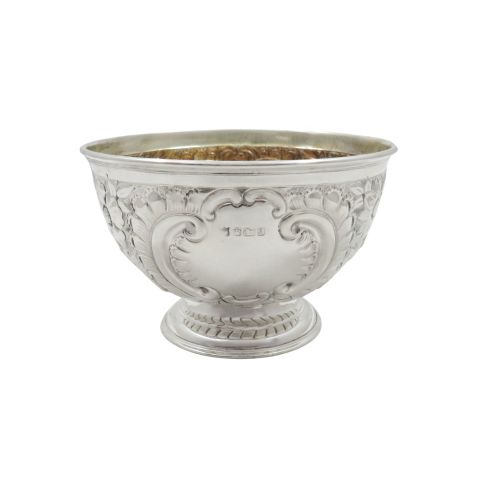
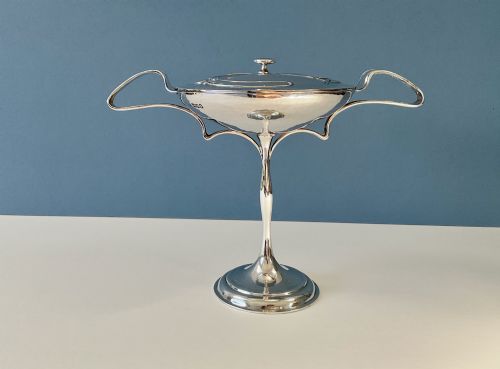
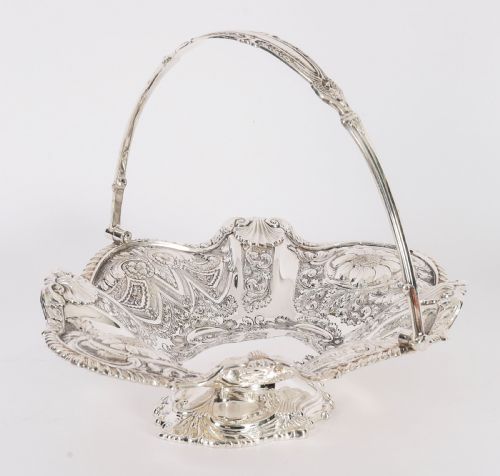
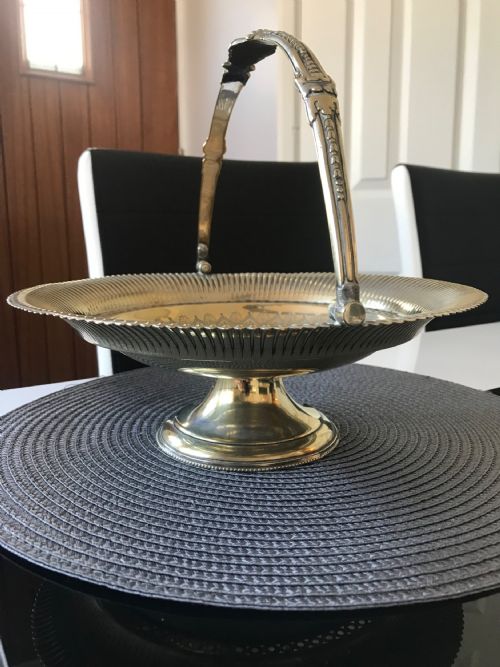
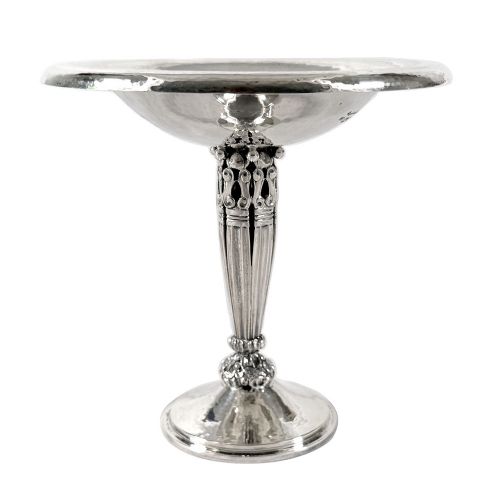
When you search for an edwardian silver pedestal dish, you encounter footed vessels designed for display, fruit, bonbons, or centrepiece service. The selections range from solid sterling silver pieces bearing hallmarks for London, Birmingham, Chester, and Edinburgh to silver plated and electroplated nickel silver alternatives. Forms span decorative bowls, comports, tazzas, baskets with loop handles, and pierced dishes created across the Edwardian period and adjacent decades.
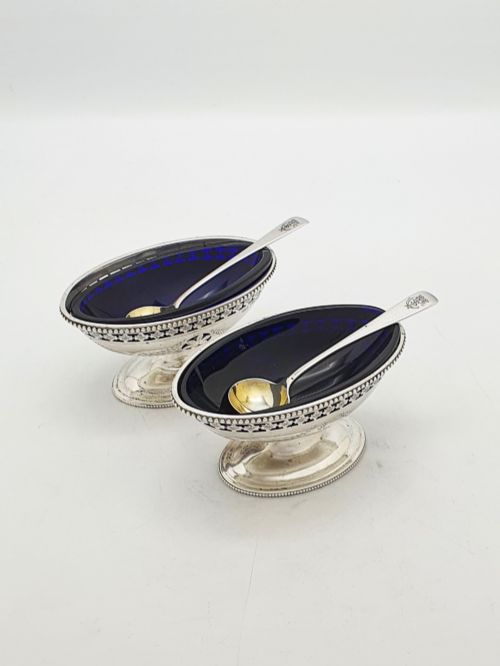
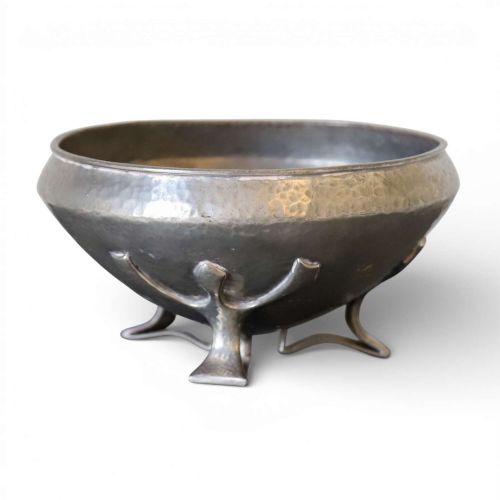
The version you are most likely to meet on this page carries the stylistic hallmarks of the early twentieth century, alongside Victorian, Art Nouveau, Arts and Crafts, and Art Deco influences. Makers utilised pierced lattice details, hammered surfaces, and cobalt glass liners to add colour and texture to the raised form. These pieces function as decorative bowls and serveware, reflecting the domestic entertainments of the early 1900s.
The category encompasses smaller sweet stands and bonbon dishes alongside substantial fruit baskets and centrepieces raised on distinct feet. Materials extend beyond sterling silver to pewter, brass, and silver gilt, showing the broad material vocabulary of the era. Each piece relies on the elevation provided by the pedestal to create presence on a dining table or sideboard.
Assessing quality and character
Quality rests in the crispness of the piercing, the weight of the metal, and the balance of the pedestal foot supporting the bowl. Substantial sterling silver items demonstrate heavier gauge metal compared to silver plated counterparts, though high quality plating and patination maintain visual appeal.
Maker attribution and assay office marks heavily influence desirability, with London, Birmingham, and Chester hallmarks providing clear provenance. The complexity of design, such as elaborate handles, lattice work, or the inclusion of original cobalt glass liners, elevates individual pieces.
Some Edwardian sweet stands still harbour faint traces of long-vanished peppermint dust in their deepest corners.
Goldsmiths and Silversmiths Company·George W. Scott and Sons Ltd·Liberty and Co·Charles Boyton·Mappin and Webb·Walker and Hall·Elkington and Co·James Dixon and Sons
The Edwardian Silver Pedestal Dish Glossary
- Tazza
- A shallow bowl or plate mounted on a pedestal foot. These elevated vessels were traditionally used for serving fruit or small confections.
- Comport
- A decorative stand or dish raised on a high foot for table service. They frequently feature pierced or patterned borders.
- Bonbon dish
- A small pedestal bowl intended for holding sweets or bonbons. These delicate pieces often appear in matched pairs.
- Pierced
- Work where portions of the metal are cut away to form openwork patterns and lattice designs. This technique lightened the visual weight of silver vessels.
- Electroplated nickel silver
- A base metal alloy coated with a layer of silver through an electrolytic process. It provided an accessible alternative to solid sterling silver.
Edwardian Silver Pedestal Dish: Frequently Asked Questions
What were pedestal dishes used for?
These elevated vessels served multiple domestic functions, primarily holding fruit, bonbons, or sweetmeats on the dining table. Their raised profile also made them effective centrepieces for decorative display during Edwardian meals.
Over time, their roles shifted as dining styles evolved, turning them into decorative accent pieces for sideboards and mantels.
How do I clean antique silver?
Cleaning requires a soft cloth and a specialised silver polish formulated to remove tarnish gently without abrading the metal surface. Avoid harsh chemical dips, particularly on pieces with applied finishes or glass liners.
Regular, gentle dusting and minimal polishing help preserve the natural patina accumulated over a century of existence.
Are silver plated dishes valuable?
Silver plated and electroplated nickel silver vessels hold value based on their maker, design quality, and overall condition rather than precious metal content. Renowned firms produced plated wares with the same artistic care as their solid silver lines.
Collectors often seek out plated pieces by prominent makers for their striking aesthetic and decorative utility.
How can I date my pedestal dish?
Dating relies on identifying the hallmarks stamped into the metal, which indicate the assay office, date letter, and standard of silver. Stylistic clues such as Art Nouveau curves or Arts and Crafts hammering also point to specific decades around 1900.
Maker marks provide additional confirmation when matching pieces against known production periods of firms like Walker and Hall or Elkington.