



Edwardian Silver Novelty Glass
These edwardian silver novelty glass pieces combine whimsical forms with fine metalwork, offering collectors clever desk wares and table accessories from the late nineteenth and early twentieth centuries.
Edwardian Silver Novelty Glass
When you search for edwardian silver novelty glass, you encounter functional items transformed into playful shapes, from owls and apples to thistles and wheelbarrows. The examples on this page span the Victorian, Edwardian, and George V periods, merging glass bodies with sterling silver or silver plate mounts.
You are most likely to meet animal and botanical forms, particularly owls housing scent bottles or inkwells, alongside fruit-shaped preserve pots and thistle decanters. These pieces served practical purposes on desks and dining tables while displaying the whimsical taste of the period.
What varies in quality
Quality depends upon the crispness of the silver casting and the harmony between the glass vessel and its metal mount. Superior pieces display finely detailed featherwork, secure hinges, and well-fitted glass inserts that complement the figural design.
The reputation of the maker also elevates a piece, with established workshops achieving more convincing animal expressions and robust construction than anonymous makers of simpler cruet sets or match holders.
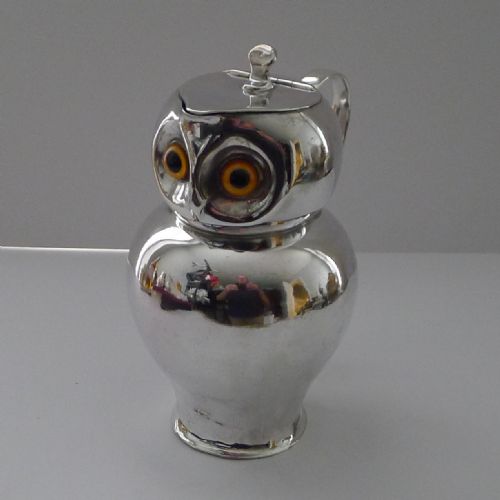
Several mischievous owls glare across the page with inset glass eyes, guarding inkwells and stamps as if they were live birds.
Hukin and Heath·Sampson Mordan
The Edwardian Silver Novelty Glass Glossary
- Sterling silver
- A silver alloy containing 92.5 percent pure silver and 7.5 percent other metals, typically copper, used for durable and high-quality metal mounts.
- Silver plate
- A base metal coated with a thin layer of silver, frequently utilised for larger novelty tablewares and desk stands.
- Cut glass
- Glass decorated by cutting facets or patterns into the surface using a wheel, adding brilliance and weight to decanters and preserve pots.
- Cruet set
- A matched group of small bottles or containers holding condiments for the dining table, often housed in a decorative stand.
- Scent bottle
- A small container designed for holding liquid perfume, frequently fitted with a screw or hinged silver cap.
Edwardian Silver Novelty Glass: Frequently Asked Questions
What were novelty glass and silver items used for?
These whimsical objects served everyday domestic and desk functions, holding ink, postage stamps, matches, or condiments while adding amusement to a room.
Owners displayed them on writing desks, smoking tables, and dining sideboards where guests could admire their clever figural designs.
How do I identify an Edwardian piece?
Edwardian pieces date from the reign of King Edward VII between 1901 and 1910, often displaying hallmarks from this specific decade.
They share stylistic traits with late Victorian designs but typically feature lighter, more refined silver mounts and cheerful Edwardian sensibilities.
Are the glass components original?
Many items retain their original blown, cut, or coloured glass inserts, which were specifically shaped to fit the custom silver mounts.
Because glass is fragile, some pieces may feature period-appropriate replacements that match the exact contours of the silver framing.
How should I clean silver mounts?
Clean silver mounts gently with a soft cloth designed for silver maintenance, taking care to avoid harsh polishes touching the glass.
Keep moisture away from any internal compartments or paper labels that might reside inside stamp boxes or inkwells.