


Silver Mounted Green Glass
Silver mounted green glass brings together rich coloured vessels and polished metal work from the nineteenth and early twentieth centuries.
Silver Mounted Green Glass
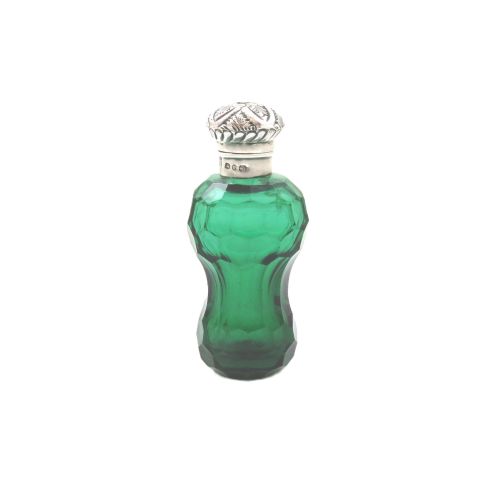
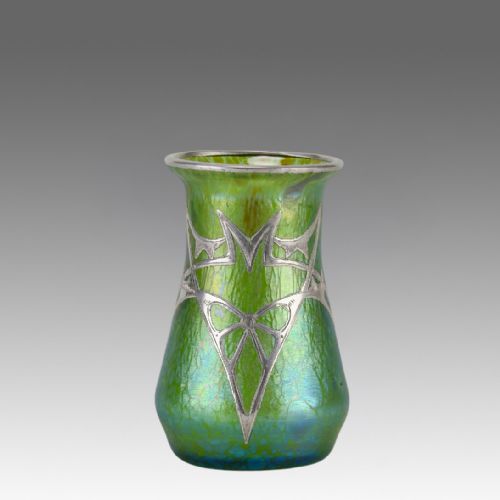
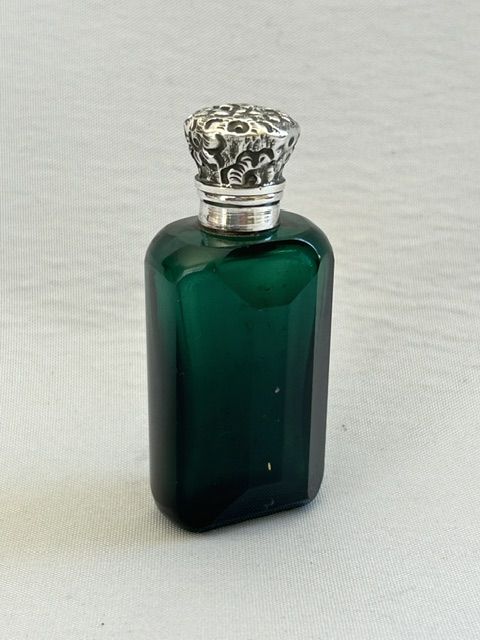
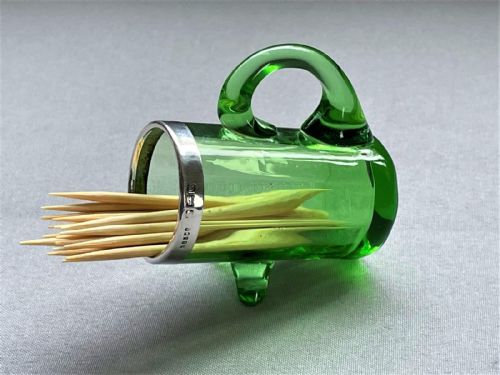
When you search for silver mounted green glass, you encounter functional vessels and small display items created during the Victorian and Edwardian periods. These objects combine deep green, lime, and teal glass bodies with sterling silver or silver plate collars, mounts, and bases.
The selection on this page centres on decanters, scent bottles, vases, and match holders. Victorian examples frequently utilise Bristol green or Moser glass, often enriched with gilt or enamel details, while later Edwardian and Vienna Secession pieces lean towards streamlined forms and distinctive glass types like iridescent or overlay finishes.
What varies in quality
Quality in these pieces rests primarily on the depth and clarity of the glass and the weight of the metal mounts. Finer examples display crisp hand-cutting, uniform colour saturation, and substantial sterling silver mounts rather than thin silver plate.
Makership and design ambition also separate standard production wares from superior items. Pieces associated with notable glasshouses or silversmiths demonstrate greater precision in the fit between metal and glass, along with more refined decorative programmes such as hand-applied enamel or Secessionist metalwork.
Listings feature items spanning the Victorian, Edwardian, and Vienna Secession styles, created from materials including sterling silver, silver plate, and iridescent glass.
Johann Loetz·Mousley Brothers·Charles May·Schindler and Co
The Silver Mounted Green Glass Glossary
- Bristol Green
- A deep, rich shade of dark green glass traditionally produced in the Bristol area during the eighteenth and nineteenth centuries. It remains a defining characteristic of many Victorian scent bottles and decanters.
- Silver Mounts
- Fitted collars, rims, shoulders, or bases made of sterling silver or silver plate that reinforce and decorate glassware. They often carry hallmarks providing precise date and maker information.
- Moser Glass
- Art glass produced by the Bohemian company Ludwig Moser & Söhne, known for heavy green glass enhanced with rich gilding and enamel. These pieces are highly prized by collectors of nineteenth-century decorative arts.
- Vienna Secession
- An early twentieth-century artistic movement that rejected historicism in favour of clean lines and geometric forms. In glass and metalwork, this style produced avant-garde vases and vessels.
- Match Striker
- A small desktop or table container featuring a textured glass or ceramic section designed for igniting safety matches. Silver mounts often frame the upper rim or base of these utilitarian objects.
Silver Mounted Green Glass: Frequently Asked Questions
How do I clean silver mounted green glass?
Use a soft cloth and warm soapy water to wipe the glass, taking care to keep moisture away from any interior cork linings in the silver mounts.
Polish the silver portions gently with a dedicated silver cloth, avoiding abrasive creams that might scratch the surrounding green glass surface.
Are these glass pieces hand blown?
Many nineteenth and early twentieth century items in this category are indeed hand blown into moulds or free-blown by skilled artisans.
Signs of this traditional production include pontil marks on the base, slight air bubbles within the green glass, and subtle variations in thickness between individual vessels.
What is the difference between sterling and plate?
Sterling silver contains a high purity standard of silver alloy, usually marked with traditional British assay office symbols such as a lion passant.
Silver plate consists of a base metal coated with a thin layer of silver, which may show wear or base metal showing through over generations of handling.
How can I date my scent bottle?
Examine the silver mounts for hallmarks, which indicate the exact assay office, maker's mark, and date letter corresponding to British hallmarking records.
The overall silhouette, glass tone, and manufacturing technique also offer clues to whether a piece originates from the early Victorian era or the later Edwardian period.