
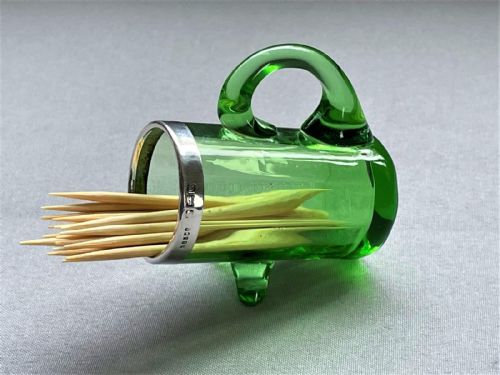


Sterling Silver Rim Glass
Sterling silver rim glass pieces combine solid metal mounts with heavy crystal vessels to create durable tableware and desk accessories that elevate everyday interiors.
Sterling Silver Rim Glass
Sterling silver rim glass items combine metal mounts and collars with glass bodies, ranging from desk accessories to large serving vessels. When you search for sterling silver rim glass, you encounter functional objects designed for dining tables and writing desks.
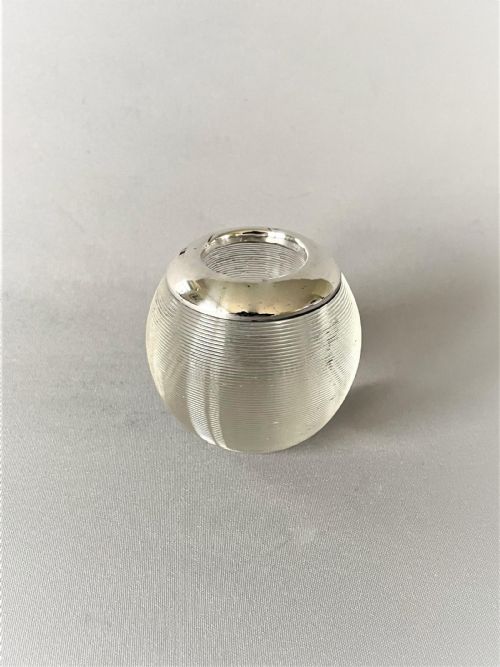
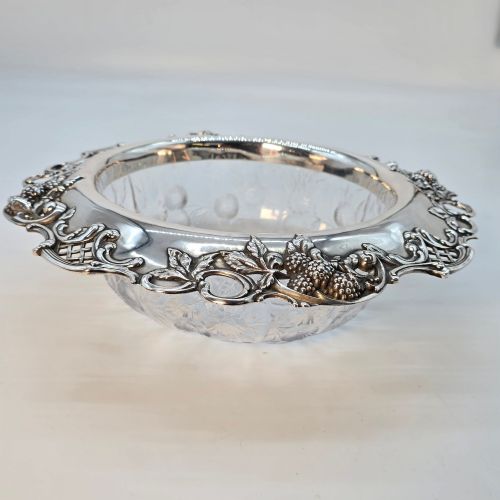
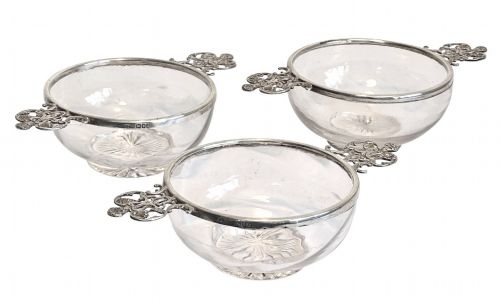
The pieces on this page span several eras from the nineteenth century through the mid twentieth century, encompassing Victorian and Edwardian examples alongside later twentieth century designs. Match strikers, bowls, jugs, and salt cellars form the core of the selection.
Makers applied silver mounts to cut glass, crystal, and threaded glass to protect the rims and add weight to vessels. These hybrid objects served practical household functions while displaying the polished metalwork typical of their period.
Materials and construction
Silversmiths formed the rims, collars, and mounts from sterling silver, often securing them directly onto blown or moulded glass vessels with internal adhesives or tight mechanical friction. Crystal and cut glass bodies provide heavy, refractive bases that contrast with the reflective quality of the polished silver mounts.
Makers cut geometric patterns into the glass surfaces or ribbed the walls to catch the light, pairing these textured vessels with hallmarked silver bands. Workshops utilised specialist glassblowers to create the blanks before silversmiths measured and fitted the custom metal hardware.
Victorian smokers relied on oversized glass match strikers to spark their evening cigars without leaving their seats.
Evaluating quality and execution
Quality in these pieces depends on the thickness of the glass vessel and the gauge of the sterling silver mount. Heavier silver collars and deeper glass cutting indicate superior craftsmanship, whereas thin metal rims and light, pressed glass represent more utilitarian production.
The crispness of the hallmarks stamped into the silver and the precision of the fit between metal and glass determine the overall standard. Superior items retain unblemished glass surfaces and thick silver mounts that sit flush against the glass without movement.
Tiffany & Co.·William Comyns·Asprey & Co·George Ernest Hawkins
The Sterling Silver Rim Glass Glossary
- Sterling silver
- An alloy containing 92.5 percent silver and 7.5 percent other metals, typically copper, chosen for durability in tableware and mounts. This standard has been used by British assay offices for centuries.
- Cut glass
- Glassware shaped and patterned by holding the blank against rotating abrasive wheels, creating deep facets and sharp edges. This technique produces high brilliance and weight in bowls and jugs.
- Match striker
- A heavy glass container, often with a sterling silver rim and a textured ceramic base, designed for lighting safety matches. The ribbed striker surface ignites the match head upon friction.
- Hallmark
- A series of official stamps applied to precious metals indicating the maker, assay office, standard of purity, and date letter. These marks verify the authenticity and origin of the silver mount.
Sterling Silver Rim Glass: Frequently Asked Questions
How do I clean the silver mounts?
Clean the sterling silver mounts using a soft cloth and a dedicated silver polish, taking care to avoid getting polish on the glass surface. Gentle care prevents the abrasive paste from wearing down engraved details or lodging in cut glass grooves.
Wash the glass body separately in warm soapy water rather than submerging the entire piece if the silver is attached with historical adhesives. Proper drying prevents moisture from becoming trapped between the silver collar and the glass rim.
What were match strikers used for?
Match strikers held safety matches on dining tables, smoking rooms, and hallways during the Victorian and Edwardian periods. Guests struck matches against the unglazed ceramic section to light cigars or candles.
The heavy glass body and silver rim provided stability and protected the glass edge from chipping during daily use. Many examples incorporate a striated base specifically designed to create the friction required for striking.
How can I date a silver rim?
Examine the hallmarks stamped directly onto the silver rim to identify the assay office city, the maker's mark, and the exact year letter. Birmingham and London marks appear frequently on these British and imported pieces.
Compare the style of the glass cutting and the shape of the silver mount to design periods like Edwardian or Art Deco. Heavy ribbed glass and thick collars typically indicate late nineteenth or early twentieth century manufacture.
Are these pieces safe for food?
Most antique bowls, jugs, and salt cellars function safely for serving cold food and drinks, provided the glass and silver are thoroughly washed. Avoid using them with hot liquids, as antique glass can crack under thermal shock.
Check whether the silver mounts are securely attached to the glass before filling jugs with liquids or heavy contents. Historical adhesives can weaken over time if exposed to prolonged moisture during cleaning.