
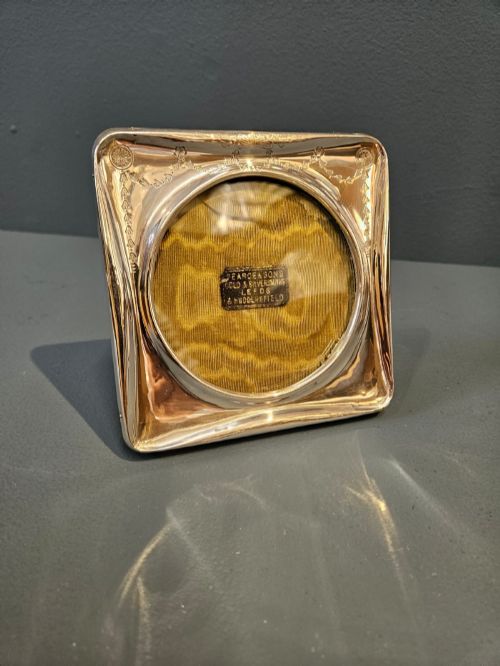
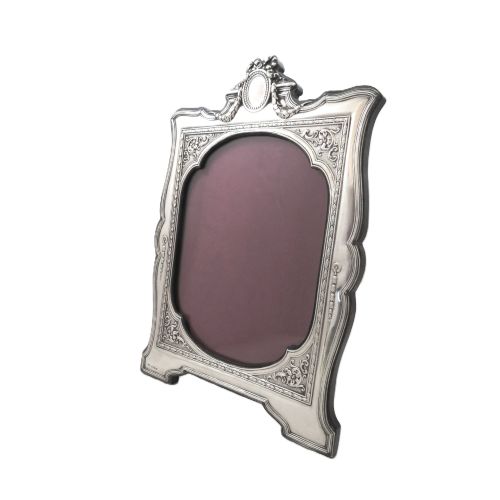
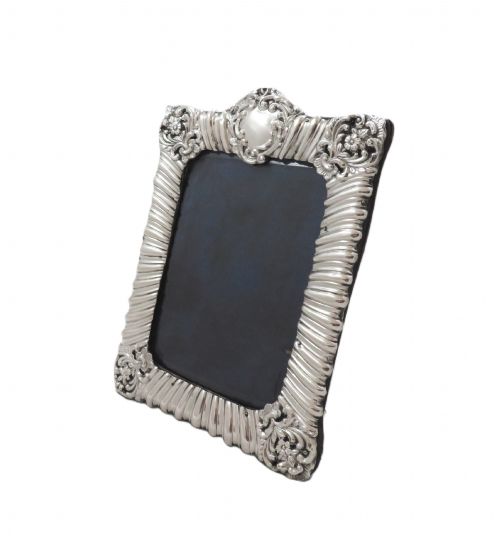
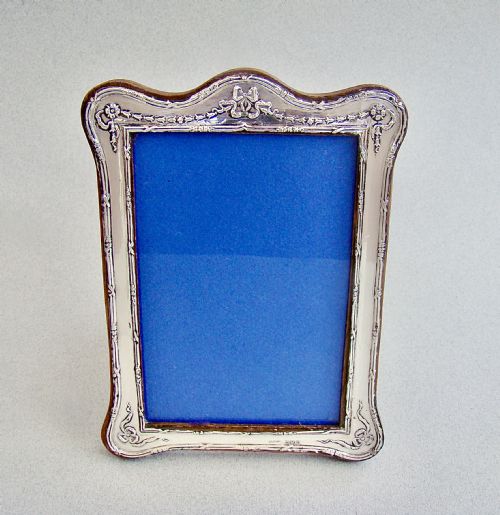
Edwardian Silver Desk Frame
An Edwardian silver desk frame unites practical desk accessories with personal display, bringing solid sterling silver and delicate craftsmanship to the working surface.
Edwardian Silver Desk Frame
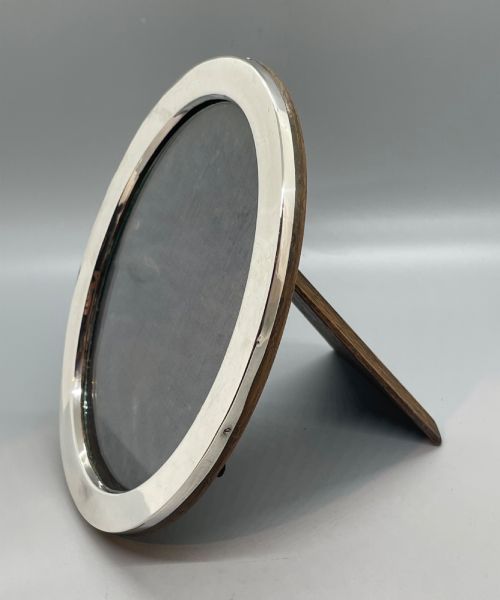
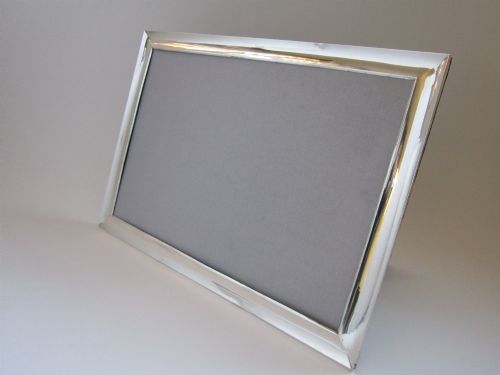
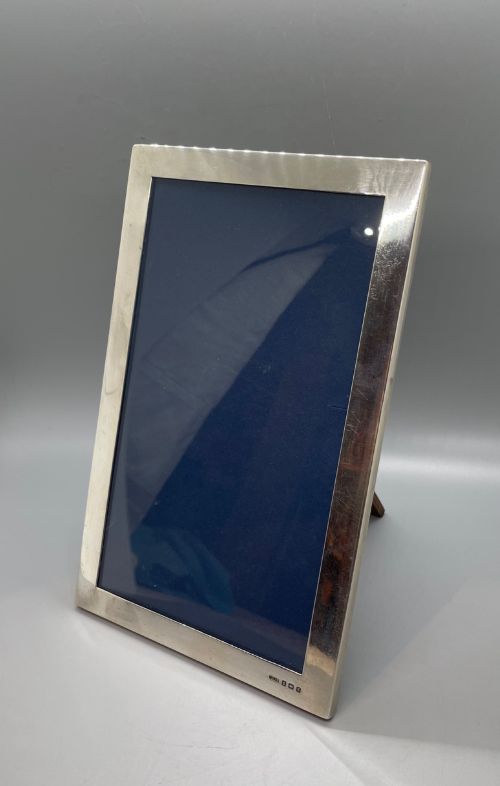
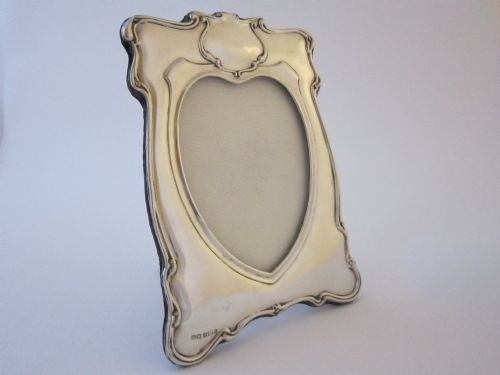
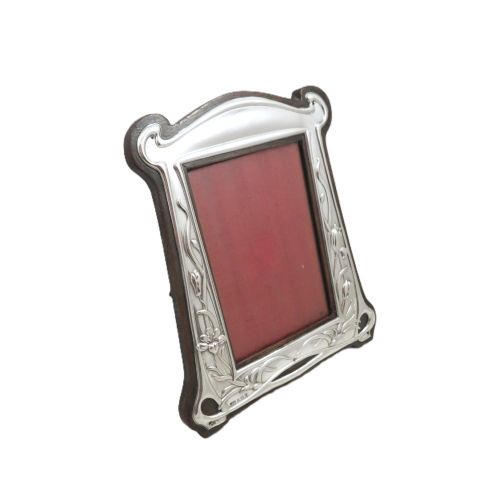
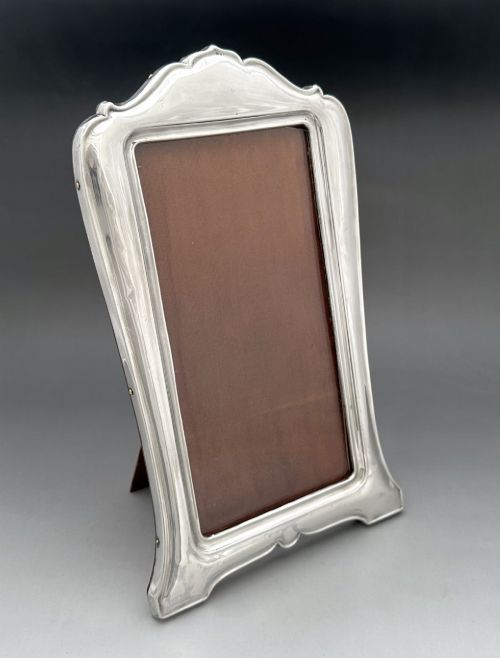
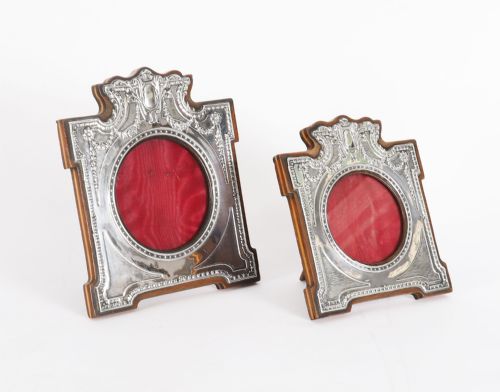
An edwardian silver desk frame encompasses a variety of desktop items designed to hold photographs, calendars, pocket watches, or thermometers. Picture and photograph frames dominate the selection, often accompanied by combined desk clips, barometers, and tidies.
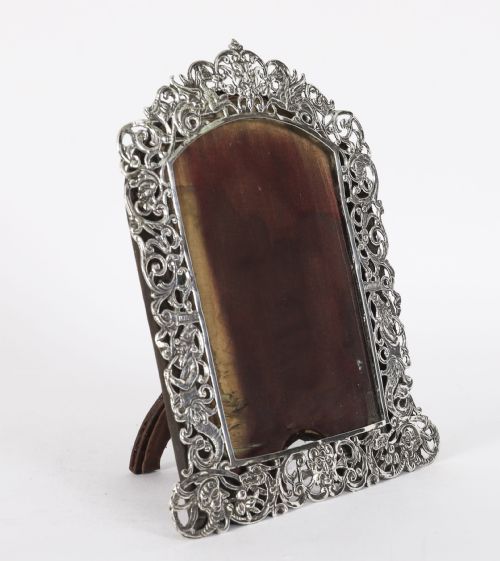
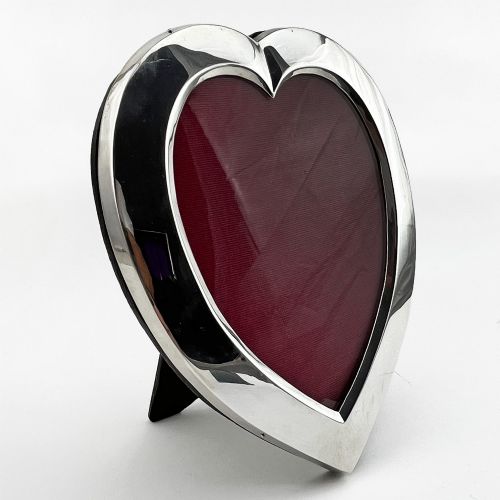
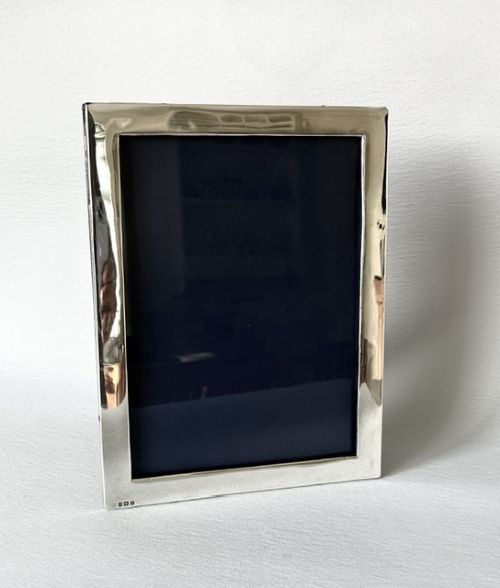
Most pieces date from the Edwardian period and the surrounding decades of the early twentieth century, spanning styles from late Victorian to Art Nouveau, Arts and Crafts, and George V. Forms range from simple rectangular and oval borders to heart shapes, buckle motifs, and novelty miniature furniture.
How They Were Made
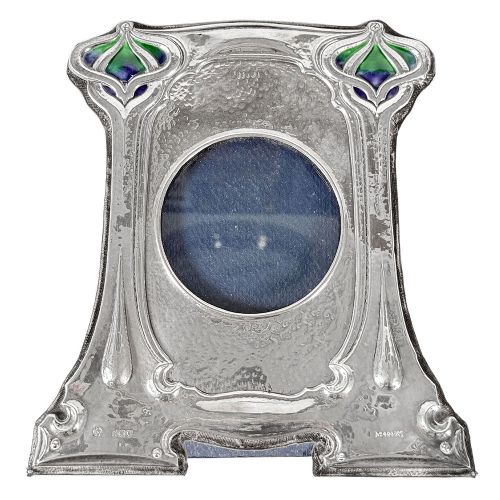
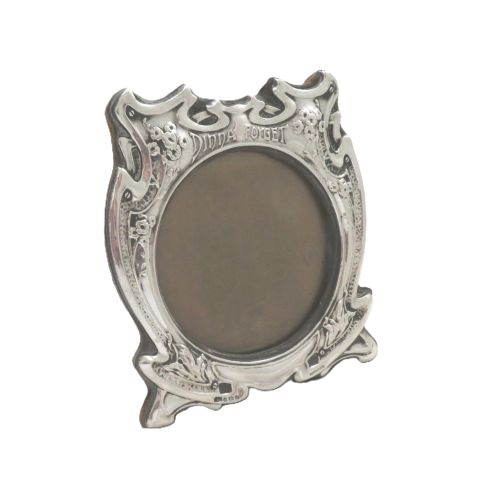
Silversmiths utilised sterling silver sheet metal, shaping the metal through stamping, embossing, and engraving to produce ornate borders, floral Art Nouveau tendrils, and clean plain lines. Enamel elements and gilt highlights were occasionally added to enhance specific decorative details.
The silver fronts were mounted onto structural supports using wood, fabric, or leather backs, typically fitted with hinged easel stands to allow the pieces to rest upright on a desk.
Object forms span standard picture and photograph frames alongside specialised items including pocket watch holders, perpetual desk calendars, and novelty furniture shapes.
What Varies in Quality
The distinction between standard examples and the finest work lies in the crispness of the chased or embossed decoration and the weight of the sterling silver used in the bezel. Master silversmiths achieved deeper relief and more intricate detailing, such as enamelling or complex ribbon motifs, which remain sharp and well-defined.
The integrity of the structural backing materials also sets pieces apart, as original wooden, velvet, or leather backs with functioning easel hinges indicate a well-preserved desk accessory.
Rosenthal Jacob And Co·William Comyns·William Hutton And Sons·Mappin Bros·WI Broadway And Co·Deakin And Francis
The Edwardian Silver Desk Frame Glossary
- Sterling silver
- A silver alloy containing 92.5 percent silver by mass, forming the primary metal used for these frames and desk accessories.
- Assay mark
- A stamp indicating the purity of the metal, the assay office city such as Birmingham or Chester, and the date letter for the year of testing.
- Easel back
- A hinged support attached to the rear of a frame, allowing it to stand independently on a flat surface.
- Art Nouveau
- A stylistic movement characterised by organic, flowing lines, floral motifs, and natural asymmetrical curves seen on many early twentieth-century frames.
- Desktidy
- A multi-functional desk accessory that combines storage or holding functions, such as a photograph frame paired with a clip or thermometer.
Edwardian Silver Desk Frame: Frequently Asked Questions
What is an edwardian silver desk frame used for?
These pieces served as functional accessories on writing desks and tables, combining portrait displays with practical items like perpetual calendars, pocket watch holders, and desk clips.
Owners placed photographs of family members or colleagues within the frames, integrating personal mementos into their daily workspace.
How do I date an edwardian silver desk frame?
Dating relies heavily on the hallmarks stamped into the silver, which include assay office symbols and specific date letters corresponding to British hallmarking years.
Stylistic indicators such as Art Nouveau curves or Arts and Crafts enamel work also help narrow down the period of manufacture.
What materials support the silver front?
The silver front is typically mounted onto a sturdy wooden, fabric, or leather backing that provides structural rigidity to the piece.
Many examples feature black or coloured velvet backing alongside a hinged easel stand for tabletop display.
Are these frames suitable for modern desk use?
The standard aperture sizes and easel stands make these antique items practical for displaying modern photographs or holding small notes.
Careful placement away from direct heat sources helps preserve the delicate silver surfaces and original backing materials.