

Edwardian Silver Card Stands
Edwardian silver card stands are miniature silver objects designed to hold place names or menus at formal dining tables, combining utility with decorative charm.
Edwardian Silver Card Stands
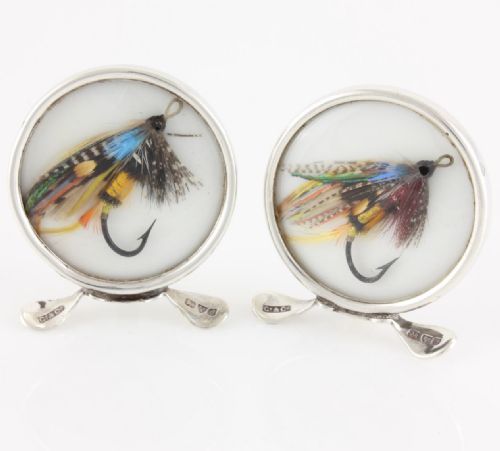
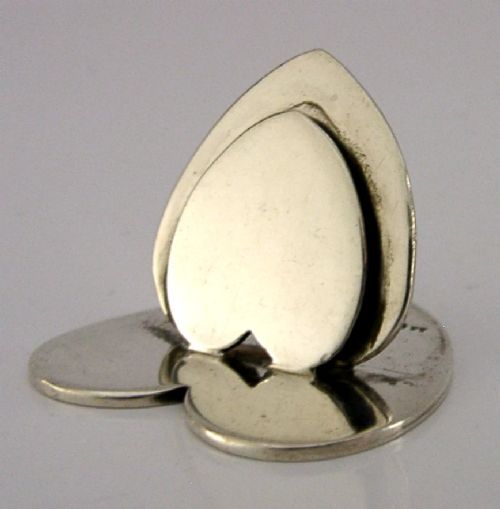
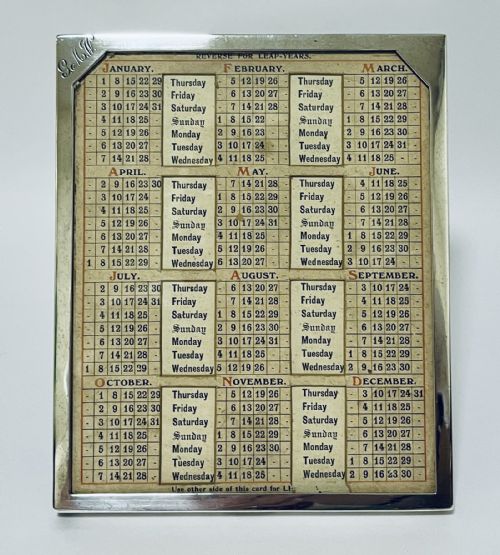
Edwardian silver card stands encompass menu holders, place card holders, and desk accessories designed to organise dining tables or writing spaces. Most examples encountered on this page belong to the Edwardian period, appearing either as single items, matched pairs, or larger sets intended for formal gatherings.
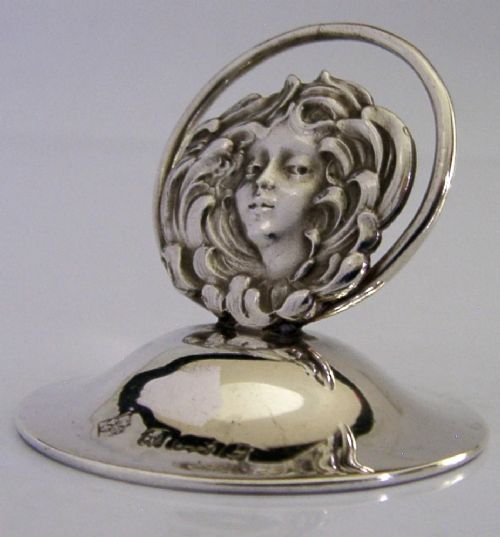
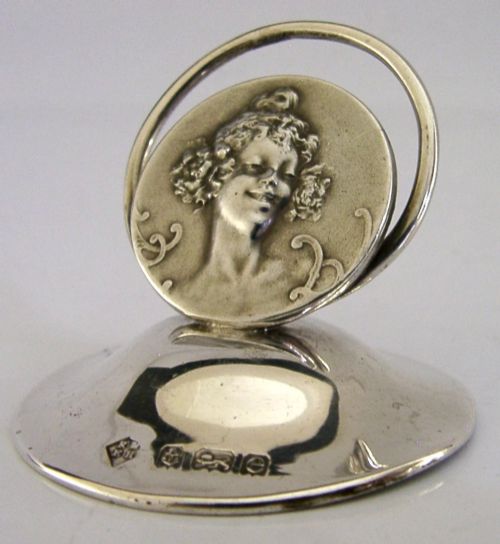
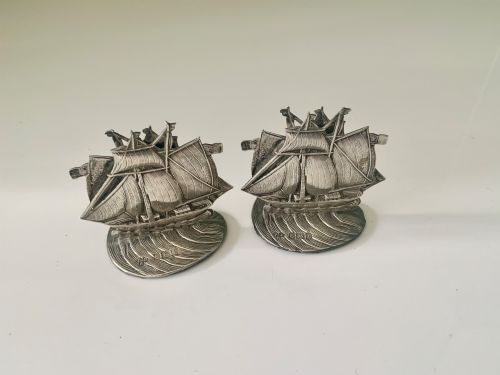
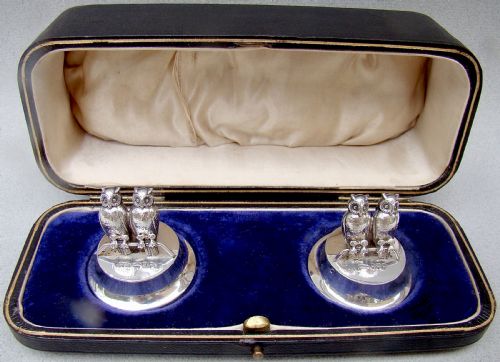
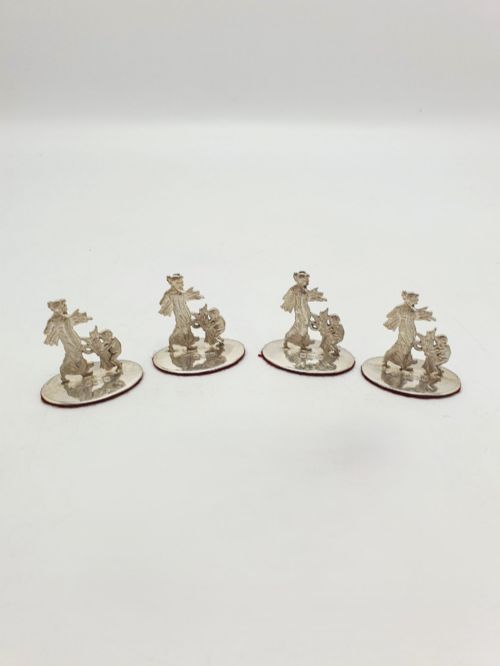
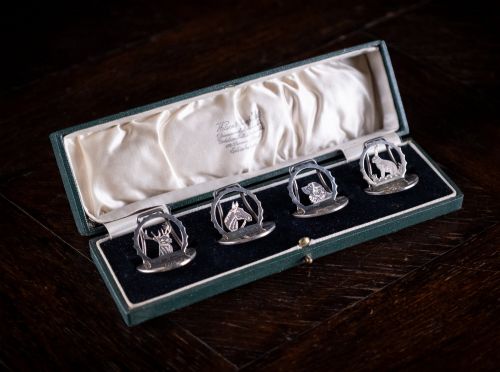
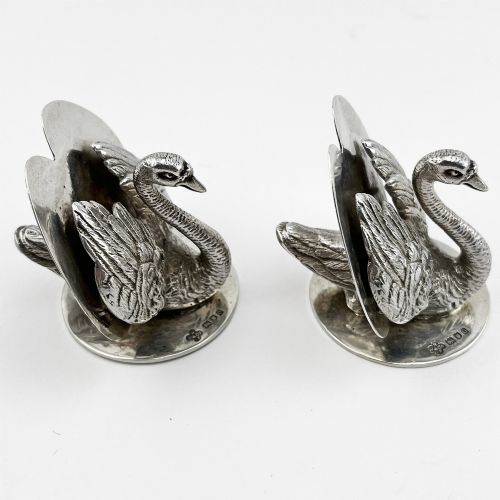
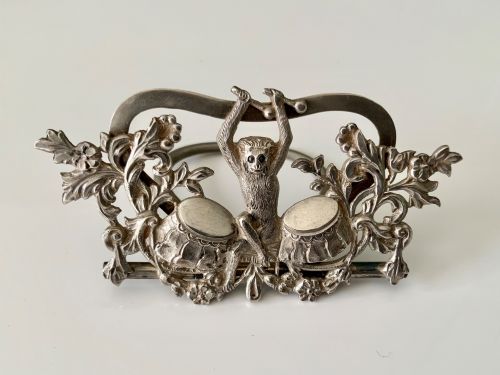
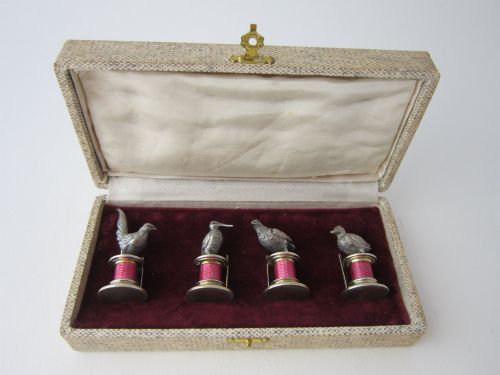
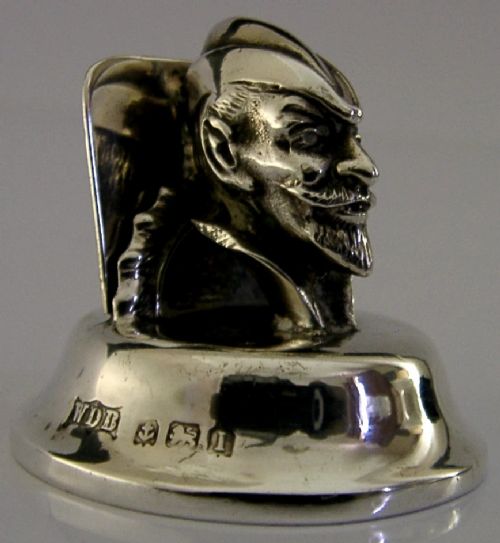
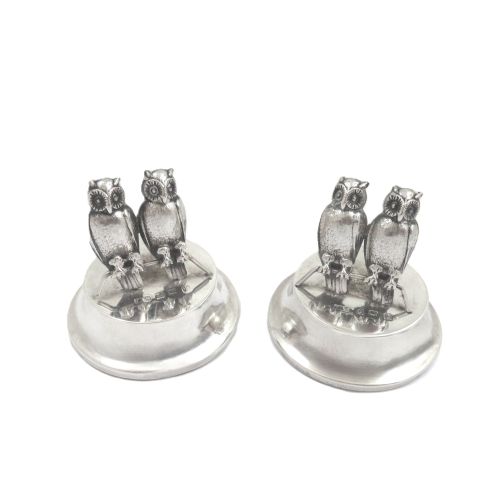
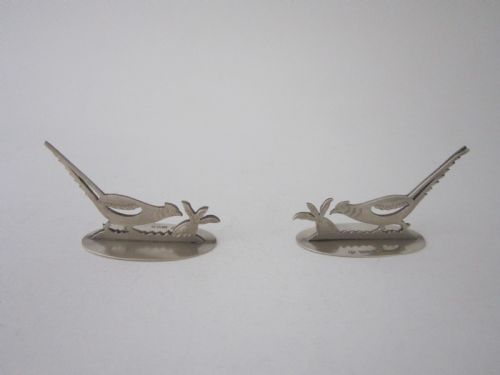
The decorative vocabulary of these pieces spans naturalistic animal forms, figural subjects such as maidens or characters from literature, and geometric Art Nouveau or Arts and Crafts motifs. Makers often produced specific thematic sets, including birds, owls, game birds, and historical or whimsical figures.
How they were made
These stands were produced primarily in sterling silver using casting, stamping, and hand-finishing techniques to achieve intricate detail in small-scale figures. Many pieces incorporate supplementary materials such as enamel for colour, velvet, silk, or leather for backing or presentation boxes, and glass components.
Assay office marks, maker's marks, and date letters are typically stamped directly onto the silver elements, recording the year of production and the location of testing in towns such as Birmingham, Chester, and London.
Listings feature Edwardian, George V, and twentieth-century periods, incorporating sterling silver, enamel, velvet, leather, and glass across various animal and figural forms.
What varies in quality
Quality in these items is determined by the crispness of the casting and the sensitivity of the modelling, particularly in figural and animal subjects where fine feather or fur texturing distinguishes superior examples. The presence of undamaged applied enamel and well-preserved original presentation cases also elevates the standing of a piece.
The reputation of the maker, such as Sampson Mordan or Levi & Salaman, contributes significantly to the distinction of individual items, alongside the completeness of matched sets and the clarity of the hallmarks.
Levi & Salaman·A. Wilcox·Grey & Co·Sampson Mordan·WMF·Liberty
The Edwardian Silver Card Stands Glossary
- Hallmark
- A set of official marks stamped onto precious metals indicating the standard of purity, the assay office, and the date of manufacture. These stamps allow collectors to trace the exact origin of a silver item.
- Sterling silver
- An alloy of silver containing 92.5 percent pure silver and 7.5 percent other metals, usually copper, chosen for durability. This is the standard material for the majority of these card stands.
- Menu holder
- A small desk or tabletop accessory featuring a slotted base or clip to display a printed menu card. They were widely used at formal dinners during the Edwardian era.
- Place card holder
- A miniature stand used to hold a guest's name card at a dining table. They frequently mirror the figural designs found on larger menu holders.
- Enamel
- A decorative glassy substance fused to the surface of metal through firing. It adds vibrant colour details to specific silver stands.
Edwardian Silver Card Stands: Frequently Asked Questions
How do I identify the date of a silver card stand?
You can identify the date by examining the hallmarks stamped into the silver, which include a specific letter code denoting the year of assay.
Additional style indicators, such as characteristic Art Nouveau motifs or Edwardian design traits, help confirm the period of manufacture.
Were these stands used singly or in sets?
They were used both as individual novelty pieces and as matched sets of four, twelve, or more for larger dining tables.
Complete sets or pairs are frequently found housed in their original velvet or silk-lined presentation boxes.
What materials are used besides silver?
While sterling silver forms the primary structure, many examples incorporate coloured enamelwork, glass inserts, or leather and silk within presentation boxes.
Some specialised pieces also utilise pewter or feature fabric components like velvet and feathers depending on the specific design.