


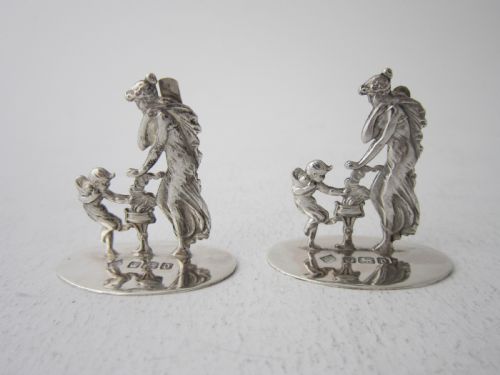


Vintage Silver Place Stands
These vintage silver place stands keep guests ordered at table, combining practical dining utility with miniature silver sculpture.
Vintage Silver Place Stands
When you search for vintage silver place stands, you encounter menu holders, place card holders, and tableware accessories designed for formal dining. These pieces organise the table during Edwardian banquets, Art Deco dinners, and mid-century gatherings.
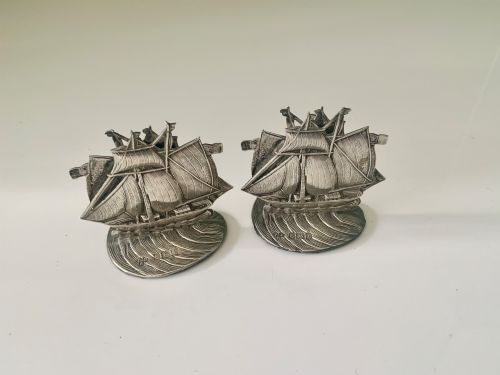
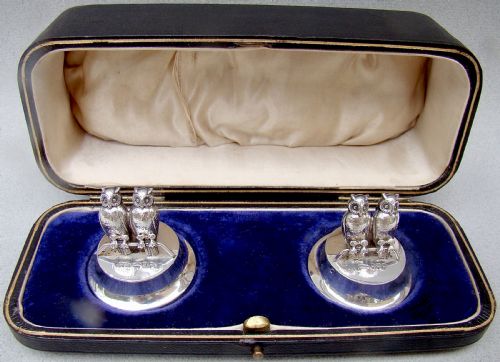
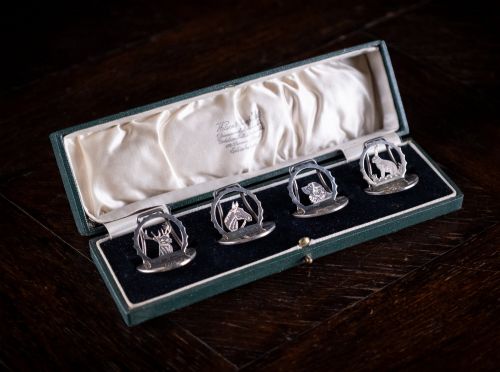
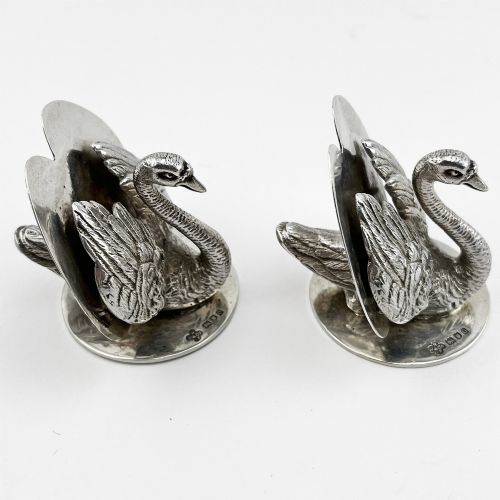
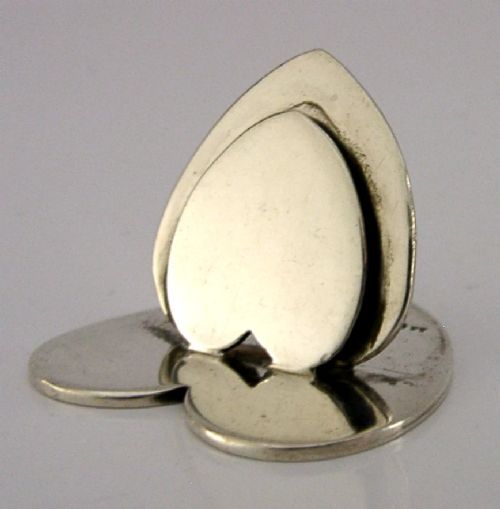
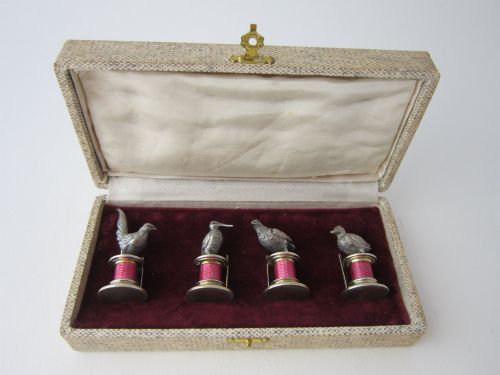
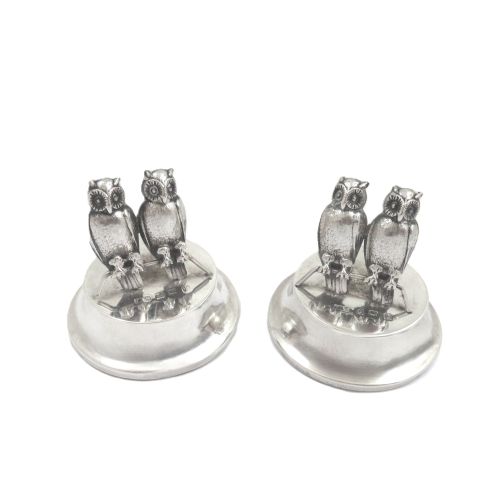
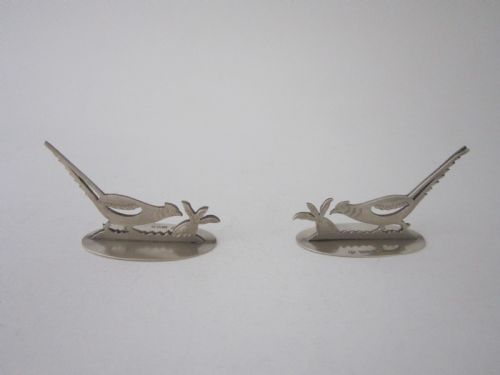
The most common versions on this page take the form of animals, birds, military insignia, and love hearts. Makers cast and model these objects in sterling silver and silver plate, frequently incorporating enamel details.
Periods span from the Victorian era through the Edwardian years, George V, George VI, and into mid-century modern designs. You find them singly, in pairs, or in matched sets intended for larger dining settings.
What varies in quality
The degree of sculptural detail separates standard table accessories from finer miniature works. Cast animals with crisp feather and fur definition require superior craftsmanship compared to plain stamped clips.
Makers' marks, hallmarks, and integrated enamel work influence the standing of a piece. Complete boxed sets and sculptural subjects like galleons or literary figures represent higher tiers of production.
Listings feature sterling silver and silver plate, incorporating enamel, velvet, silk, and leather across Edwardian, Art Deco, and mid-century periods.
Levi & Salaman·A. Wilcox·Sampson Mordan·Asprey·Liberty
The Vintage Silver Place Stands Glossary
- Sterling silver
- A silver alloy containing 92.5 percent pure silver and 7.5 percent other metals, usually copper. This standard provides the durability required for detailed miniature casting.
- Guilloche enamel
- Decorative enamel applied over a mechanically engraved metal background. This technique creates repeating geometric patterns beneath a translucent coloured surface.
- Hallmark
- An official stamp applied to precious metals indicating the standard of purity, the assay office, and the date letter. British pieces carry these marks for authentication.
- Menu holder
- A small table stand designed to hold a printed menu card upright. They share forms with place card holders across Edwardian and later dining tables.
- Silver plate
- A base metal coated with a layer of pure silver. This method offered a more affordable alternative to solid sterling silver tableware.
Vintage Silver Place Stands: Frequently Asked Questions
What is the difference between place card holders and menu holders?
Menu holders generally feature a slightly larger clip or slot to support folded cardstock detailing the meal courses. Place card holders are scaled to hold smaller individual name cards for seating arrangements.
Despite this functional distinction in period dining, many vintage examples serve both purposes interchangeably on the table.
How do I date a silver place stand?
British silver bears hallmarks that include assay office symbols and date letters corresponding to specific years. Examining these stamps provides the exact year of manufacture.
Stylistic cues such as Art Deco geometric lines or Edwardian naturalism also indicate the production period when hallmarks are absent.
Were these pieces made in sets?
Silversmiths produced these items individually, in pairs, and in larger matched sets for extended dining tables. Sets of four, six, or twelve often share a specific theme like animals or military flags.
Many multi-piece sets survive in their original velvet and silk-lined leather presentation boxes.
How should I clean silver place stands with enamel?
Enamelled surfaces require gentle cleaning with a soft, damp cloth to avoid scratching the delicate glass layer. Standard silver dips can damage enamel and should not be used.
Keep polish away from inset enamel panels and leather or velvet backing materials during maintenance.
What themes are common in these designs?
Animal subjects are widespread, including owls, swans, foxes, grouse, and horses' heads. Military emblems, naval ships like galleons, and literary subjects such as Alice in Wonderland also appear.
These varied subjects reflect the personal interests and military service of the original dining patrons.