


Edwardian Place Card Holders
Edwardian place card holders are silver table accessories designed to guide guests to their seats with miniature sculpture and decorative clips.
Edwardian Place Card Holders
Edwardian place card holders are small silver tableware accessories created to hold name cards and menu cards at formal dining tables. These pieces encompass both dedicated place card markers and larger menu holders that frequently served the dual purpose of holding individual names.
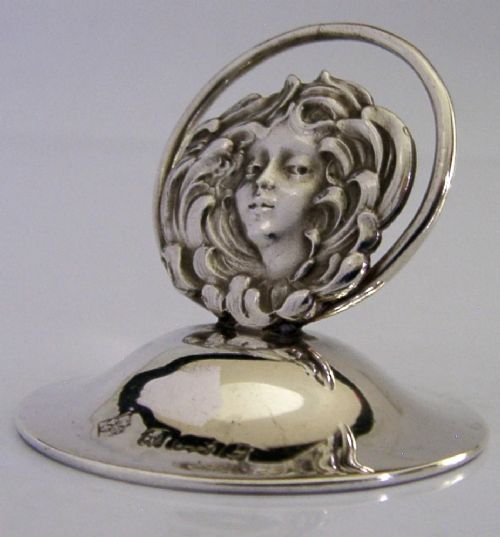
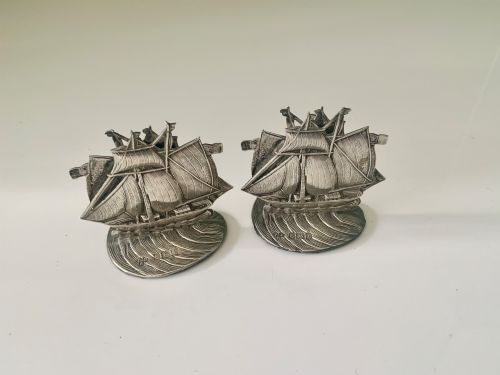
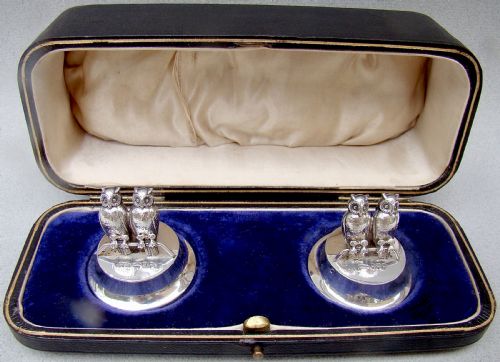
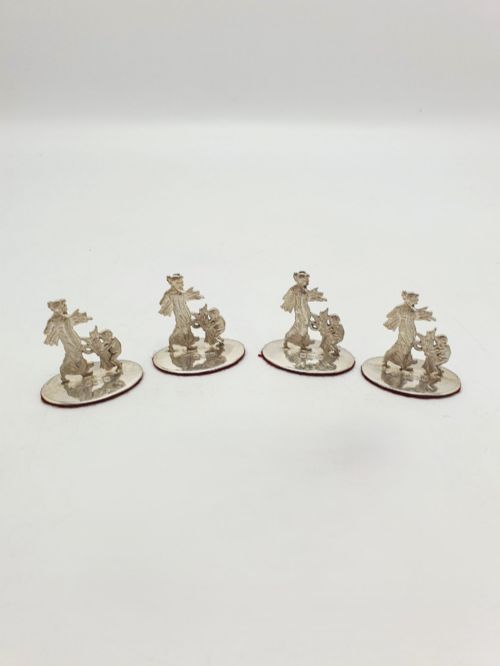
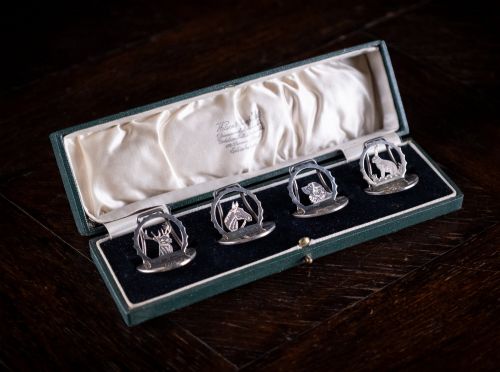
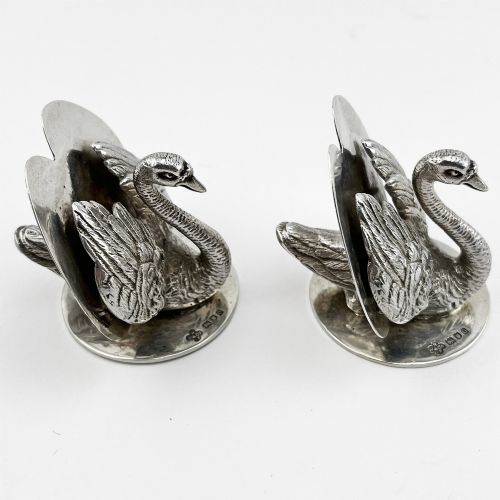
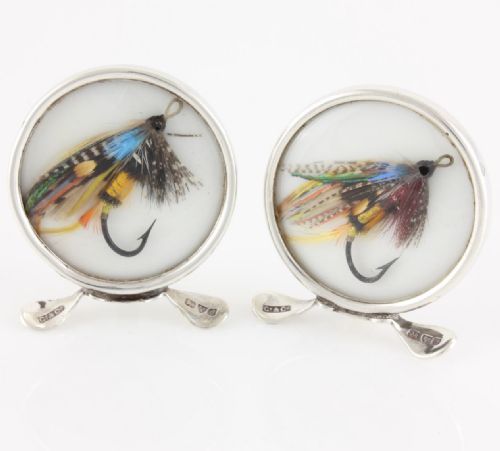
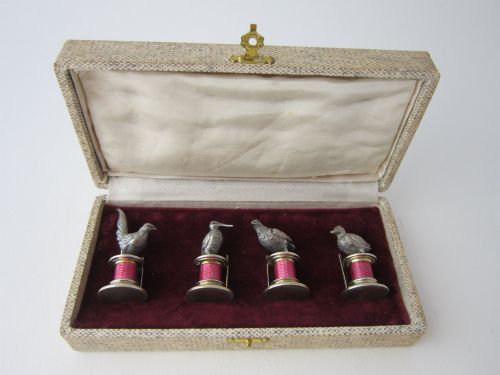
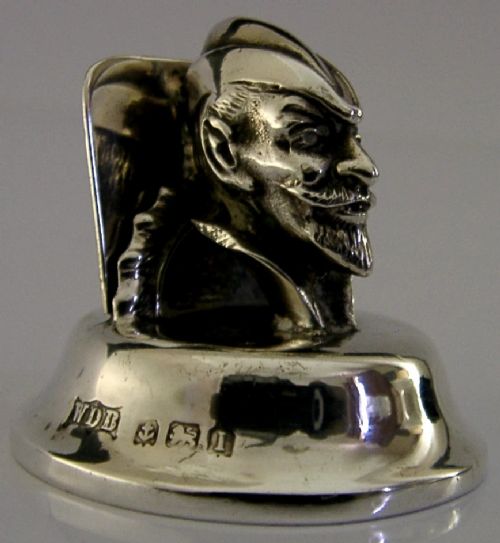
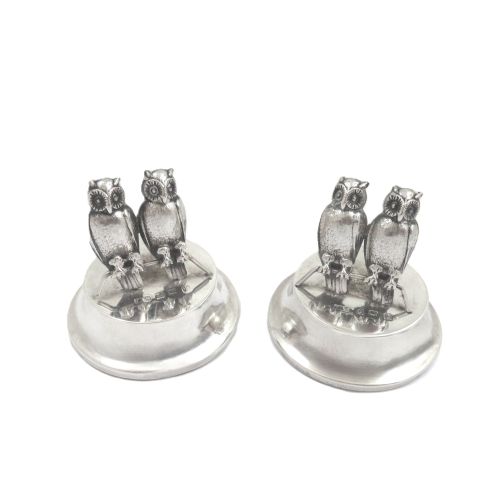
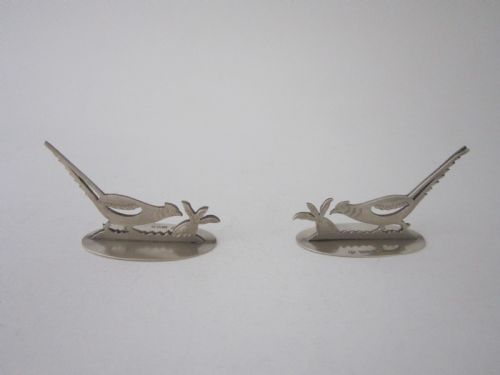
The selections encountered most often combine sterling silver fabrication with whimsical figural subjects, animals, or nautical themes typical of the period. Matching sets of four or pairs appear regularly alongside individual examples and cased sets.
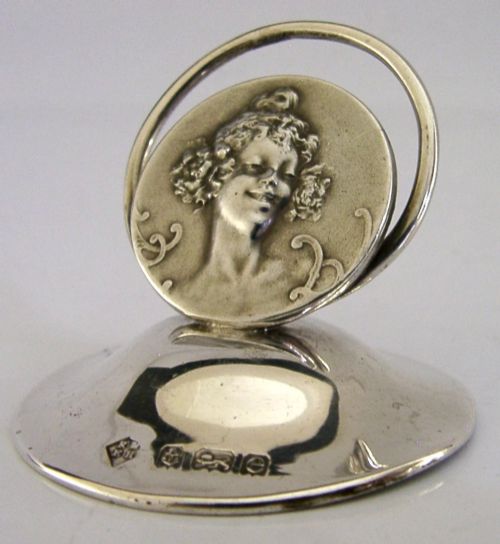
Makers drew upon diverse design movements, producing items that reflect Art Nouveau curves, Arts and Crafts simplicity, and Scottish Revival motifs alongside traditional Edwardian elegance.
How they were made
Silversmiths utilised sterling silver as the primary medium, shaping figures and bases through casting, stamping, and detailed hand-chasing. Enamel accents were occasionally fused to the silver surfaces to add colour to flags and decorative panels.
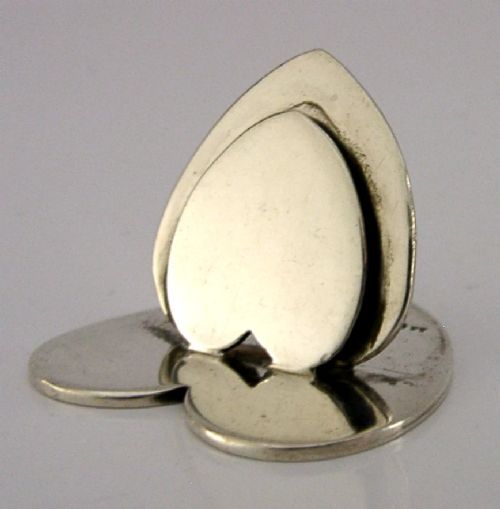
Supporting mechanisms relied on integrated spring clips, weighted bases, or slotted frames designed to grip paper cards securely without damage. Hallmarks stamped directly into the metal record assay offices, date letters, and maker marks.
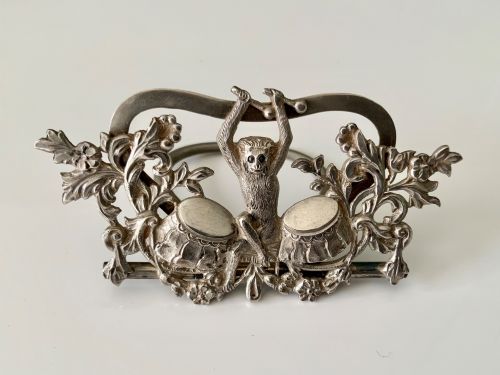
Dinners featured silver owls, monkeys playing drums, and characters from Alice in Wonderland holding up the evening's menus.
What varies in quality
Completeness dictates overall desirability, particularly when matching sets of four, pairs, or original fitted presentation boxes remain intact. Maker attribution to notable workshops also influences the standing of individual pieces within the range.
Levi & Salaman·A. Wilcox·Grey & Co.·Sampson Mordan·Liberty
The Edwardian Place Card Holders Glossary
- Sterling silver
- A silver alloy containing 92.5 percent pure silver and 7.5 percent other metals, usually copper, chosen for durability in tableware.
- Assay office
- An official body responsible for testing the purity of precious metals and stamping them with hallmark symbols.
- Date letter
- A specific letter stamped into silver indicating the exact year the item was hallmarked and tested.
- Chasing
- A metalsmithing technique where designs are hammered into the front surface of the metal to create raised relief and texture.
- Figural
- Representing a human, animal, or recognizable object in sculptural form rather than abstract ornamentation.
Edwardian Place Card Holders: Frequently Asked Questions
What is the difference between place card and menu holders?
Place card holders are generally smaller and designed specifically for individual guest names, whereas menu holders feature larger clips or frames meant to display shared dining lists.
Despite these intended uses, many Edwardian examples were manufactured to accommodate either cards or menus interchangeably.
How do I identify Edwardian pieces?
Authentic Edwardian pieces date from the reign of King Edward VII between 1901 and 1910, which is verified by official silver hallmarks stamped on the base.
Stylistic indicators include Art Nouveau motifs, figural animal subjects, and specific date letters corresponding to British assay office records.
Were these made as sets?
Silversmiths produced these items individually, in pairs, or in matched sets of four, six, or twelve to accommodate dining table arrangements.
Cased sets supplied in original velvet-lined boxes indicate high-status commissions intended for formal gifting or elite household use.
How should I display them at home?
These miniature sculptures can be arranged on sideboards or mantelpieces to appreciate the fine detail of the silver casting up close.
They also function well in modern table settings for holding place names during dinner parties or displaying small photographs.