




Antique Name Card Holders
These antique name card holders are miniature silver table appointments that keep dining seats and dinner courses organised with considerable charm.
Antique Name Card Holders
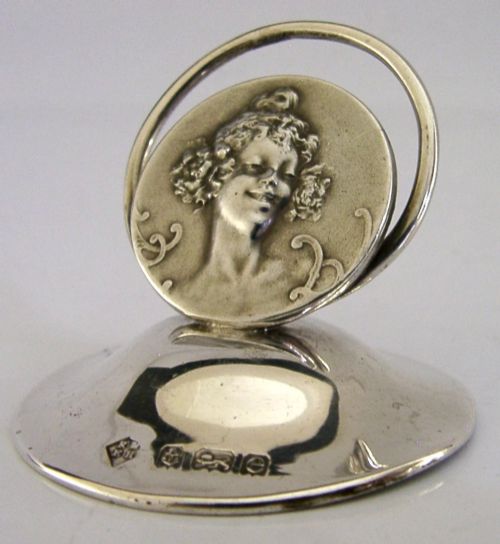
When you search for antique name card holders, you encounter small desk and dining table accessories designed to hold place cards or menu cards upright. The pieces appearing here span the Edwardian period, the 1900s, 1910, 1920, 1930, 1950, and the 19th Century.
You meet various functional forms under this heading, including menu holders, place card holders, and broader tableware accessories or menu card holders. Styles represented across these items incorporate Edwardian, Art Deco, Art Nouveau, George V, George VI, British Military, Victorian, and Anglo-Indian designs.
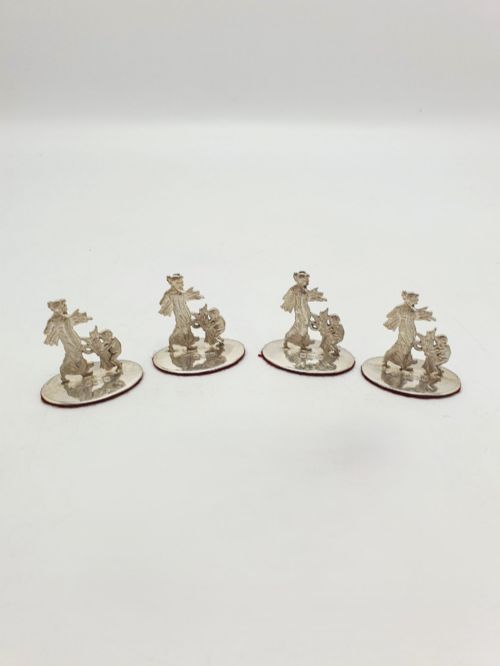
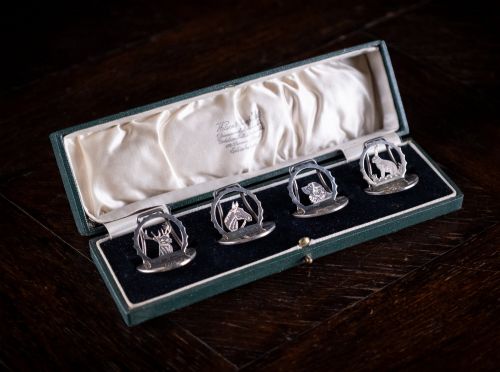
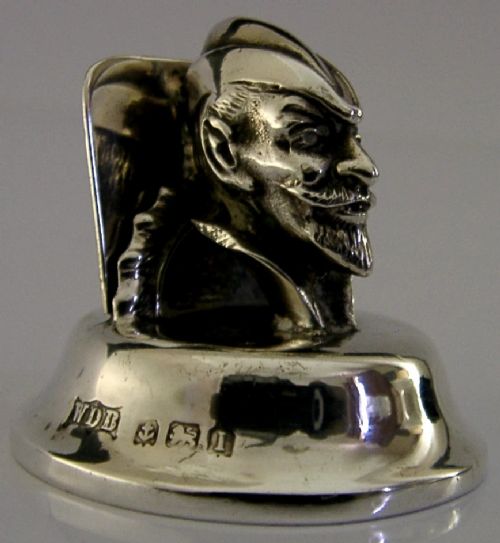
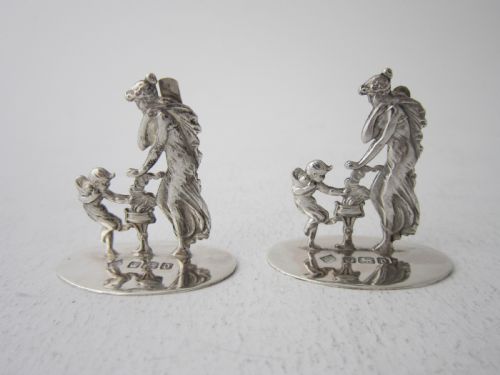
The most frequent examples on this page are Edwardian and early twentieth century creations cast or fabricated in sterling silver. These table pieces often take figurative or animal shapes to mark specific dining occasions.
Materials and construction methods
Makers fashioned these table accessories primarily from sterling silver and silver plate, frequently utilising casting and stamping techniques to achieve detailed three-dimensional forms. Silversmiths mounted figures onto weighted bases to ensure the clips or slots remained upright when supporting cards.
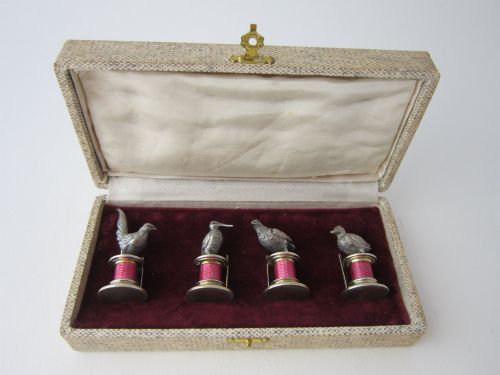
Surface decoration frequently involves applied enamel, guilloche enamel, velvet, silk, and leather linings found within fitted presentation boxes. Artisans also applied hand-chasing and engraving to delineate feathers, fur, and architectural details on figurative subjects.
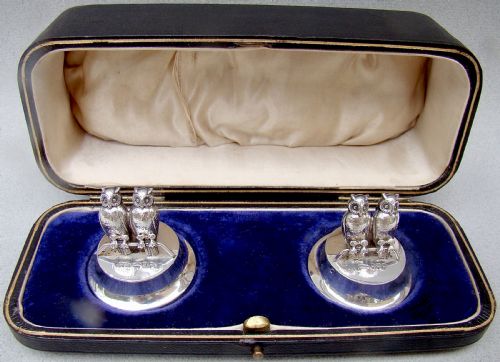
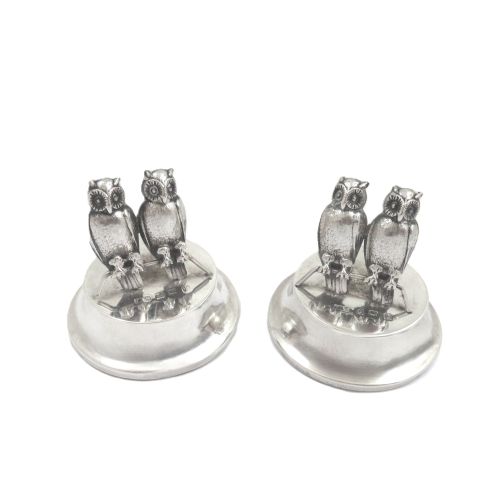
Dinners in the past apparently required miniature owls and foxes to keep track of who was sitting where.
Assessing quality in silver table markers
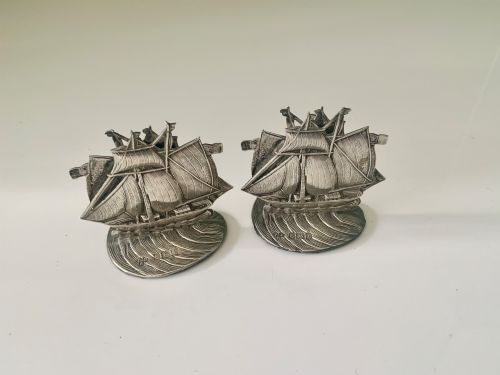
Quality rests upon the crispness of the casting and the naturalism achieved in figurative subjects such as animals, birds, and characters. Pieces modelled as owls, foxes, galleons, or sentry boxes demand high sculptural skill from the silversmith to succeed on a miniature scale.
The preservation of applied enamel work and the integrity of the original weighted bases dictate the standing of an item. Complete matching sets or boxed pairs demonstrate superior original intent compared to mismatched survivors.
Levi & Salaman·A. Wilcox·Sampson Mordan·Asprey·Liberty
The Antique Name Card Holders Glossary
- Sterling silver
- A silver alloy containing 92.5 percent pure silver by mass and 7.5 percent other metals, usually copper. This standard composition appears across the majority of these dining accessories.
- Guilloche enamel
- A decorative technique where a precise geometric pattern is engine-turned into a metal surface beneath a translucent layer of enamel. This adds depth and colour to the miniature card clips.
- Place card holder
- A small desk or table accessory designed to display the name of a dinner guest next to their setting. These items often match the theme of the table or seasonal menus.
- Menu holder
- A miniature upright stand used to display the courses of a meal for diners to inspect. They share identical construction methods with place card holders.
- Figurative
- Representing human or animal forms rather than relying on purely geometric or abstract ornament. Many table markers depict owls, horses' heads, and literary figures.
Antique Name Card Holders: Frequently Asked Questions
How were antique name card holders used?
Hosts placed these miniature stands along dining tables to indicate seating arrangements for guests or to display the evening menu.
They functioned as both practical table stationery and decorative conversation pieces during formal meals.
What subjects do these card holders depict?
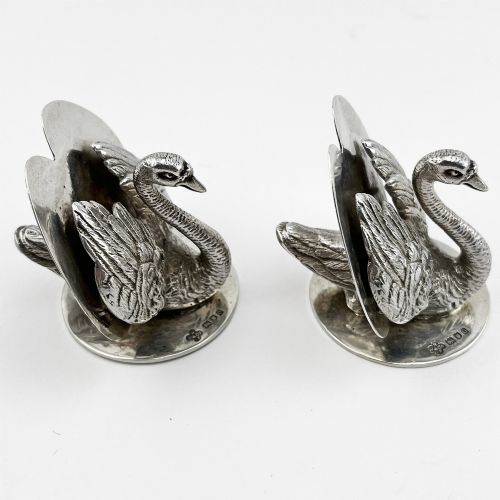
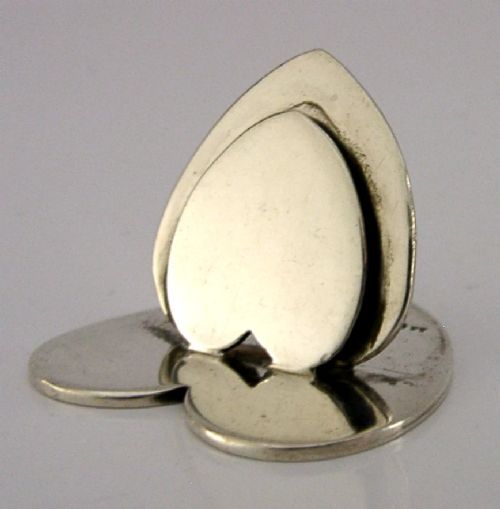
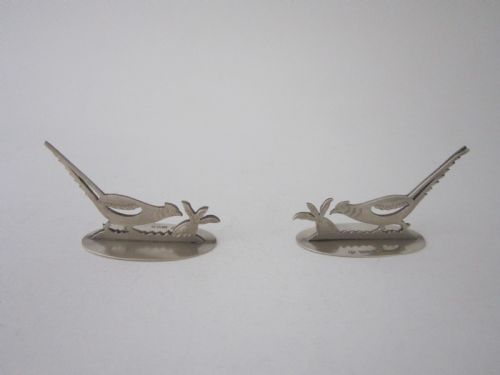
The designs range from plain geometric clips to intricate sculptural figures including owls, foxes, swans, galleons, and literary characters.
Military themes and animal heads also appear frequently among the recorded examples.
Are these items made of solid silver?
The majority of listings comprise sterling silver, though silver plated examples also occur within the archive.
Makers frequently added weighted metal bases to keep the lightweight silver stands stable on dining tables.
How do I care for silver table accessories?
Regular gentle dusting and occasional careful cleaning with a soft cloth preserve the finish of the silver and any applied enamel.
Avoid harsh liquid dips if the piece contains velvet, silk, or leather lining components.